For sale by the owner who kept the receipts

1984 Toyota Land Cruiser FJ60

Eleven years, one owner, every invoice scanned.

Daily driver, trail wagon, grocery getter. 197,700 miles, $51,000 of documented work, and nothing hidden.

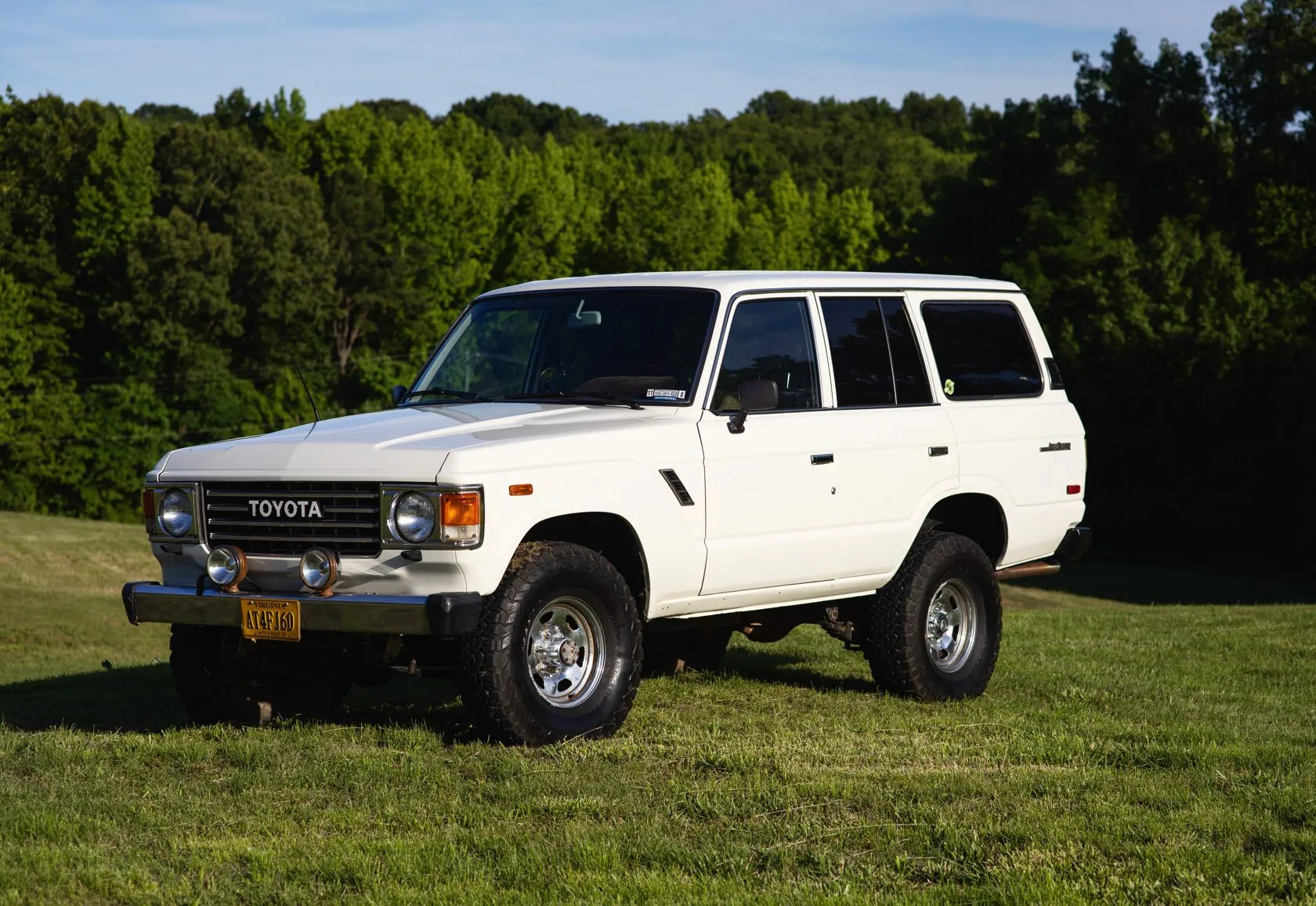
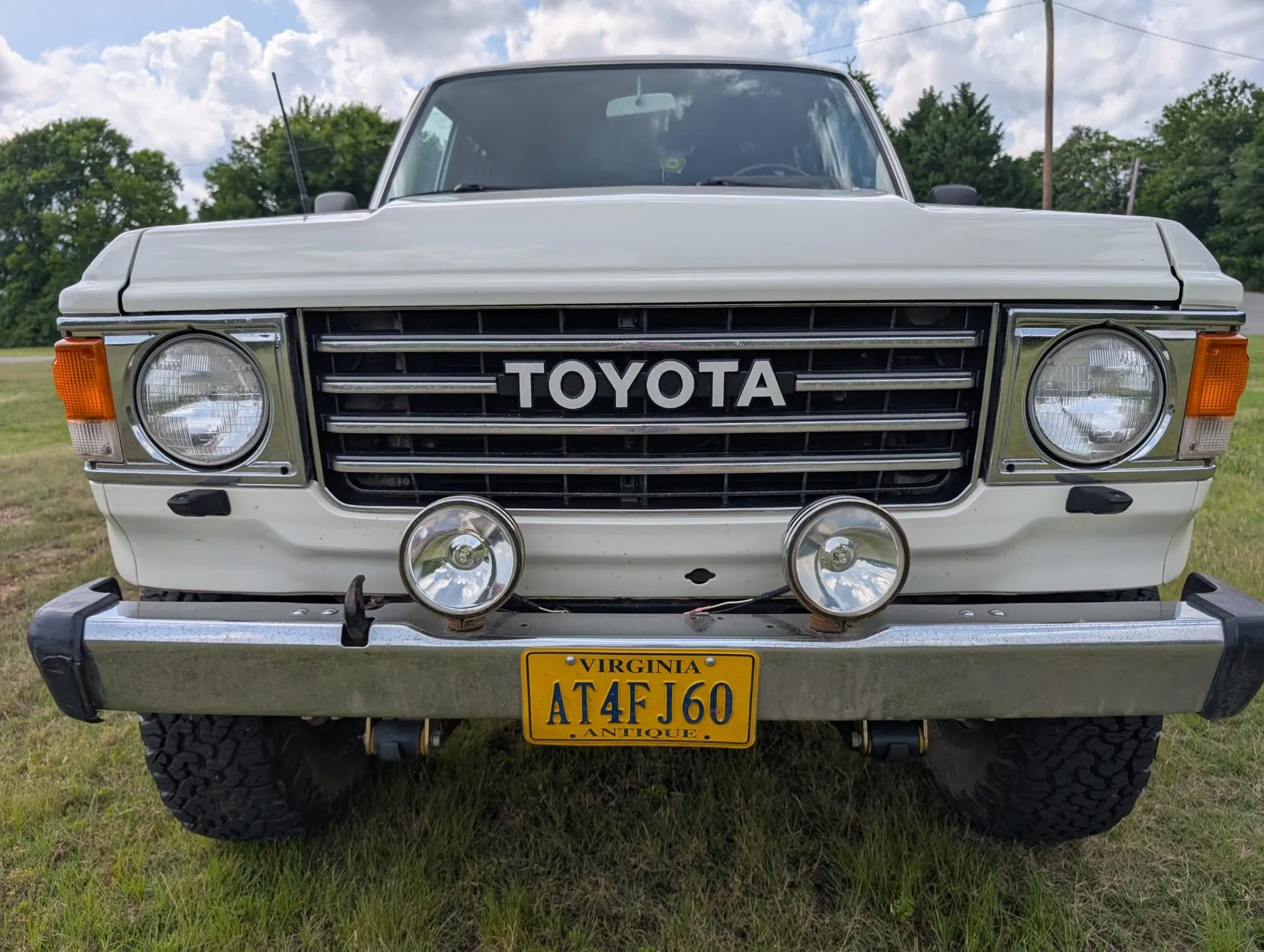
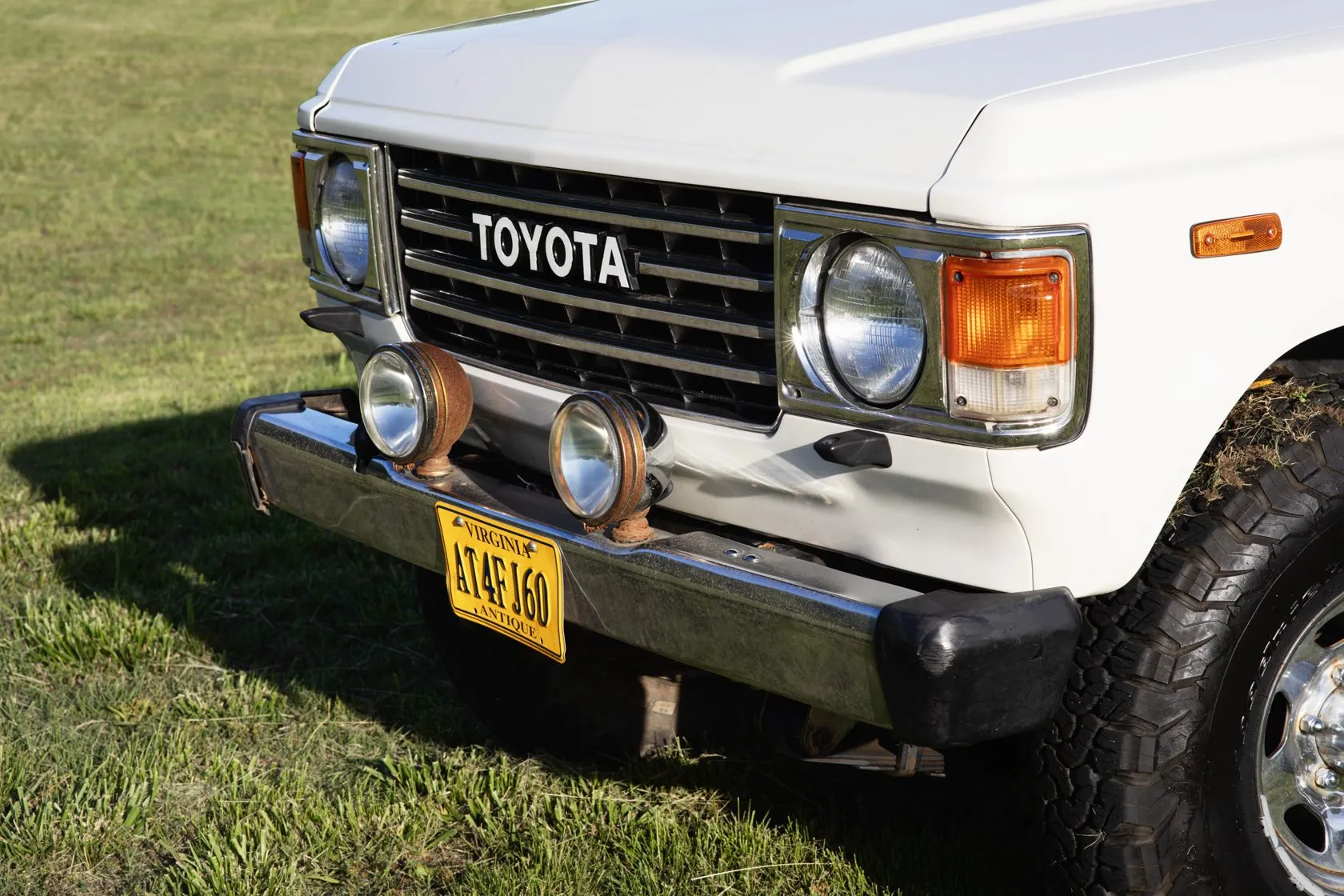
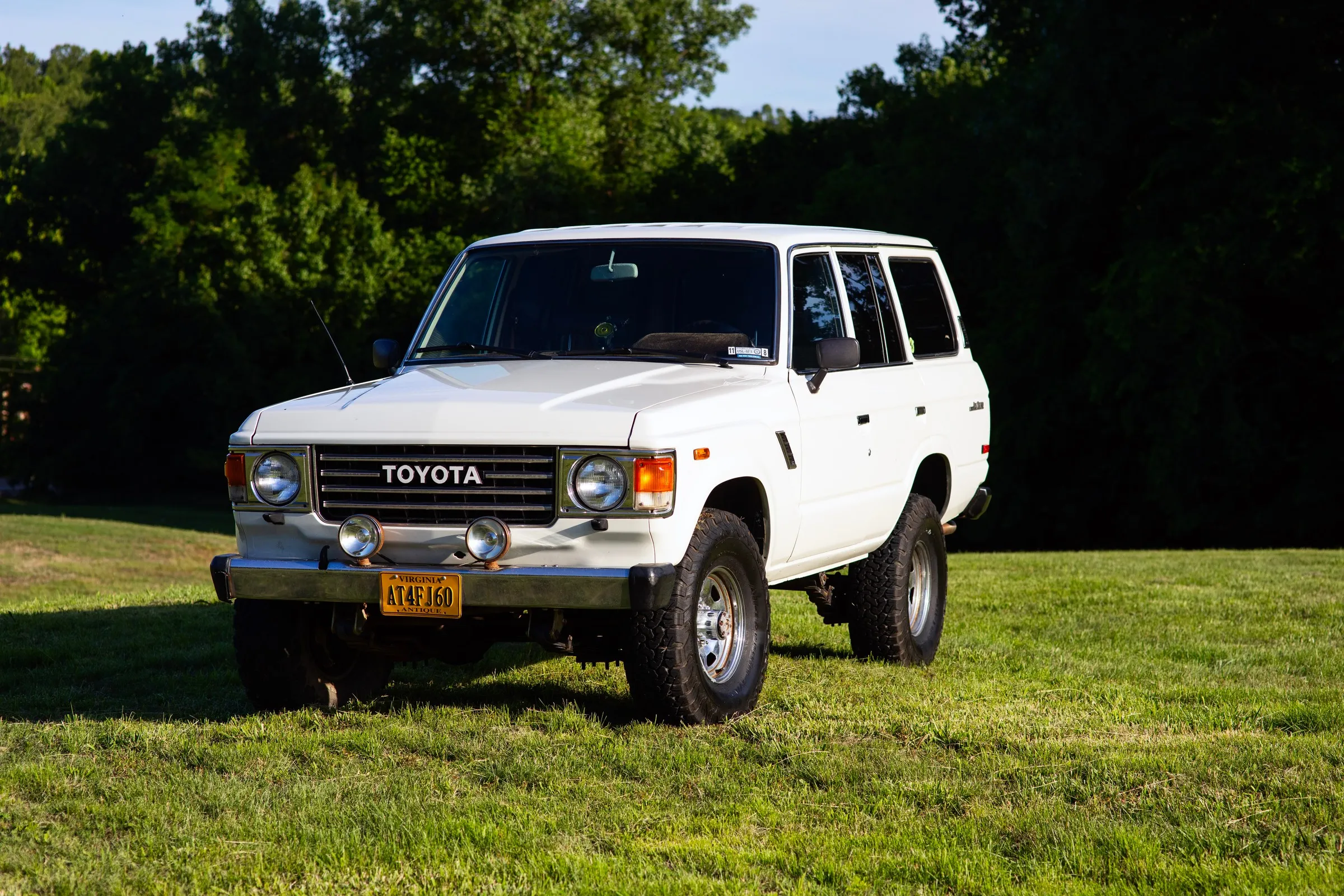
The FJ60 from the front and driver's side, parked on mown grass in low evening sun. White paint, chrome grille and front bumper, round headlights, on tall all-terrain tires.

$25,000 OBO In Richmond, Virginia. Inspection welcome, and encouraged.

Email about the FJ60

Or write to at4fj60@gmail.com directly.

What it is

Engine
4.2-liter 2F inline-six, single carburetor
Output
135 hp / 210 lb-ft, as factory rated
Transmission
Four-speed manual
Transfer case
Two-speed, locking front hubs
Odometer
197,700 miles shown, ~15,700 under current ownership
Paint
Factory white (033), repainted 2020-2022
Interior
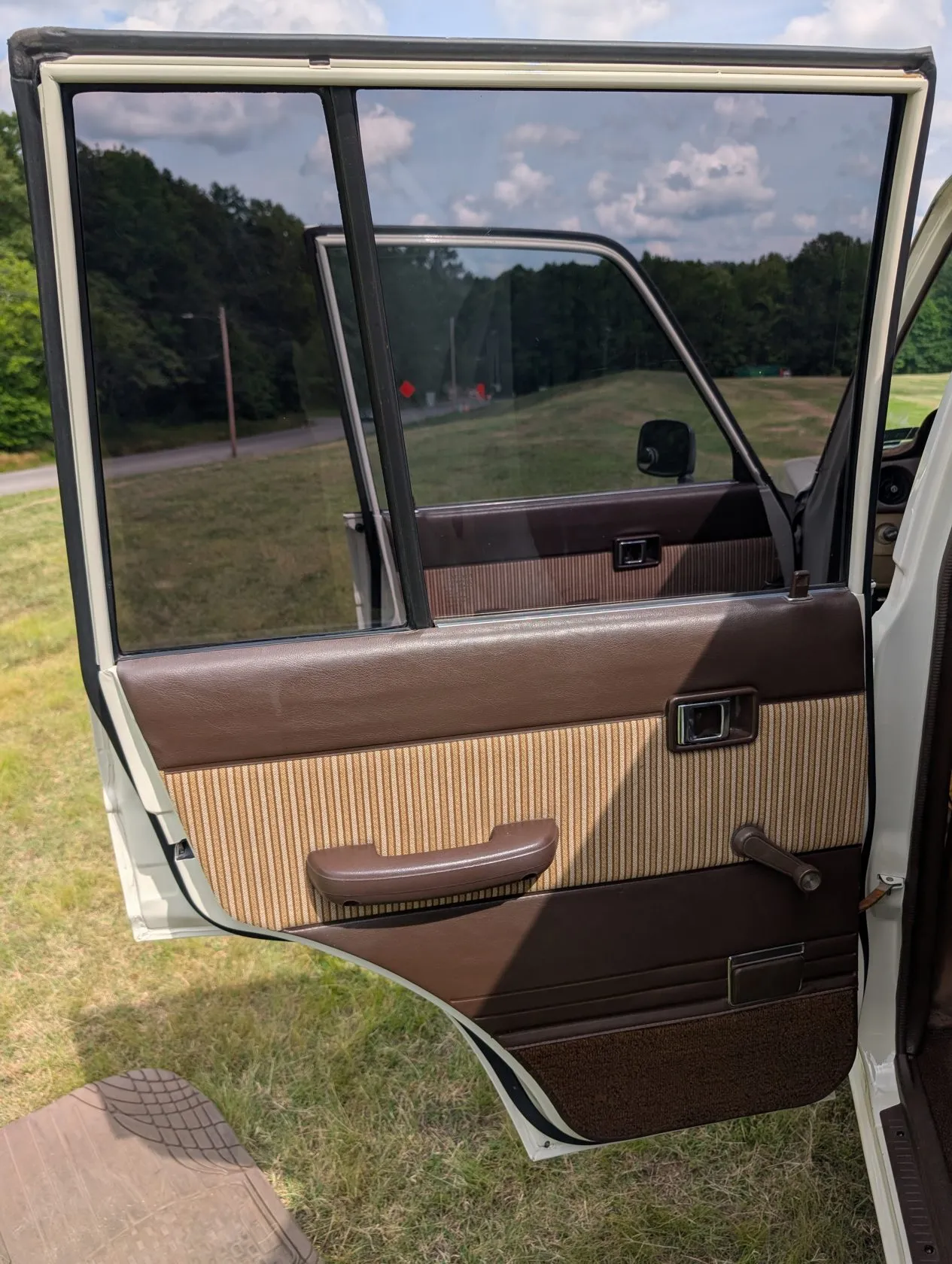
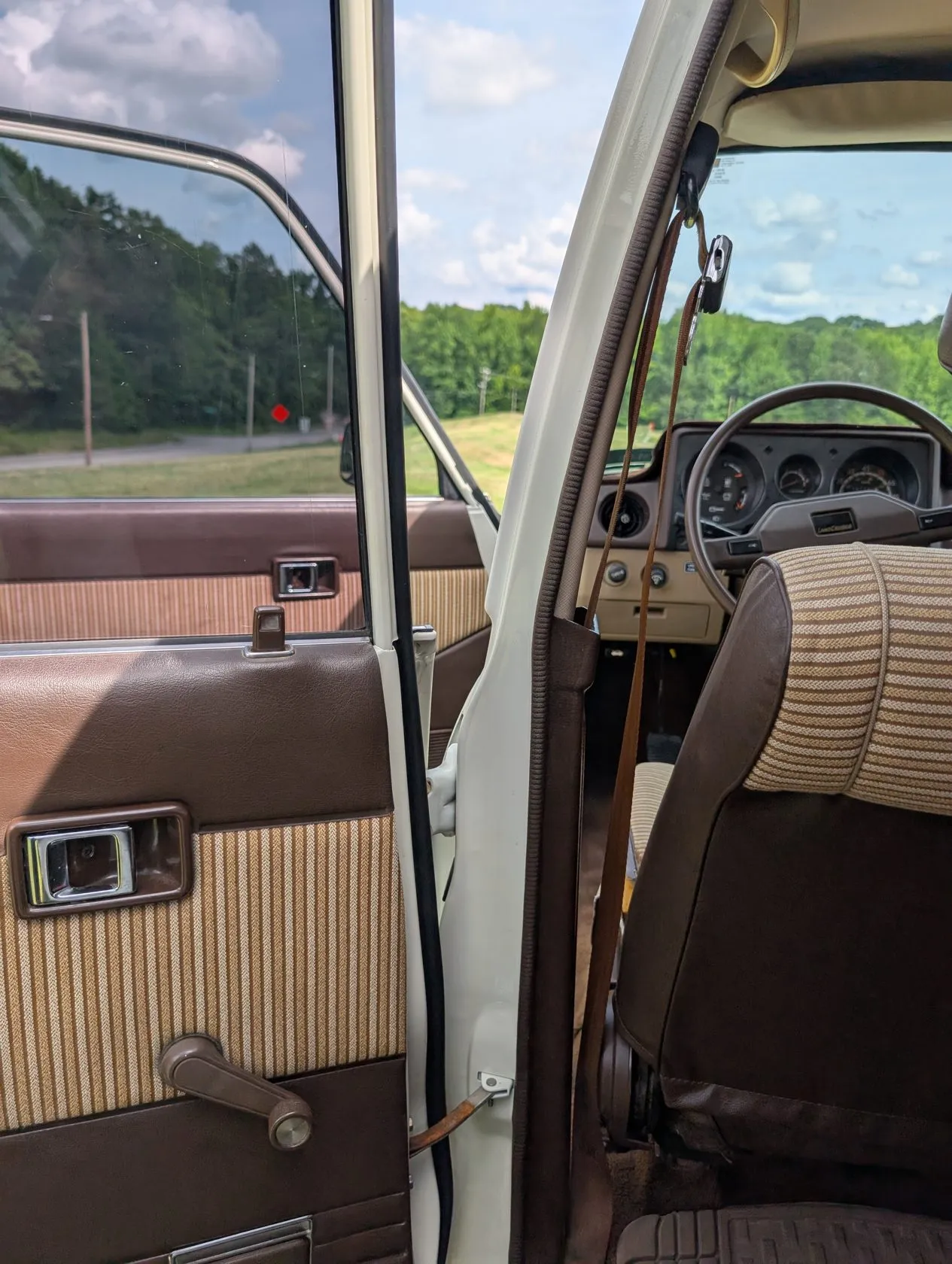
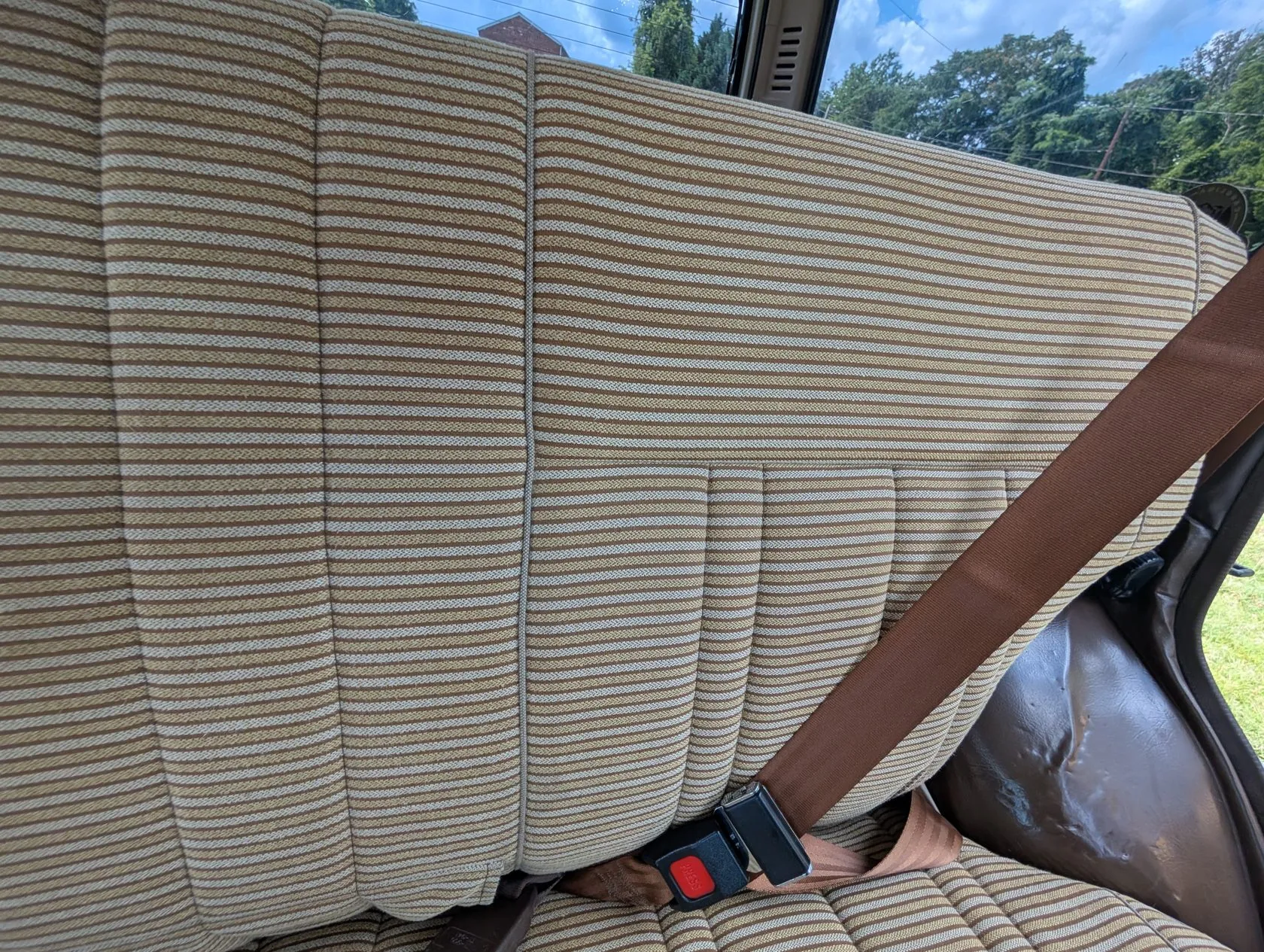
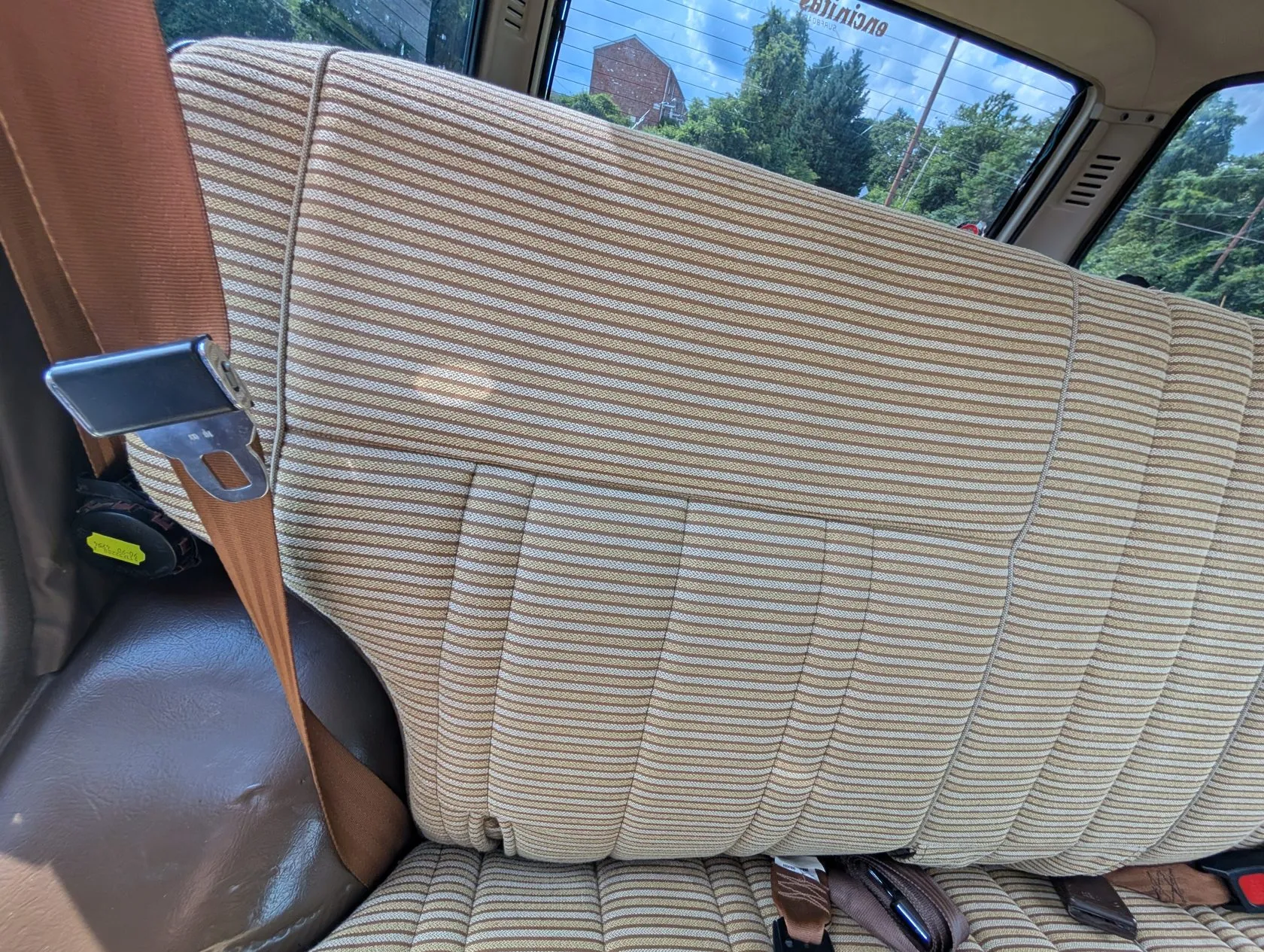
Tan cloth with brown vinyl, front buckets and folding rear bench
Suspension
Old Man Emu 2-inch Heavy lift
Wheels
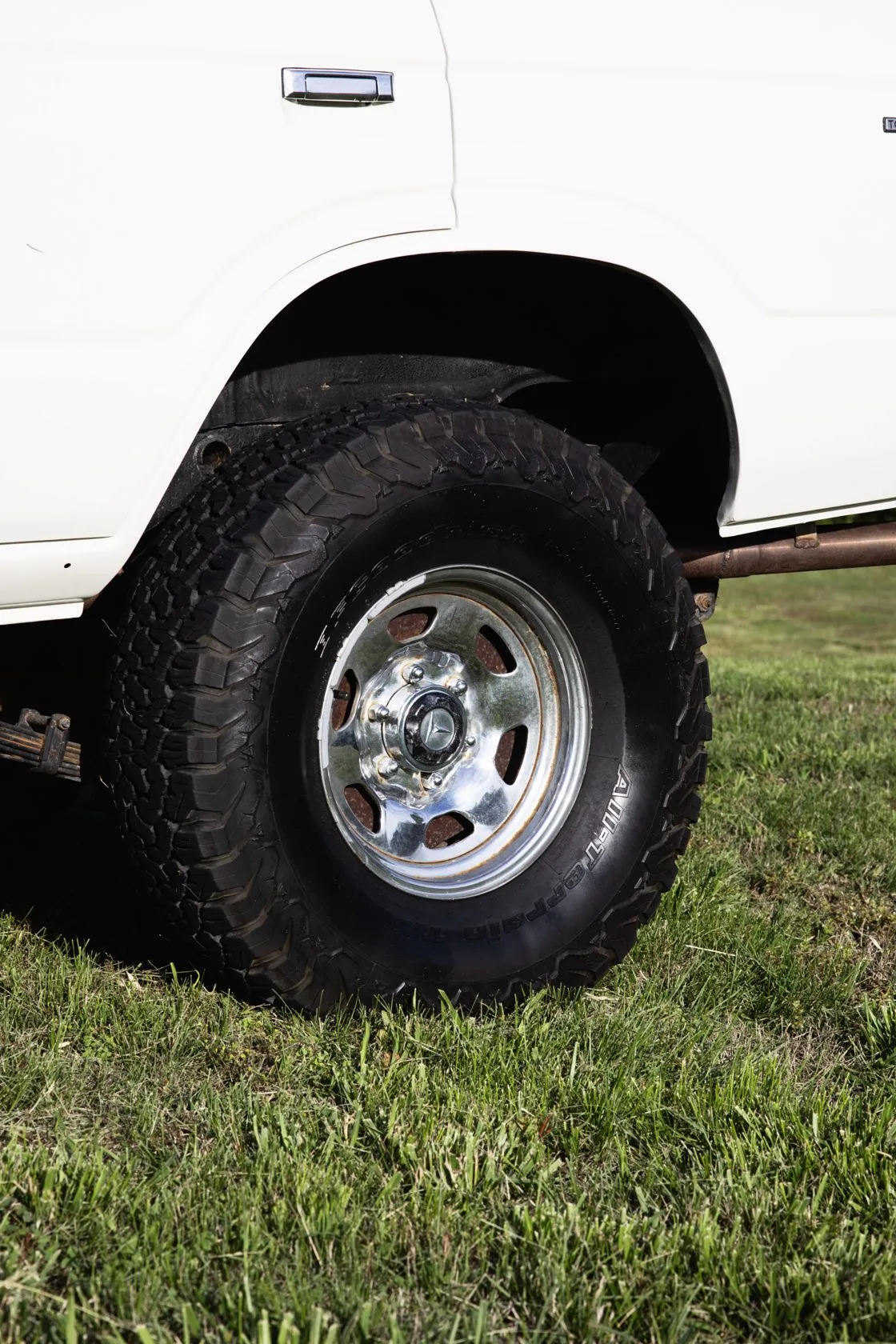
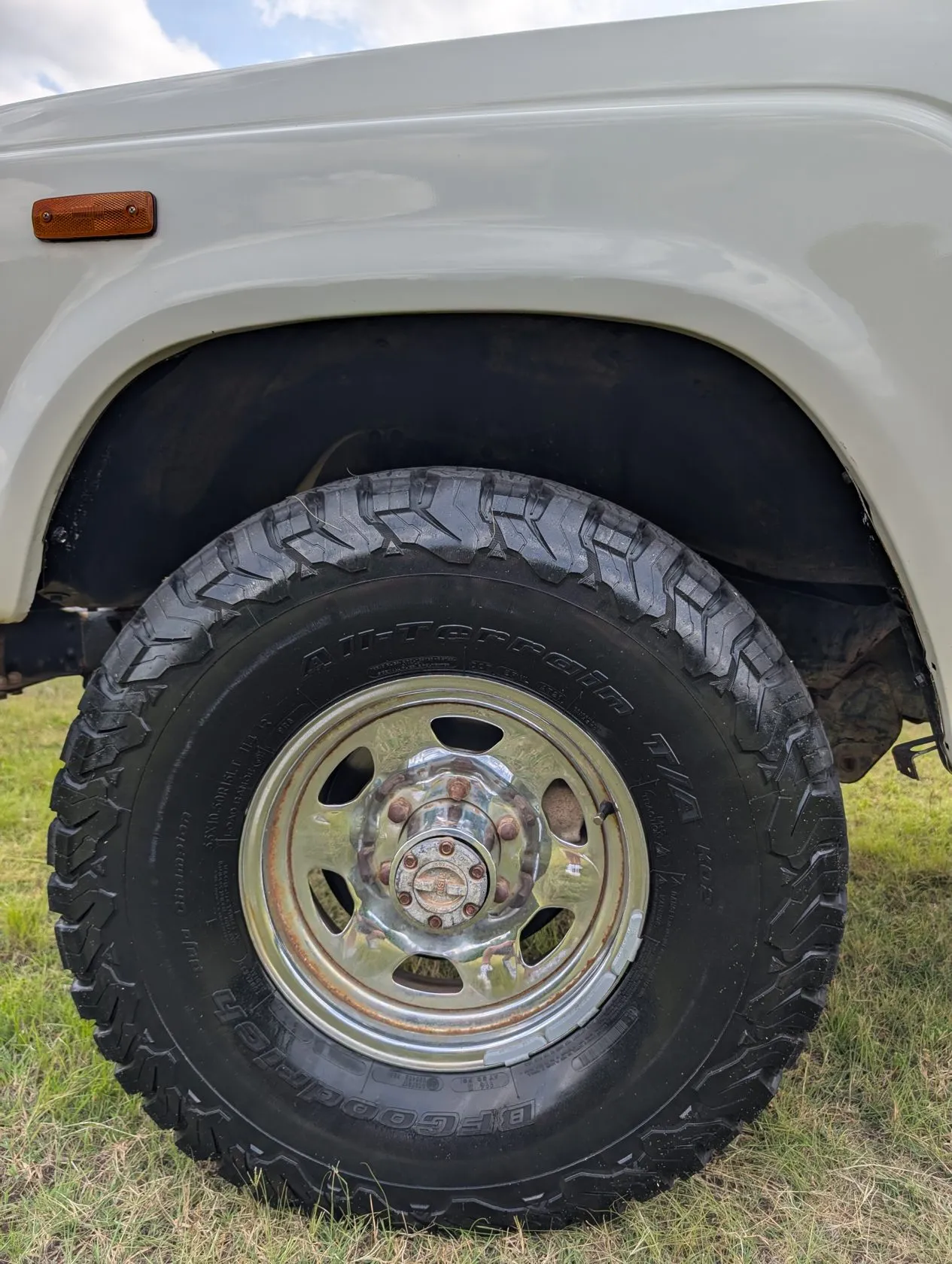
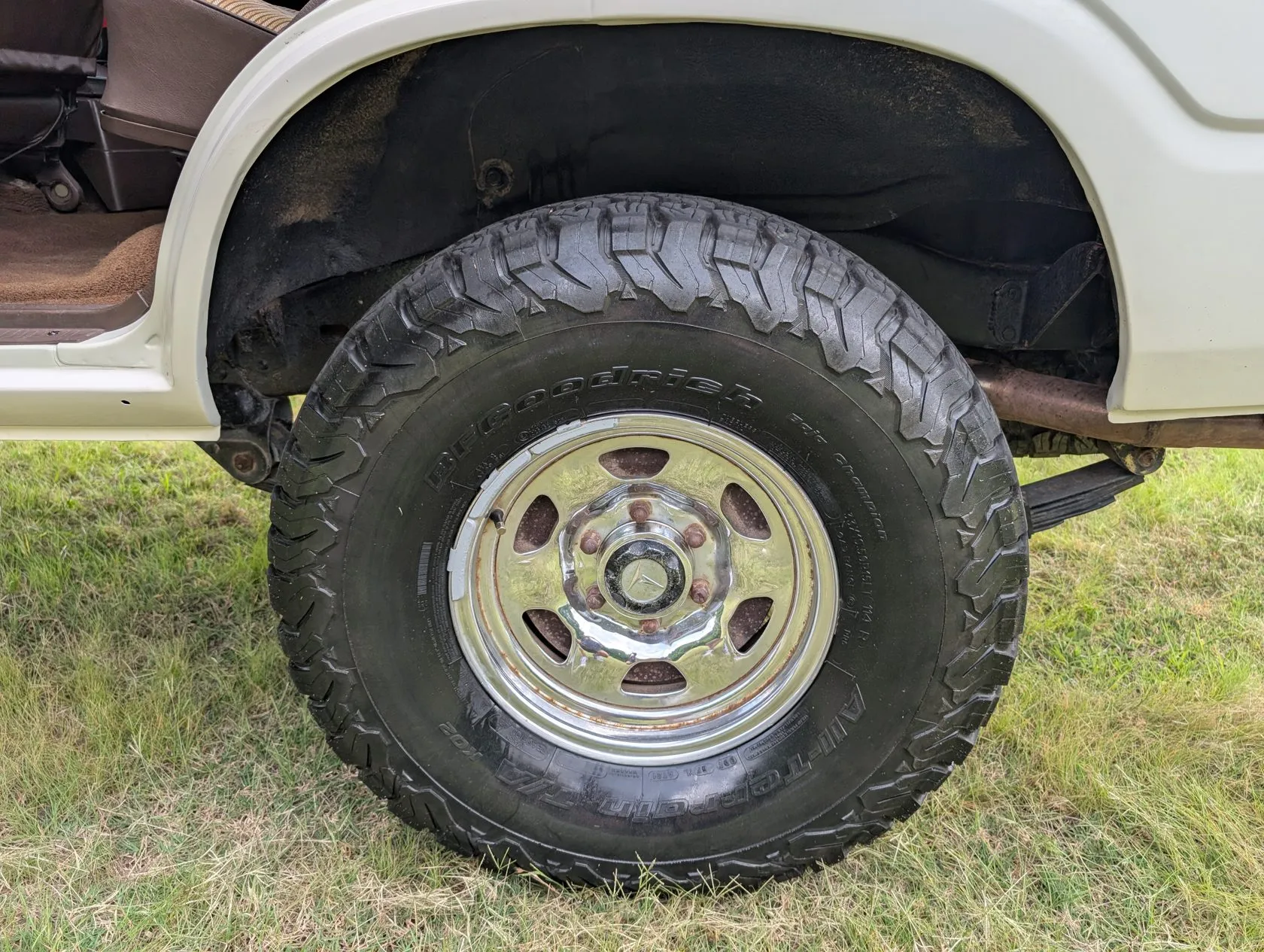
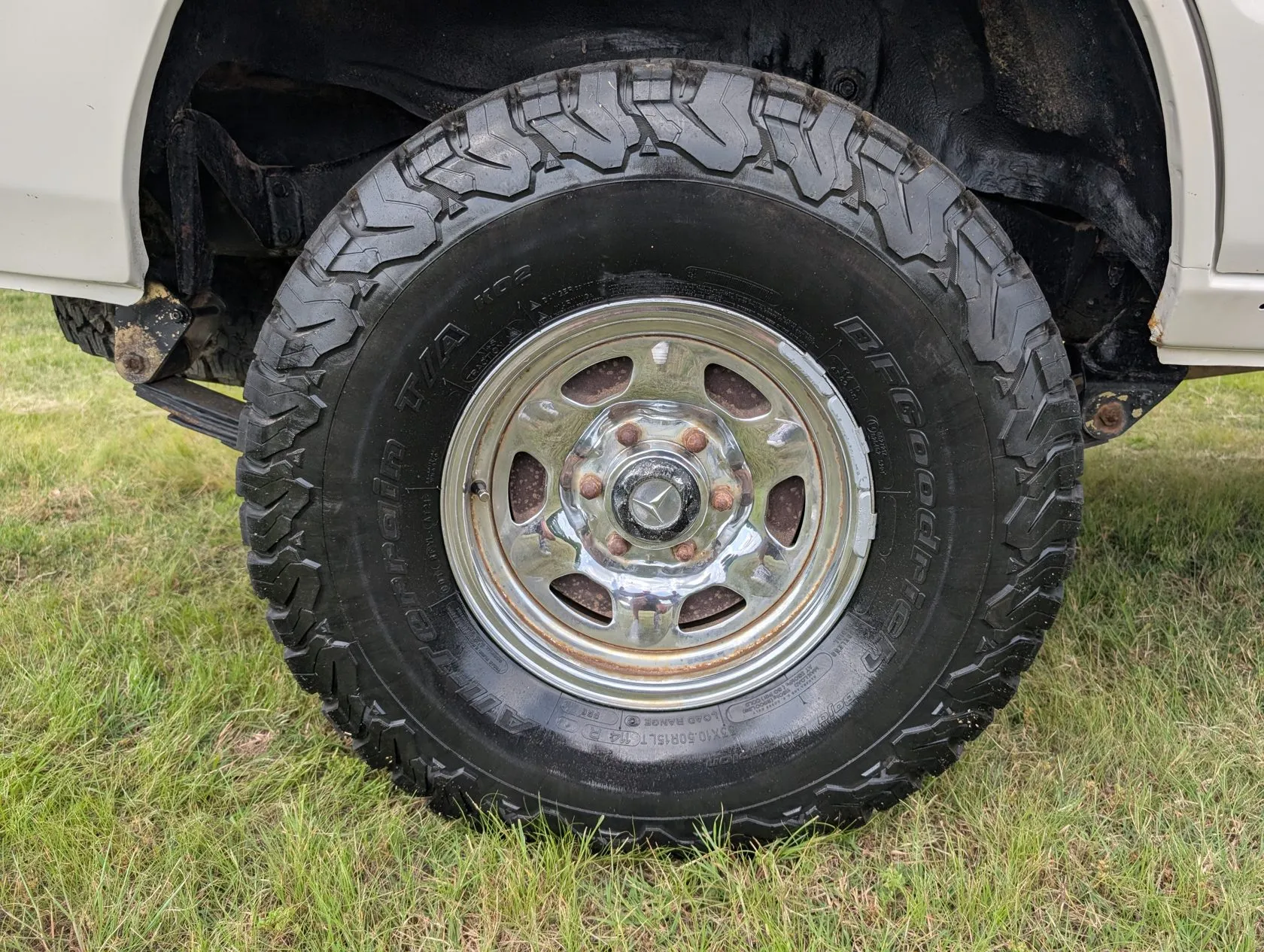
Factory 15-inch Toyota chrome steel wheels, six-lug
Tires
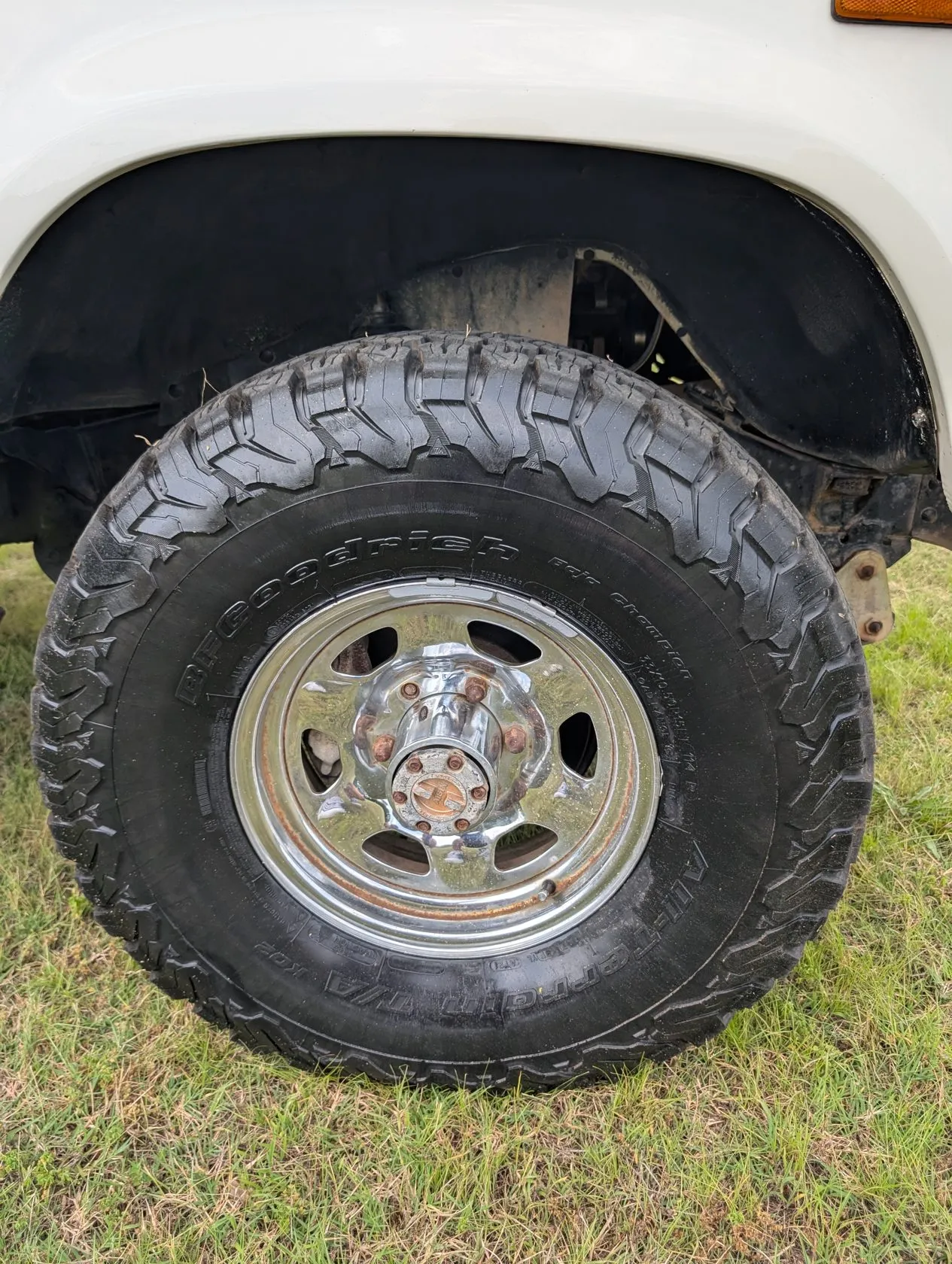
33x10.50R15LT BFGoodrich All-Terrain T/A KO2, Load Range C, about 7,000 miles
Steering
Gearbox rebuilt by Iron Pig Offroad, 2026
Brakes
Front discs, rear drums; pads replaced November 2024
Exhaust
Custom stainless system built by Iron Pig Offroad, 2025
Safety
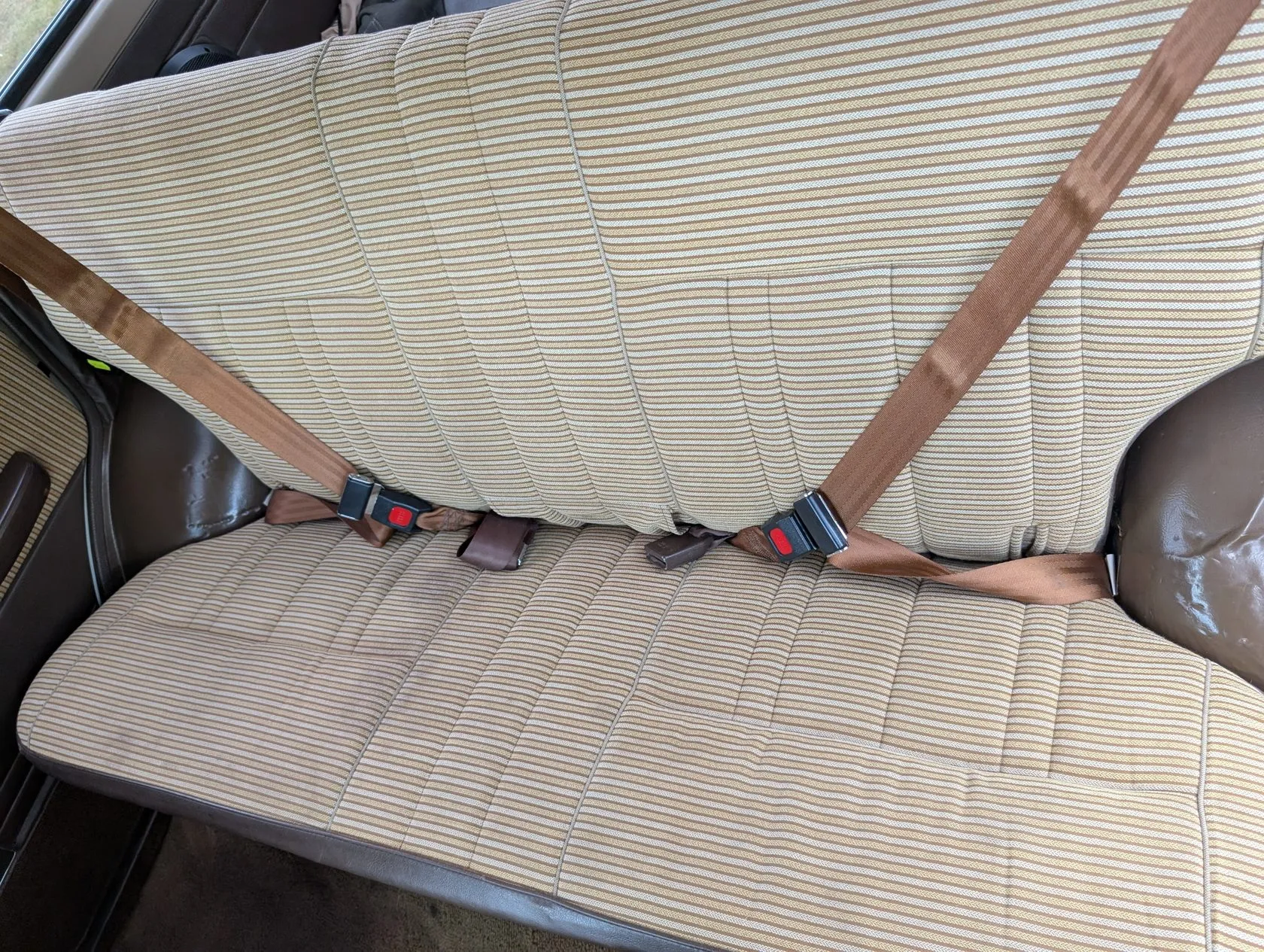
Rear-seat shoulder belts, added by the current owner. Not fitted from the factory.
Climate
Air conditioning, converted to R134a and blowing cold; rear defroster
Title
Virginia, in the seller's name

Fuel economy, honestly: 12+ MPG on the highway, 10+ combined.
Why this one

No rust, and it was fixed rather than covered

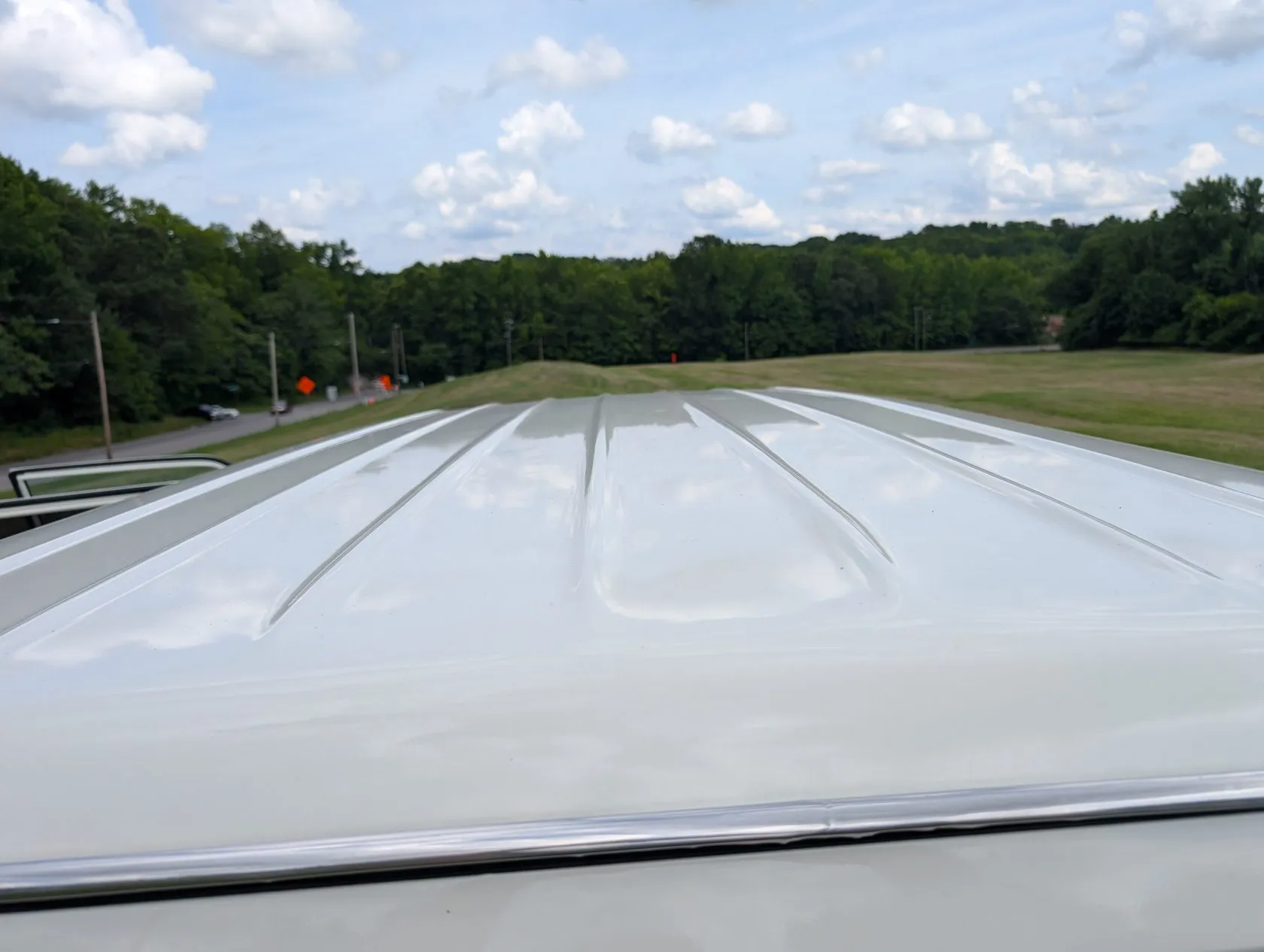
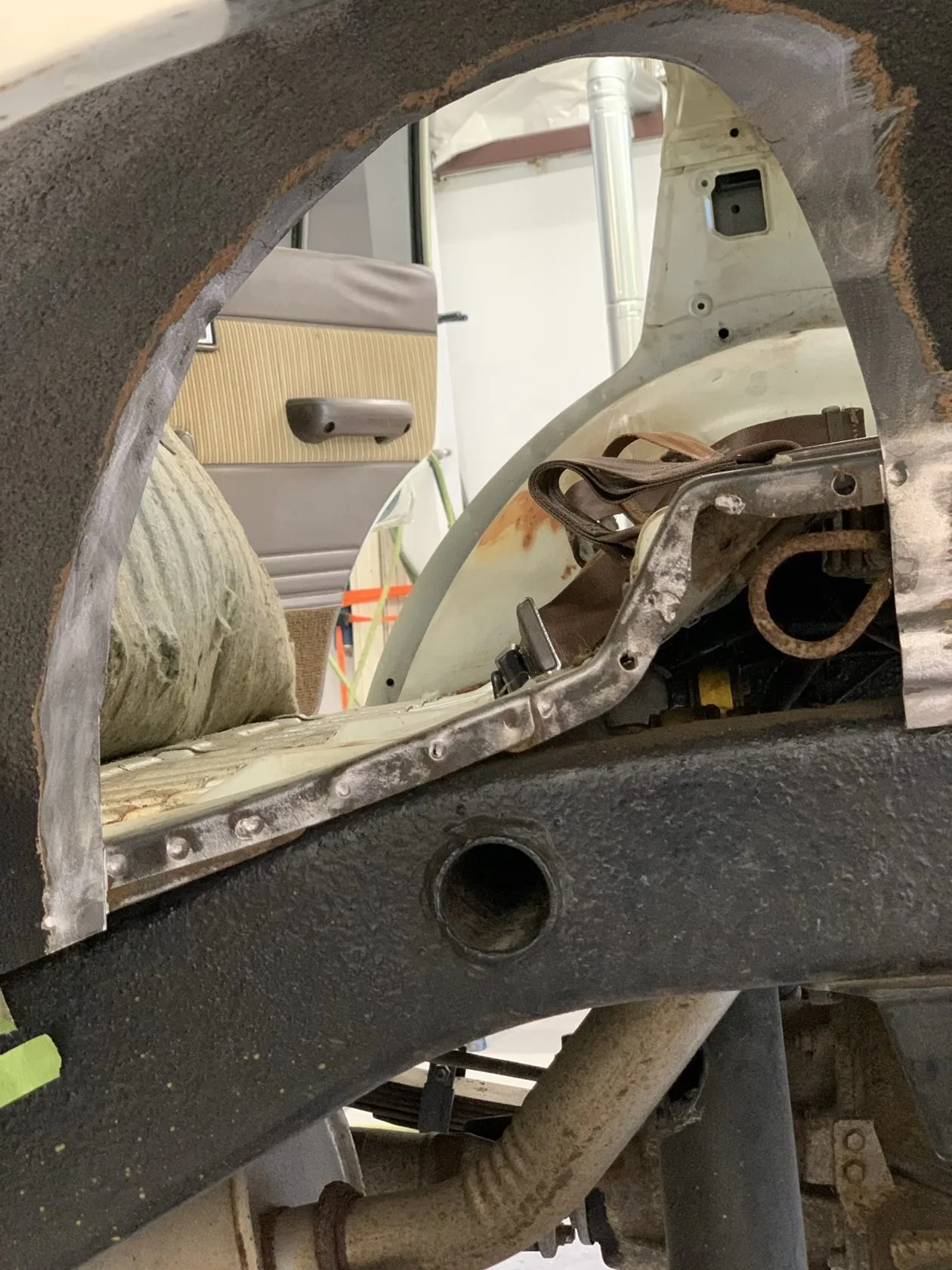
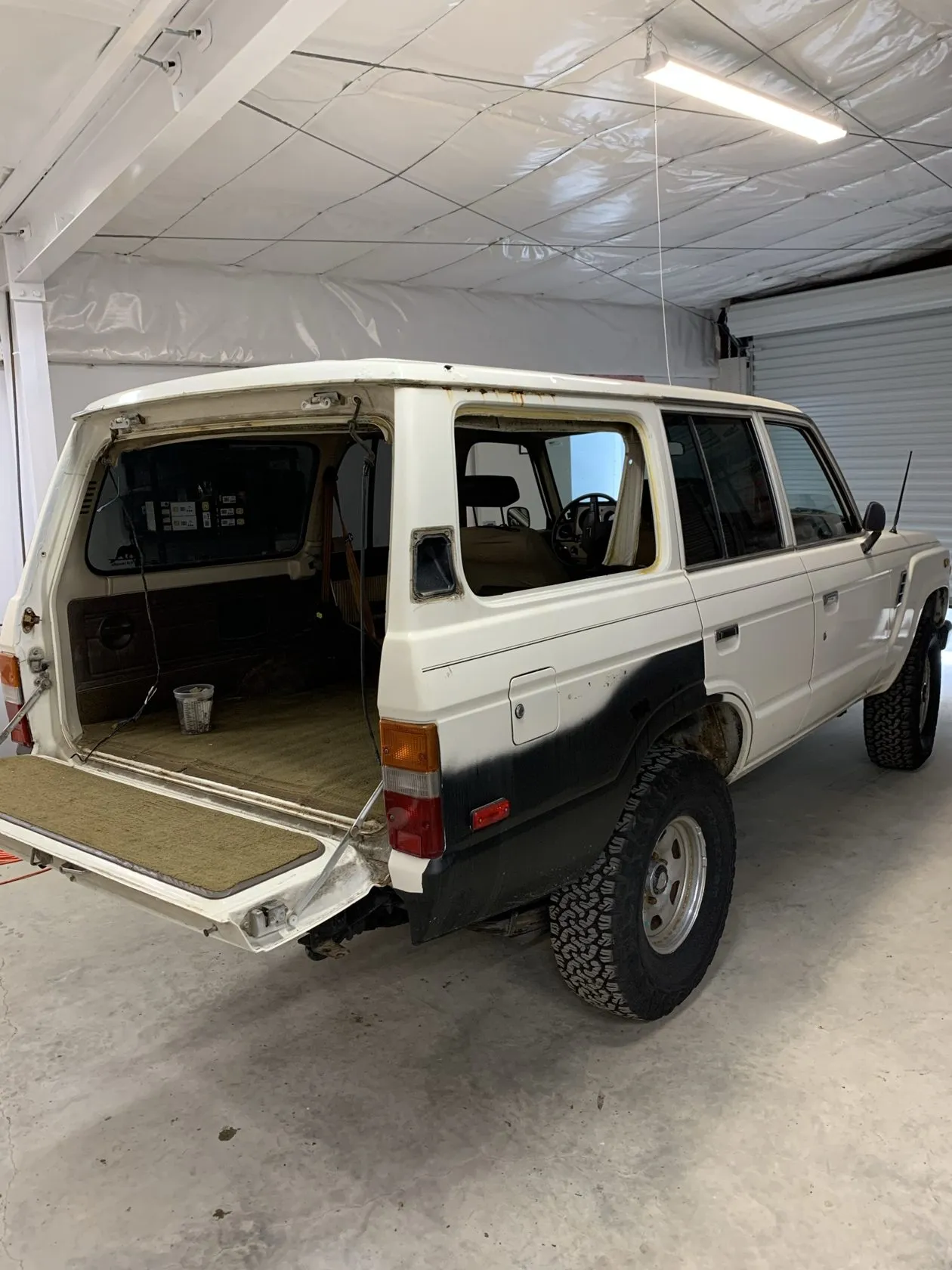
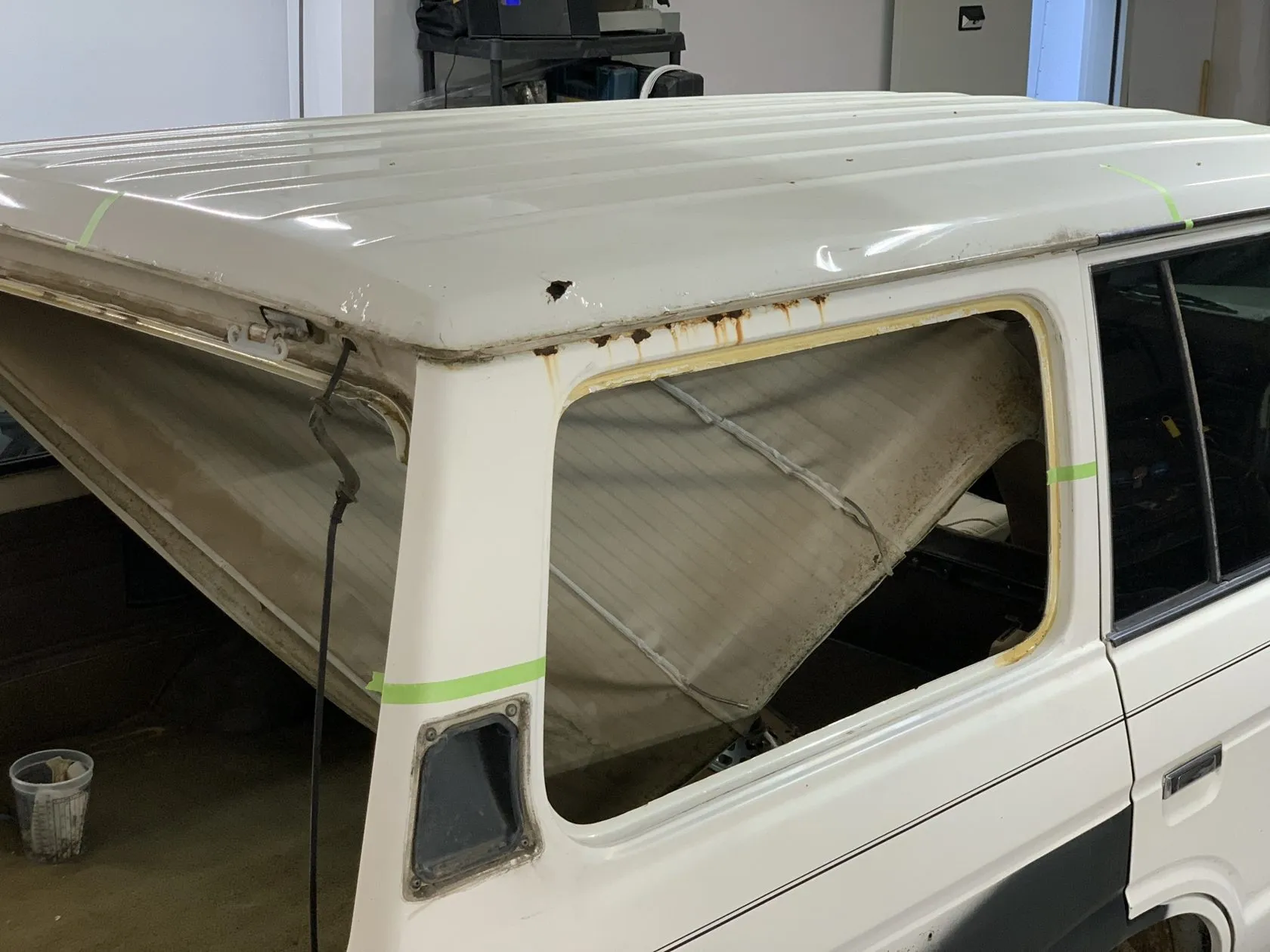
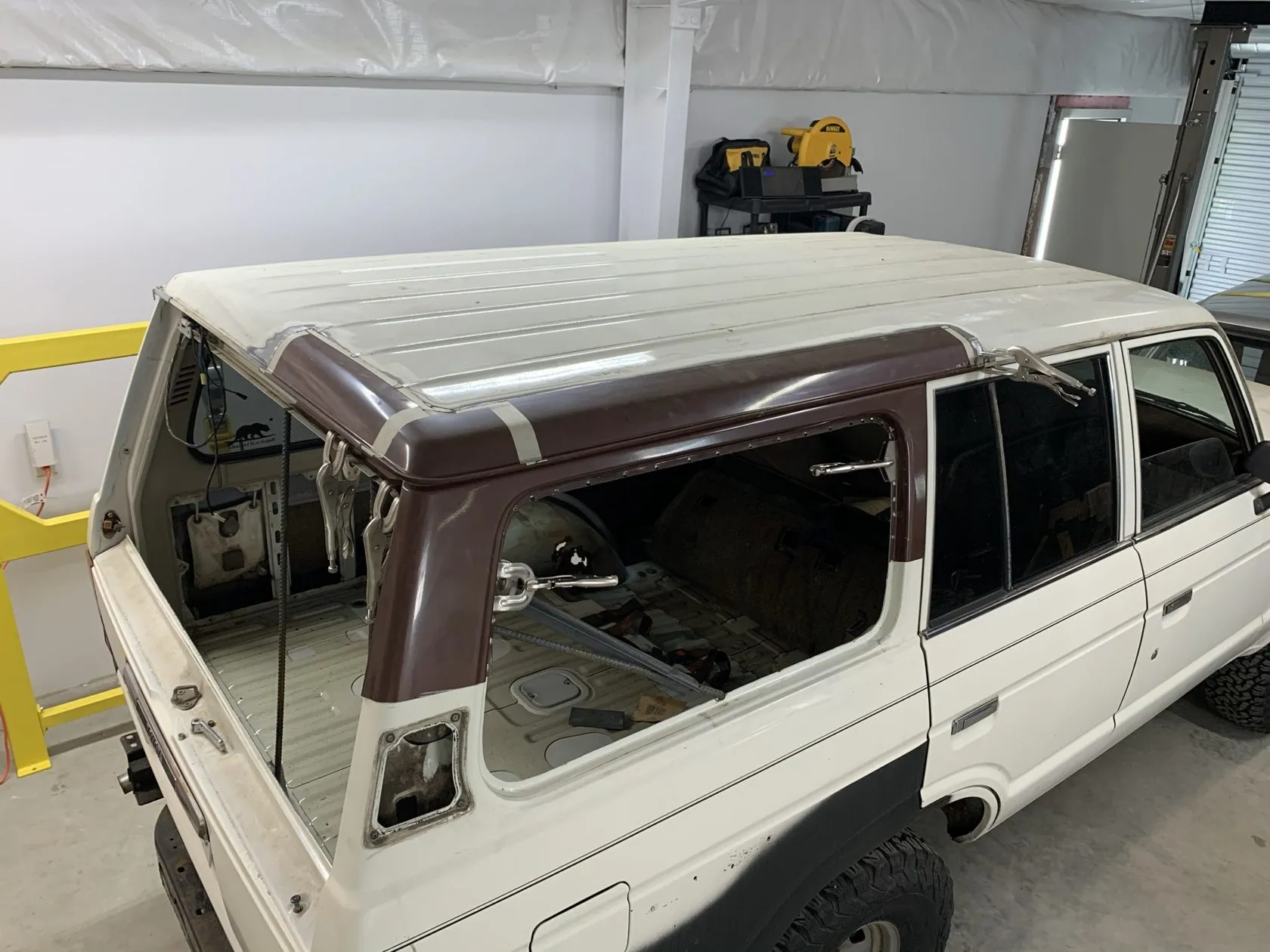
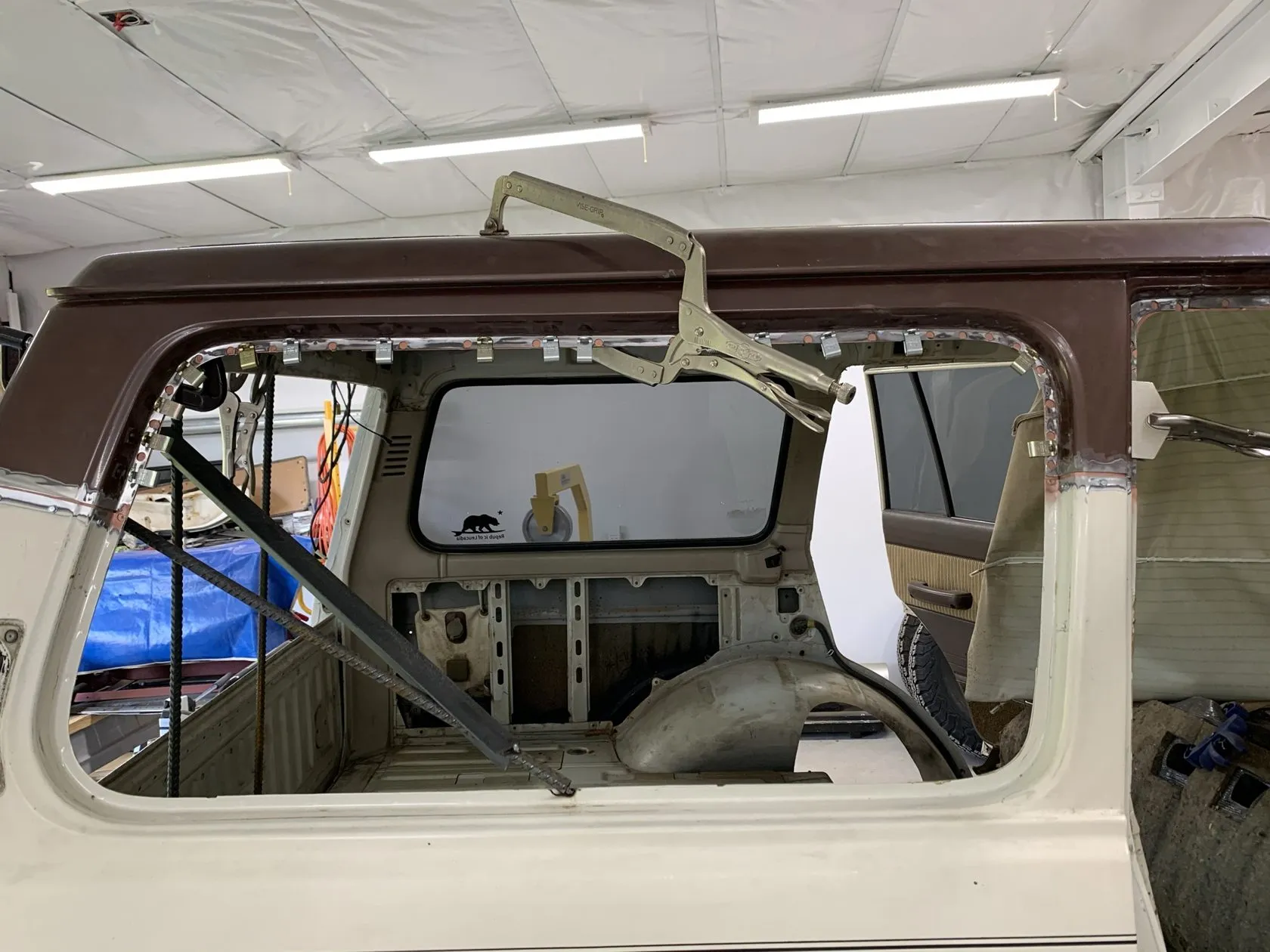
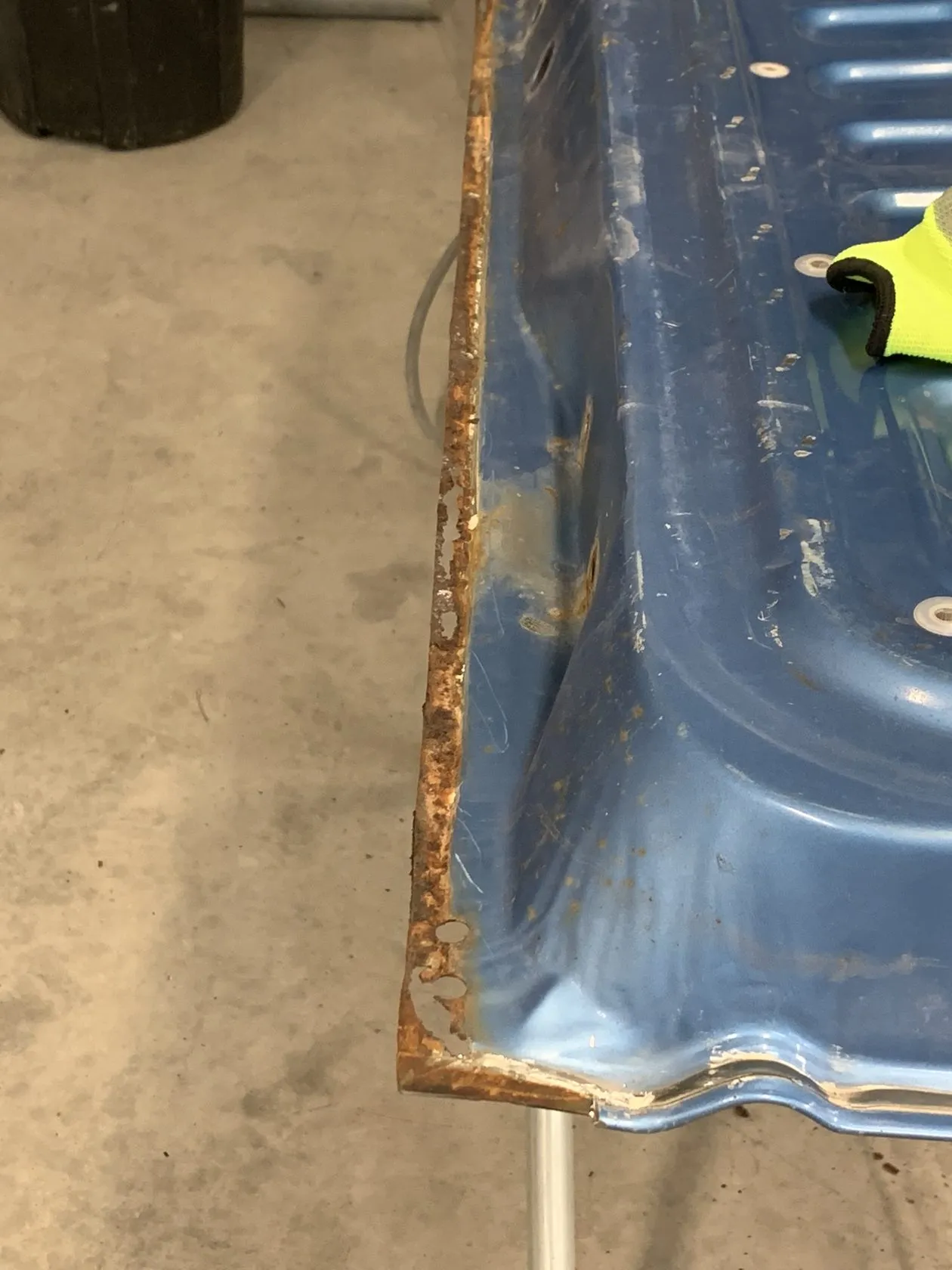
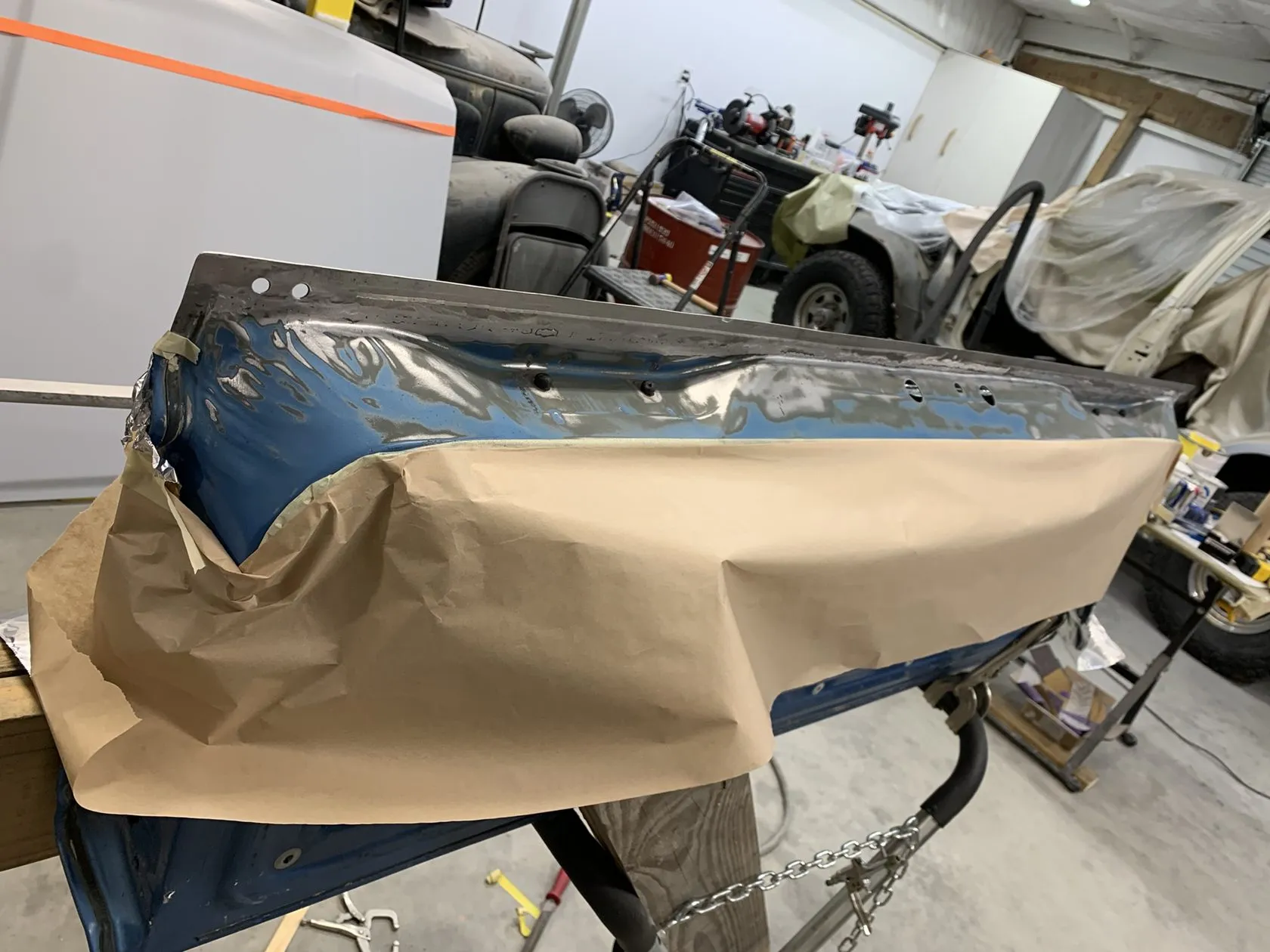
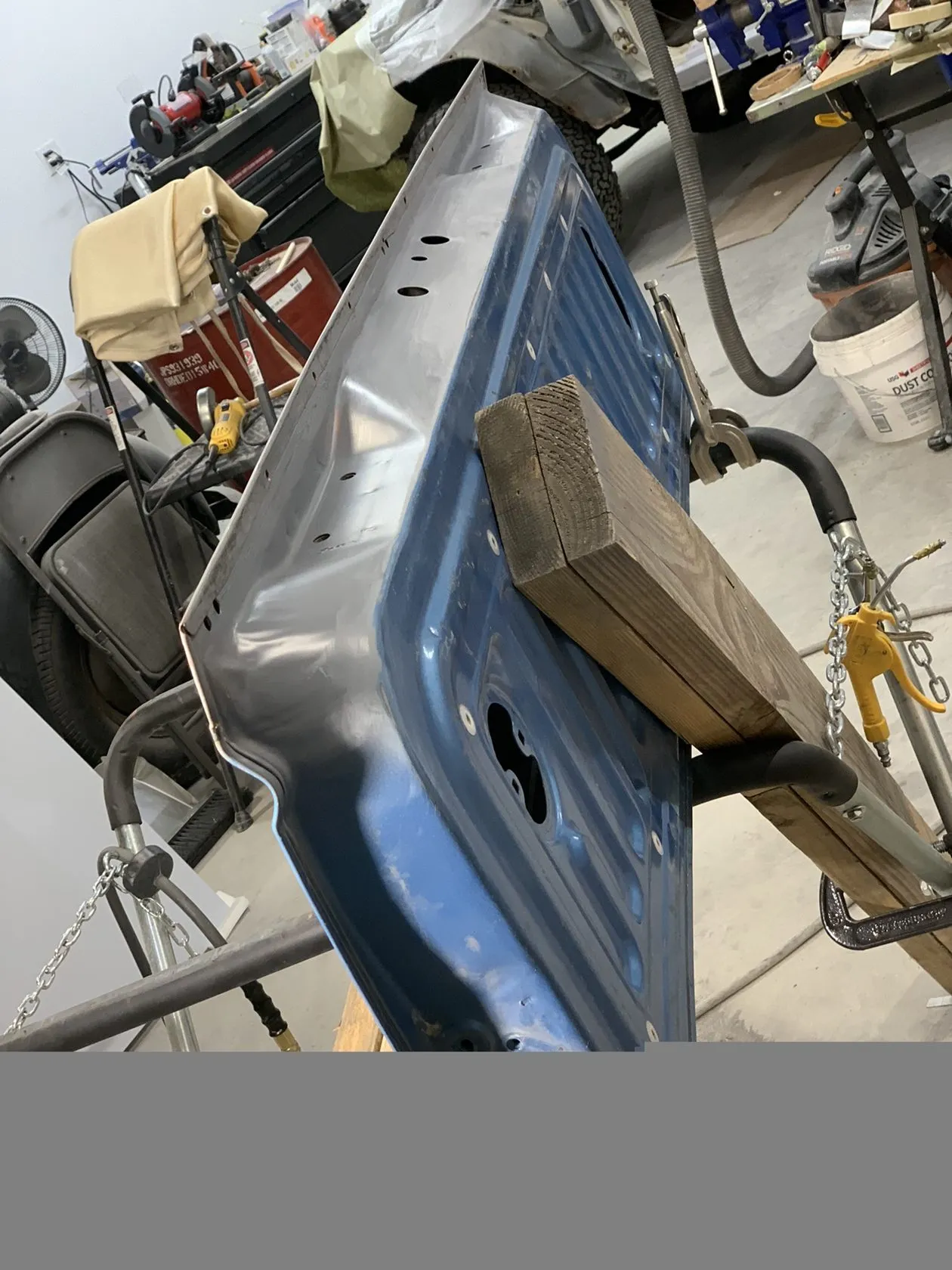
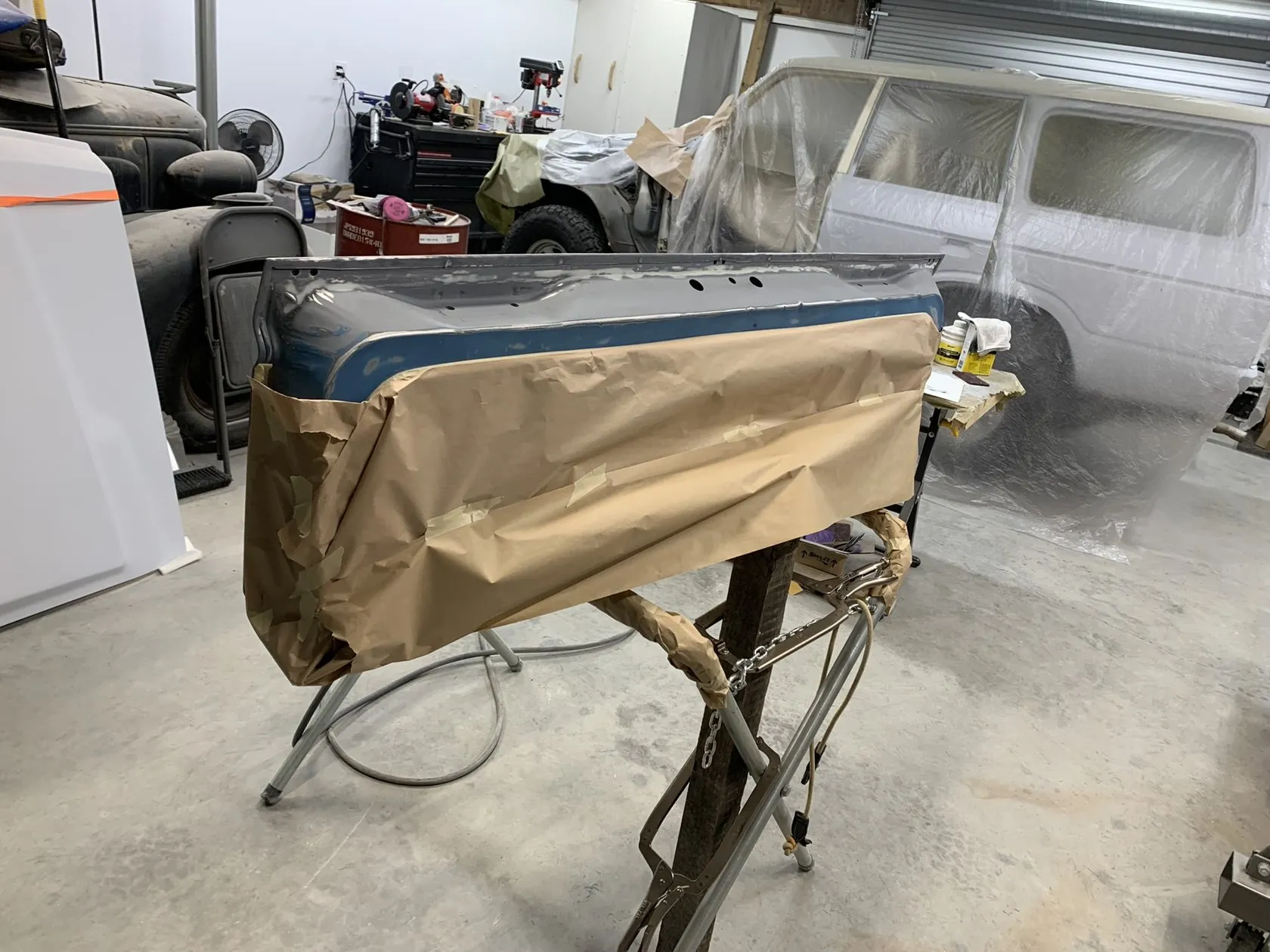
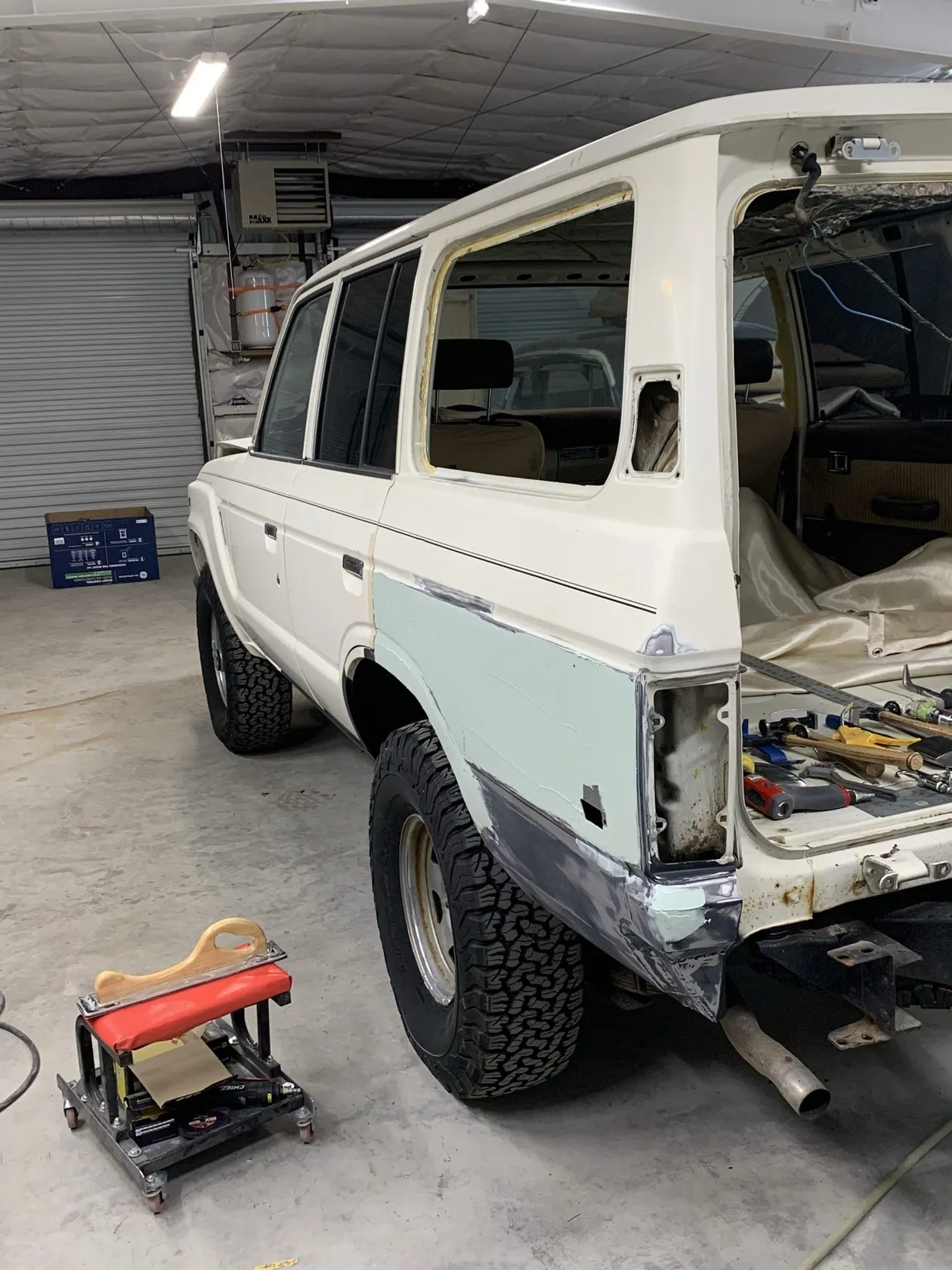
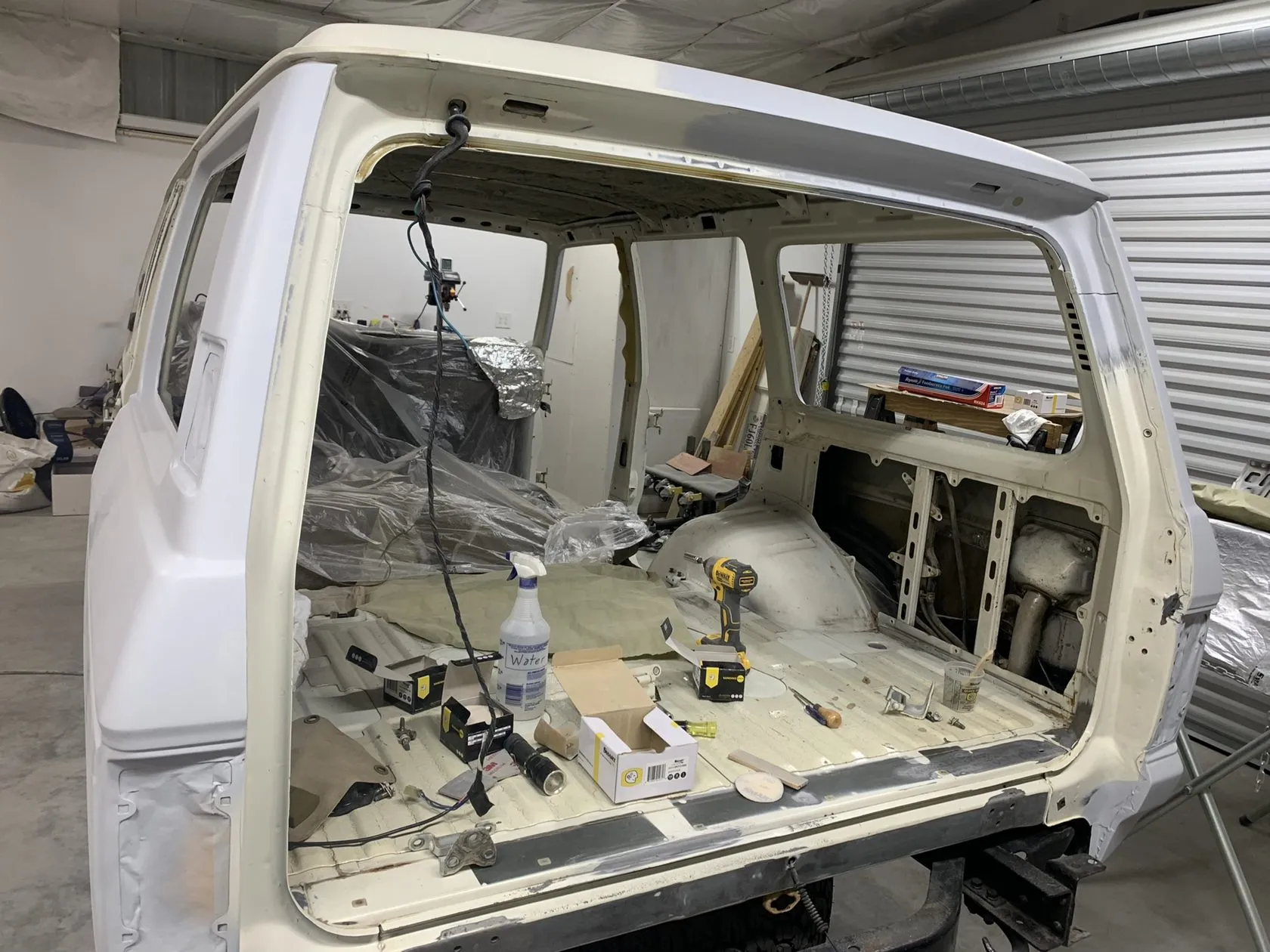
The rear quarter panels were roughly 80% bondo when the wagon was bought in 2014. They were cut out and replaced with hand-shaped steel. The original tailgate was too far gone to save, so it and the roof pan were replaced with donor material cut from a blue FJ60 — you can see that tailgate arrive in its original blue in the restoration photographs. The chassis was repaired, sectioned where needed, and coated.
Records from 2014 forward

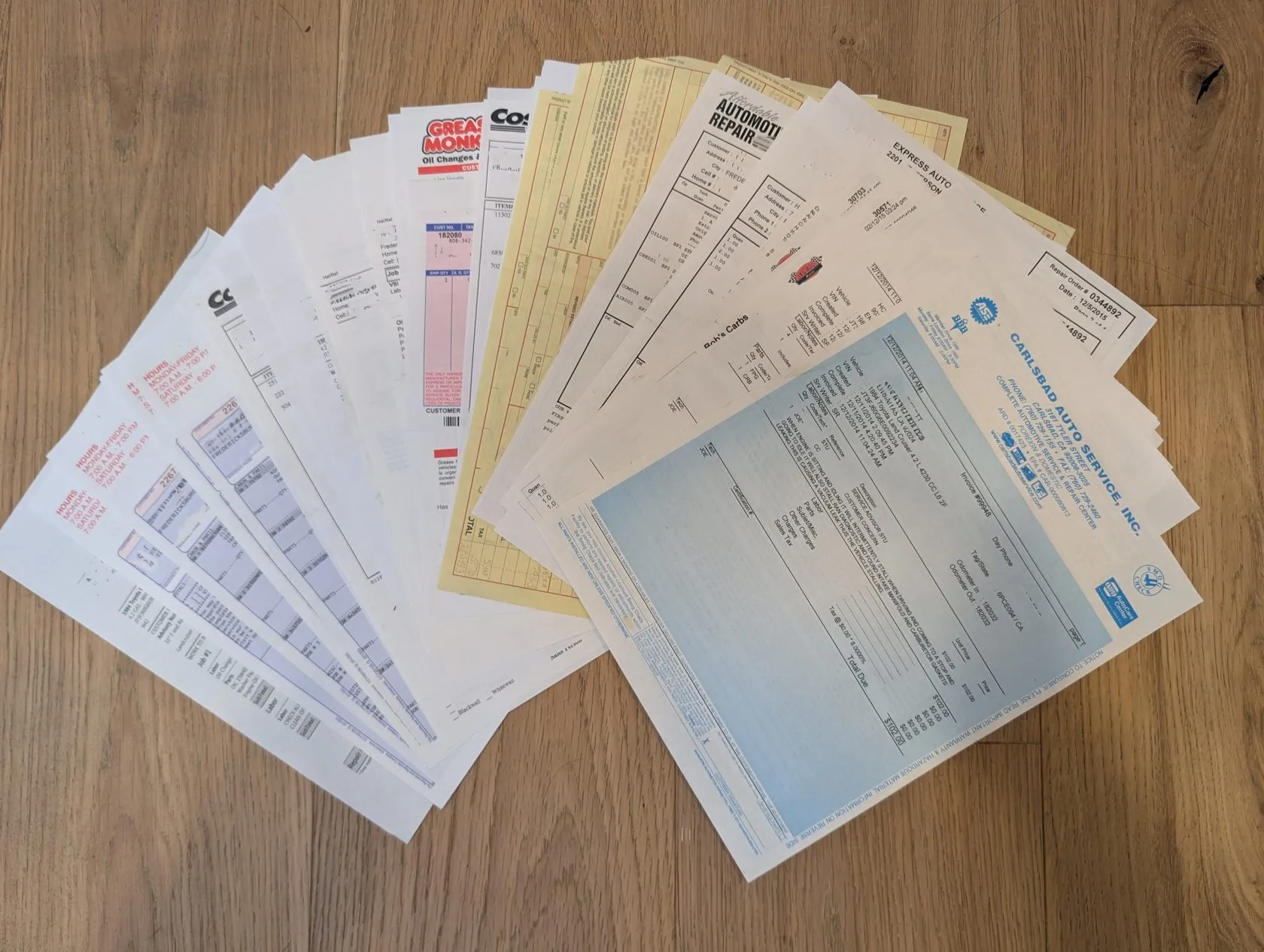
Every receipt and invoice from eleven years of ownership was scanned and entered into a spreadsheet — 174 line items from December 2014 to July 2026, with what each job cost. Most of the mechanical work was done by Iron Pig Offroad and the bodywork by Old Ride Side, with routine servicing at several other shops along the way.

Used, not stored

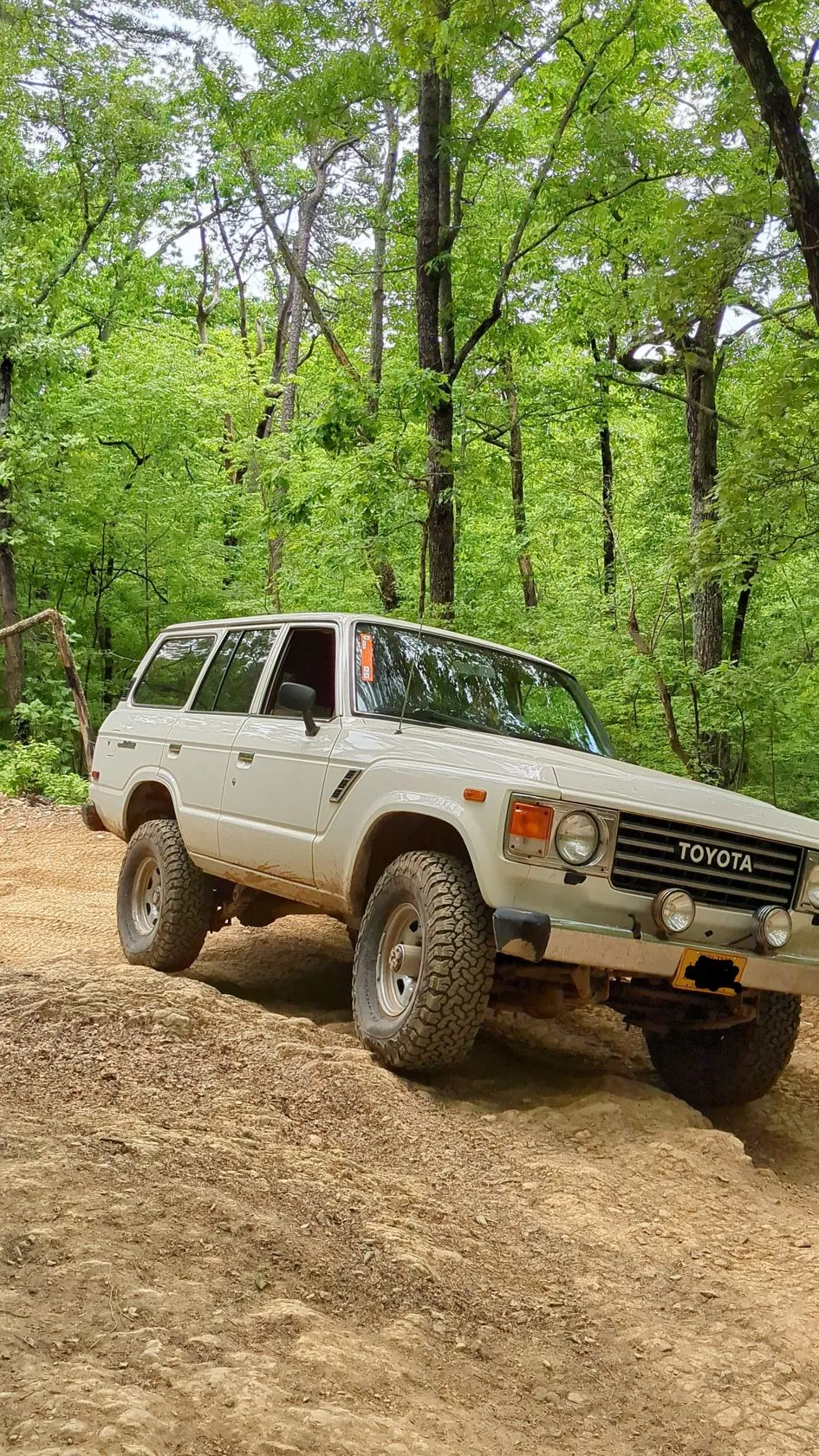
It has been a daily driver and a trail wagon. Two hours each way to the fire roads and trails in the George Washington & Jefferson National Forest, then three or more hours on the trail itself at idle to ten miles an hour. Four and more hours to the Relic Run at Uwharrie, with a great deal of trail at the far end. Paddleboards on the roof to the river, and idling through the school drop-off and pick-up line. That is three different loads on a forty-two-year-old drivetrain — highway speed, walking pace, and a lot of sitting still — which is also why the combined fuel figure reads the way it does. Rear-seat shoulder belts were added so the kids could ride in it. Nothing on the disclosure list below stops it being driven tomorrow — it is a wagon you can use, not a project you have to finish first.
Moving

Fire roads in the George Washington & Jefferson National Forest, the Relic Run at Uwharrie, and the interstate. Nothing here is staged.
Union Springs up to Flagpole Knob 1:04 Climbing the fire road in the George Washington & Jefferson National Forest. No sound — YouTube stripped the audio over the music that was playing.
Flagpole Knob in winter 0:47 The same climb with snow on the ground. Filmed at lower resolution than the rest.
Relic Run at Uwharrie 0:56 April 2024.
Highway driving 0:44 197,000 miles, at speed, with the gauges in frame.

Eleven years, in order

  1. 2014

    Bought from a seller in Temecula, California, who used it for camping and hunting trips in the Sierras and Anza-Borrego. It cut out on the drive home. First work at Carlsbad Auto Service in December: a vacuum leak diagnosed, the intake manifold gasket and carburetor base gasket replaced.

  2. 2015

    Bob's Carbs in Oceanside, California took over. Carburetor scoped and adjusted, the intake manifold gasket done again, front transmission seal, and the transmission and transfer case removed and resealed. Air conditioning converted to R134a in August.

  3. 2016

    A cross-country move to Virginia. Steering leak fixed and the choke cable replaced at Pullman's Auto; smog pumps installed and the A/C serviced. First work with Iron Pig Offroad.

  4. 2017

    Frame restoration at Iron Pig Offroad. Frame rust evaluated in April, then in November and December the corroded section replaced, the undercarriage powerwashed, corroded bolts removed, and the frame prepared and treated for corrosion. Front axle knuckle rebuilt the same year.

  5. 2018

    Air conditioning condenser replaced and a leak repaired. Routine servicing and Virginia state safety inspection, mostly at Merryman's Service Center.

  6. 2019-2020

    Little recorded beyond an oil change. The wagon was in regular use.

  7. 2021

    Body restoration begins at Old Ride Side Restoration. Interior trim and quarter glass removed, the rusted roof section cut out and replaced with a used section sourced from another FJ60, the tailgate replaced with a donor one from a blue FJ60 because the original was too rusted to save, and the inner wheel tubs repaired.

  8. 2022

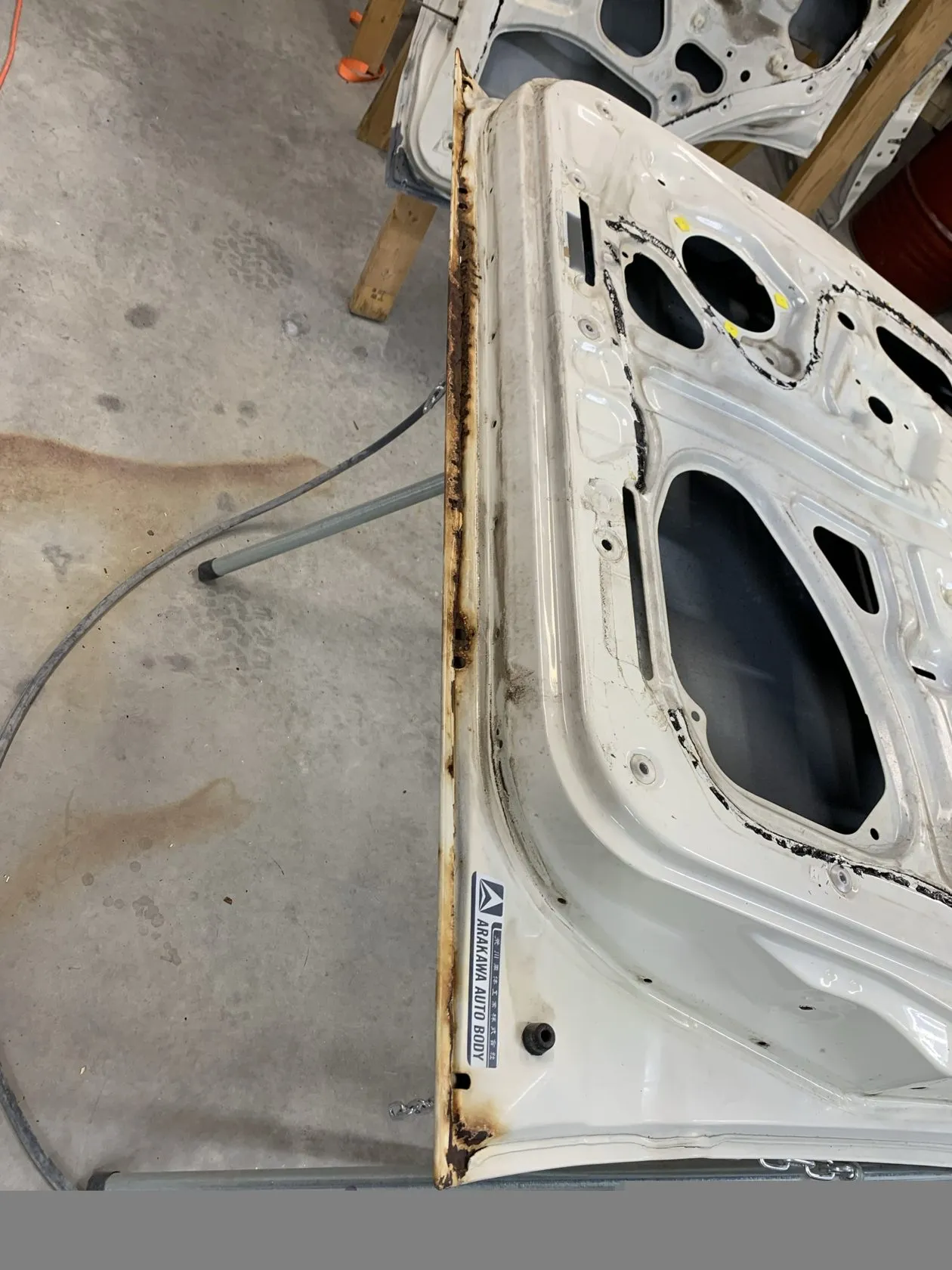
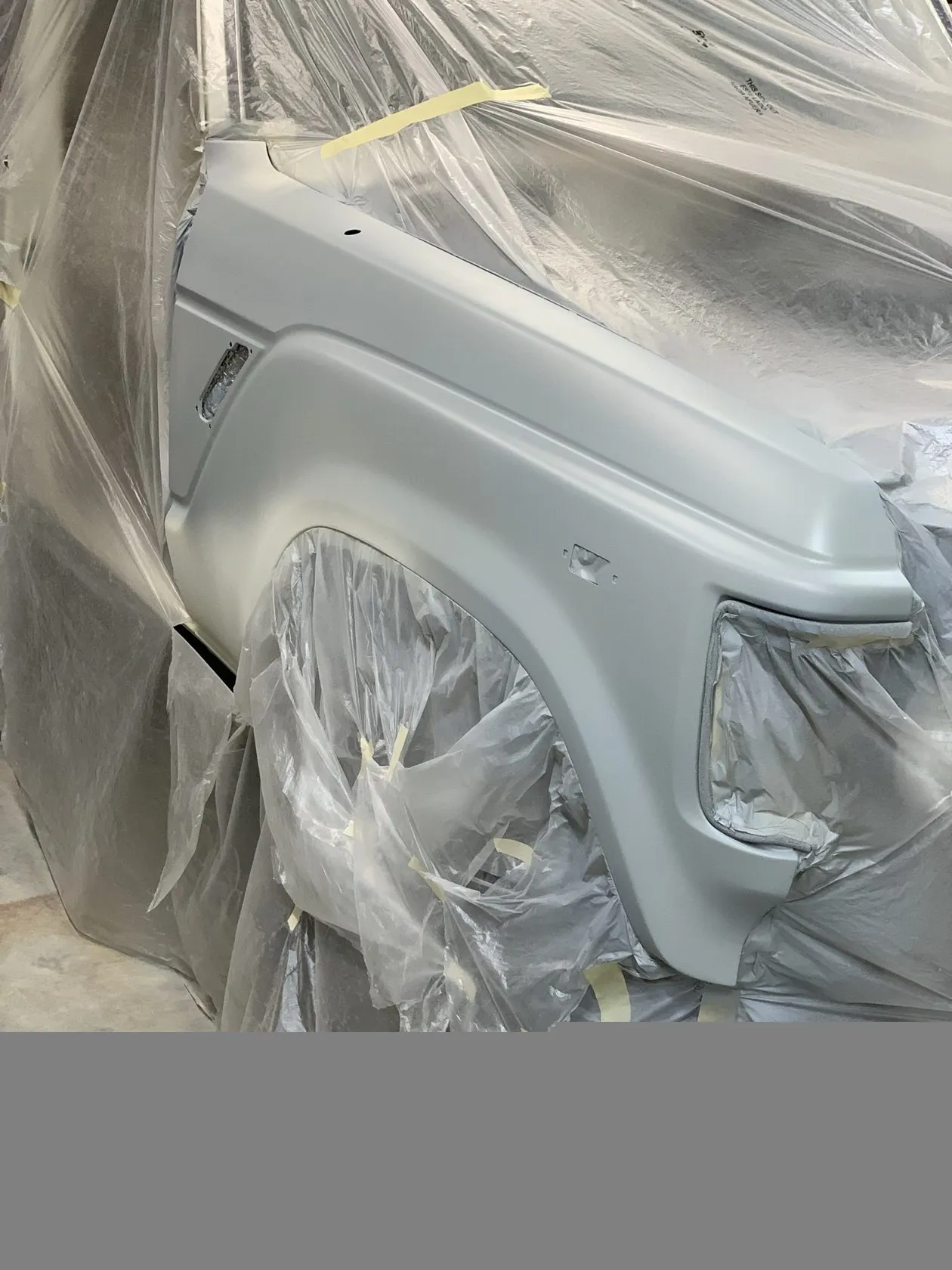
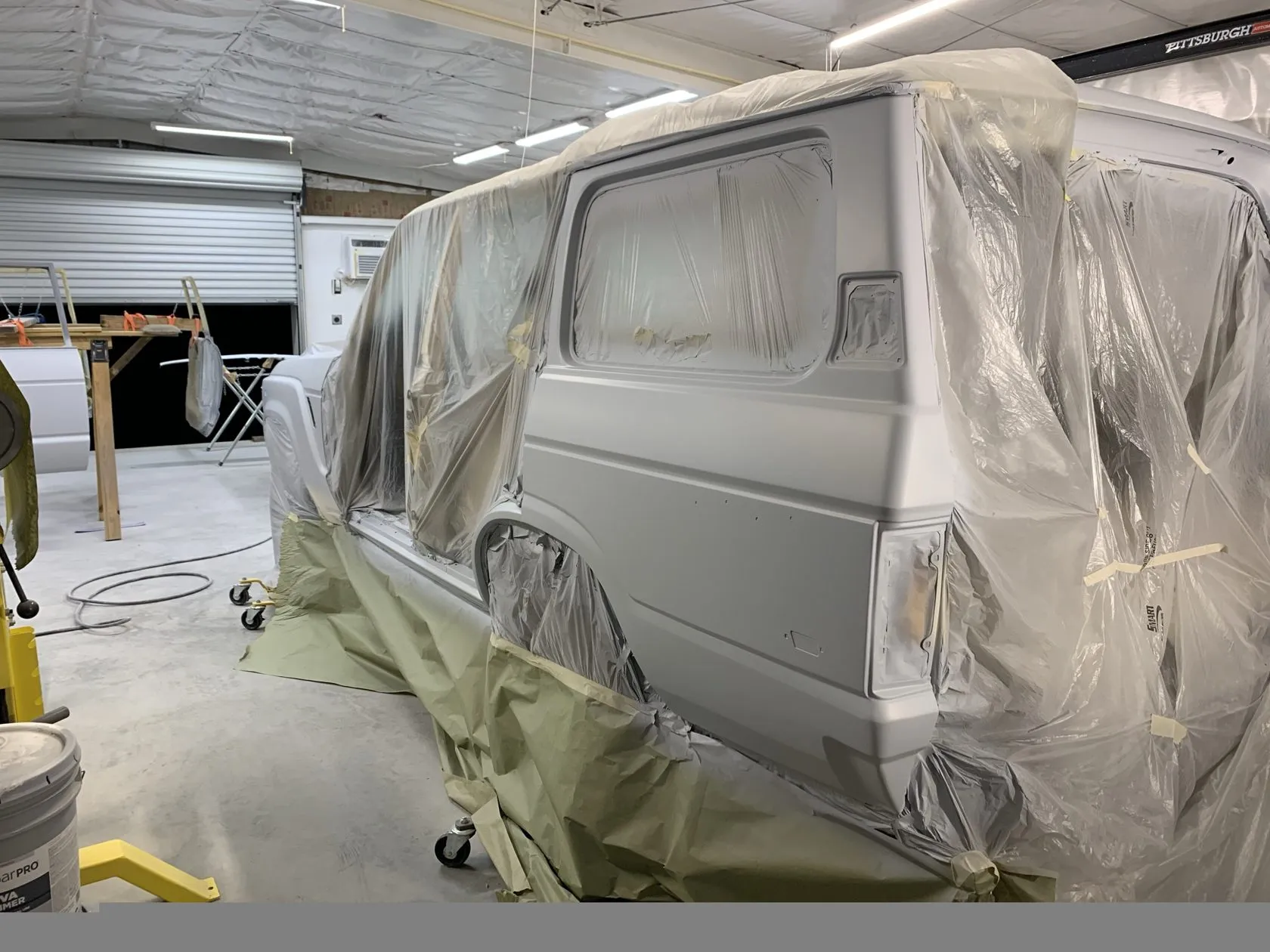
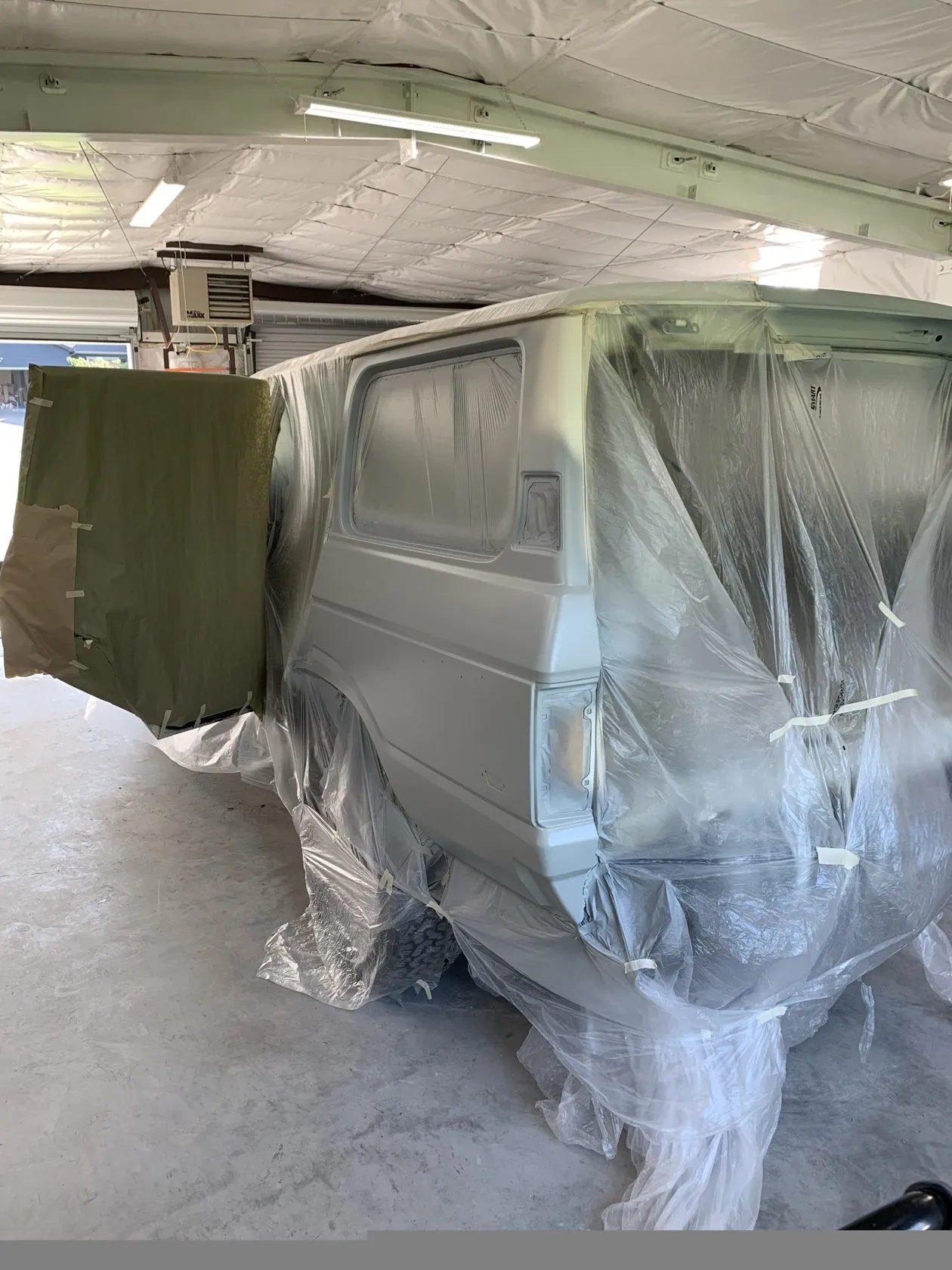
    Body restoration completed. Rust repaired in all four doors, both fenders and the lift gate; quarter panels hand-shaped in steel. Epoxy primer, block-sanded, then PPG paint and clear in factory white. The single largest year of work on the wagon.

  9. 2023

    Tires rotated and balanced, spark plugs and V-belt replaced.

  10. 2024

    Outstanding Toyota recalls carried out at Sheehy Toyota. Full four-wheel-drive service at Iron Pig Offroad — front and rear differentials and transfer case — plus oil and filter, sway bar end links and a front door lock repair in November.

  11. 2025

    Custom stainless exhaust system built and fitted at Iron Pig Offroad in March, invoiced in two payments totalling $2,266.14.

  12. 2026

    Choke cable replaced by the owner with an OEM assembly from Specter Off-Road — the cable itself was fine, the choke nut needed replacing, so the whole assembly went in. The old cable is included with the wagon.

  13. After the log

    Steering gearbox rebuilt at Iron Pig Offroad, correcting the off-centre wheel and wander that came with the lift. This is the one job with no invoice in the log below — a reprint has been requested from the shop and will be added when it arrives.

See the full maintenance log

What is wrong with it

A wagon this old with this many miles has faults. Here are all of the ones I know about. If I find another, it goes on this list.

  • It does not start on the first attempt when cold

    It has never failed to start. When it is cold out, or it has sat for a few days, it takes three or four cycles of gas, choke, crank — and then it runs fine. This is ordinary behavior for a carbureted engine. The whole choke assembly was replaced with an OEM cable from Specter Off-Road in July 2026 and the behaviour did not change, so expect the three or four cycles. The old cable goes with the wagon.

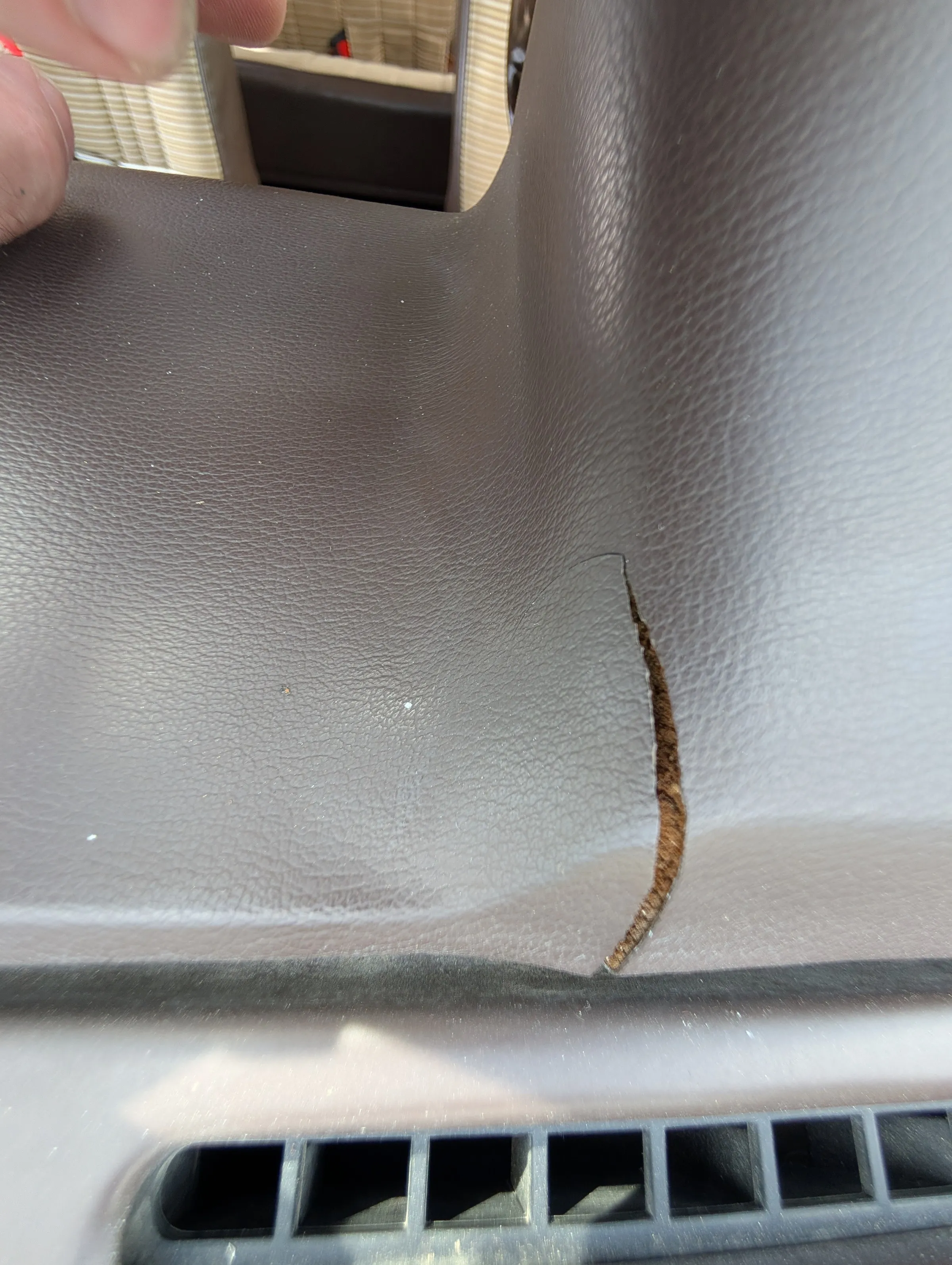
  • The dashboard is cracked

    The usual FJ60 dash cracks. There is a dash cover over it and they are not progressing. Not structural, but it is cracked underneath.

    The cracked dashboard photographed close, a split running across the vinyl surface.
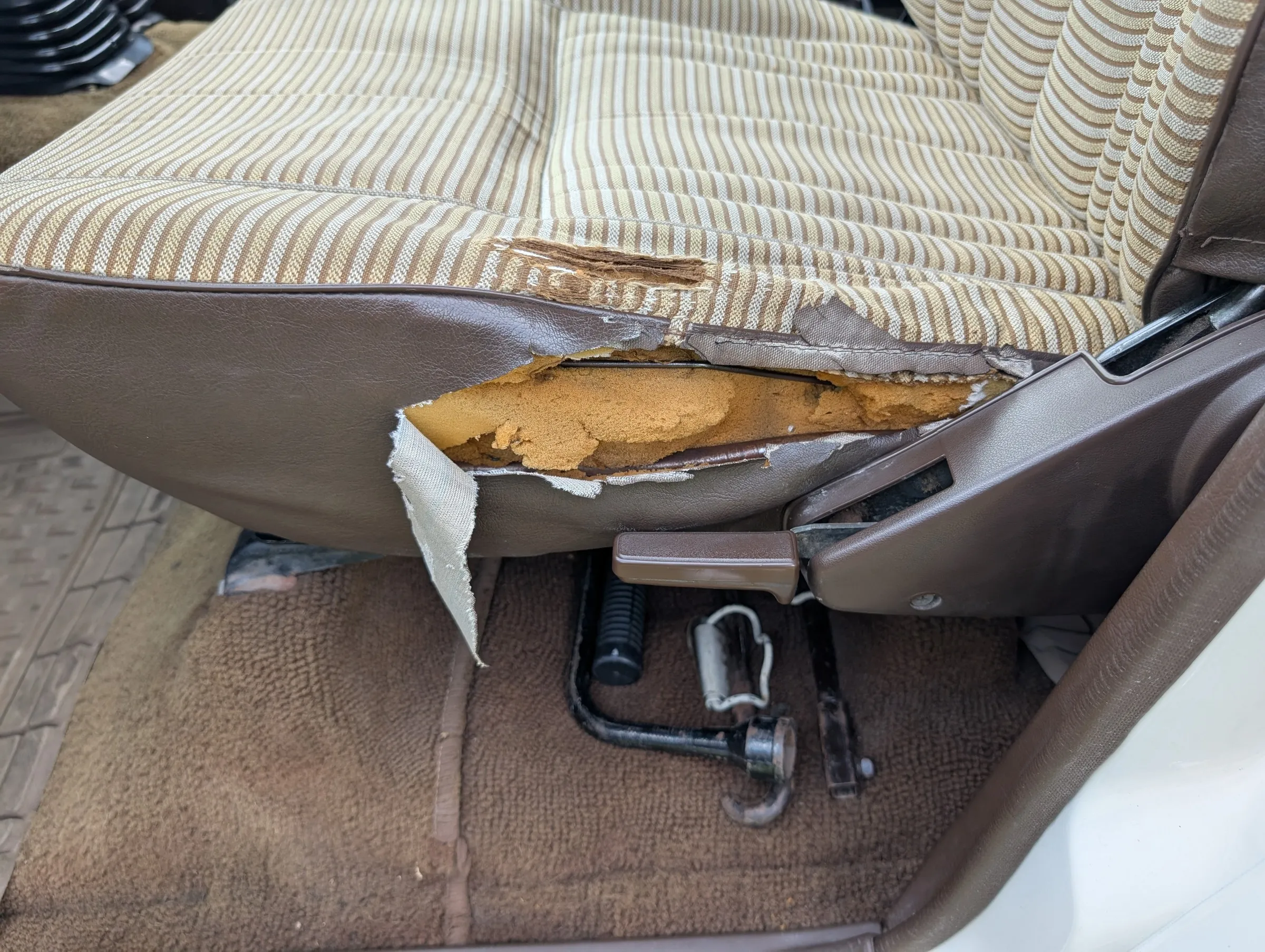
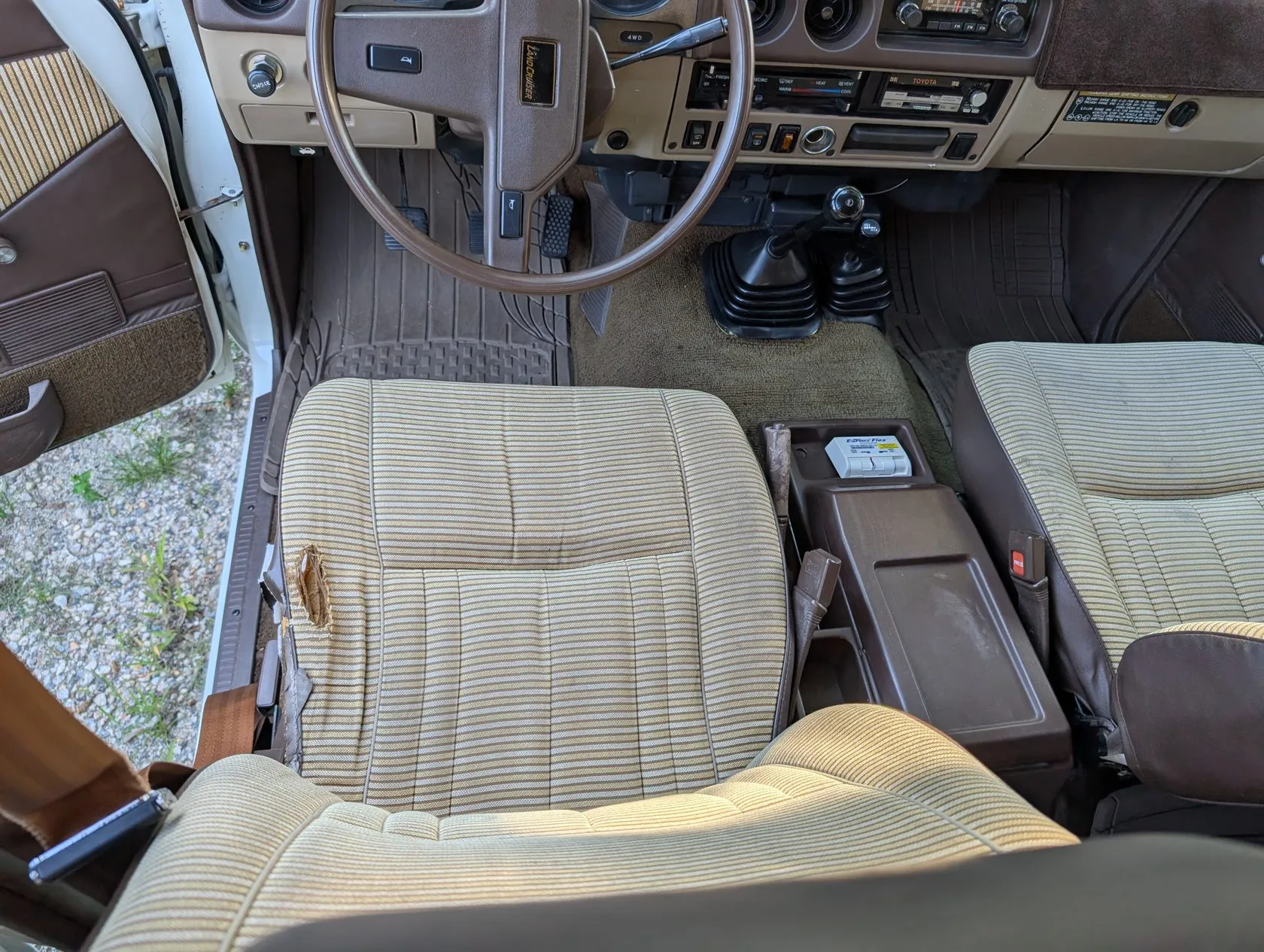
  • The driver's seat bottom is ripped and the outer edge is worn

    Visible in the interior photographs. A seat cover was kept on it for about twelve years and the wear has not got worse. The seats are original and still comfortable for a day-long trail ride. If the seller were keeping the wagon he would rebuild the foam and patch the side.

    The torn driver's seat, the upholstery split open with the foam beneath exposed.
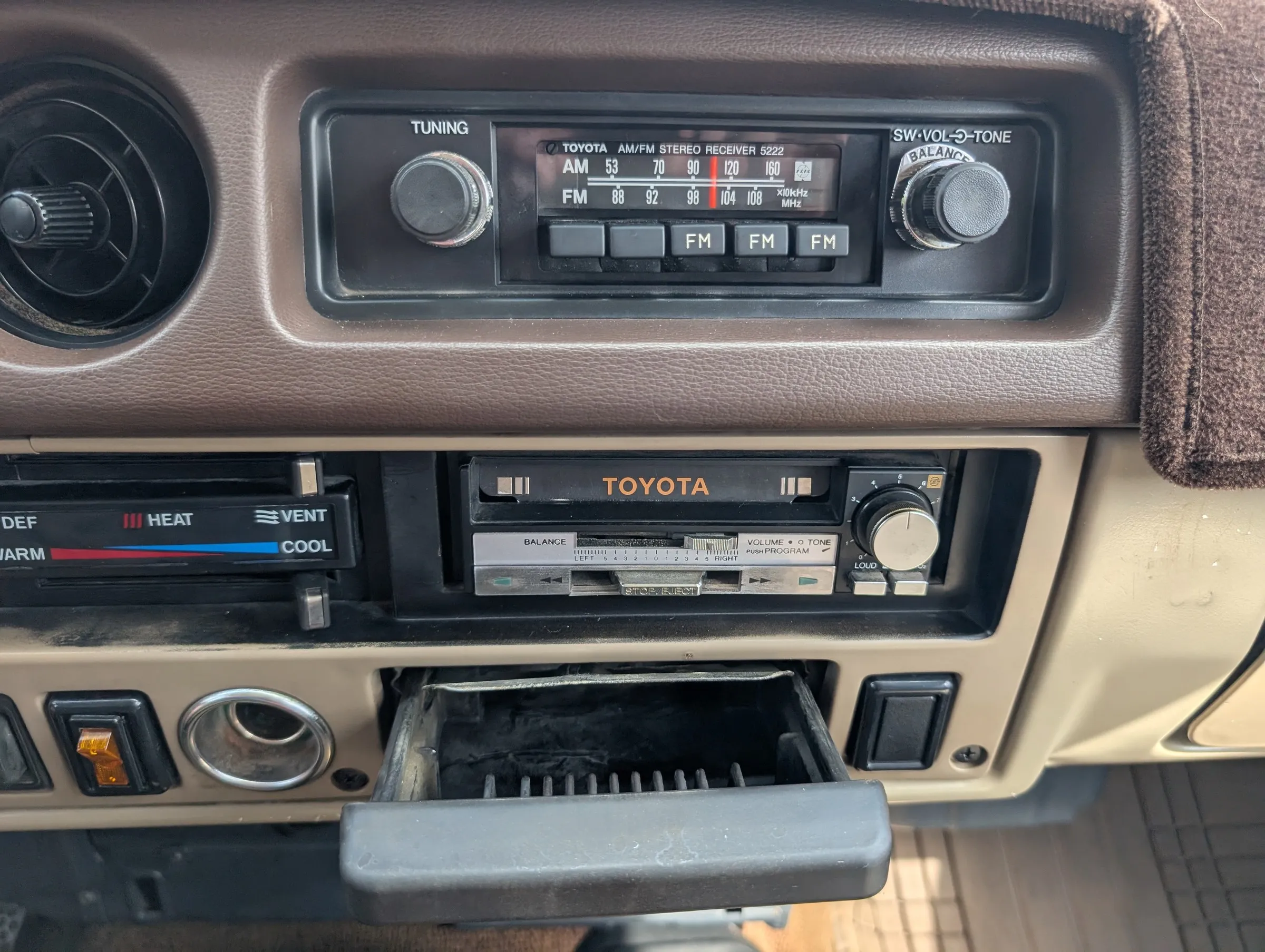
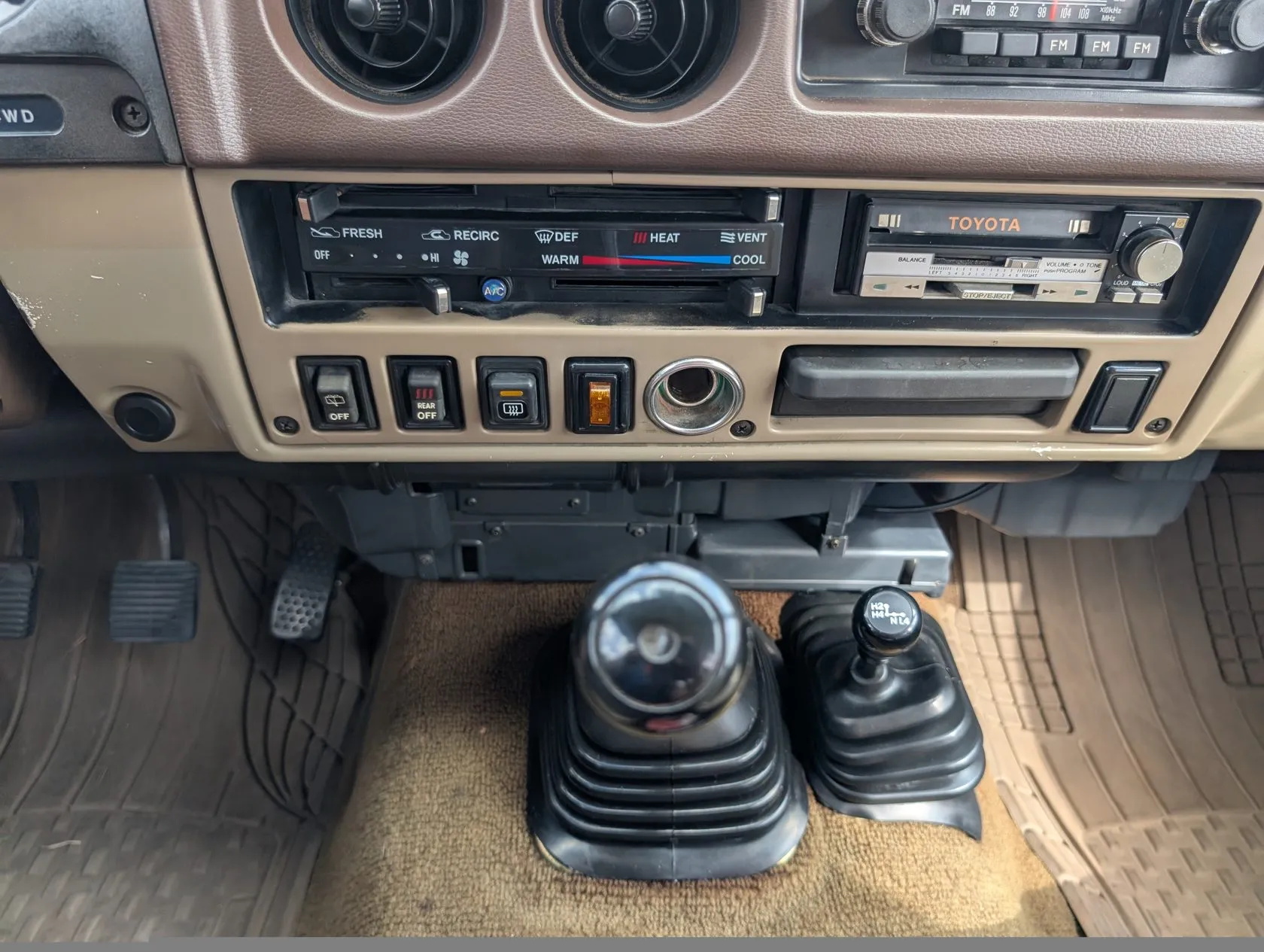
  • The cassette deck does not work

    The radio works. The tape deck does not.

    The centre stack with the radio and cassette deck. The radio works; the tape deck does not.
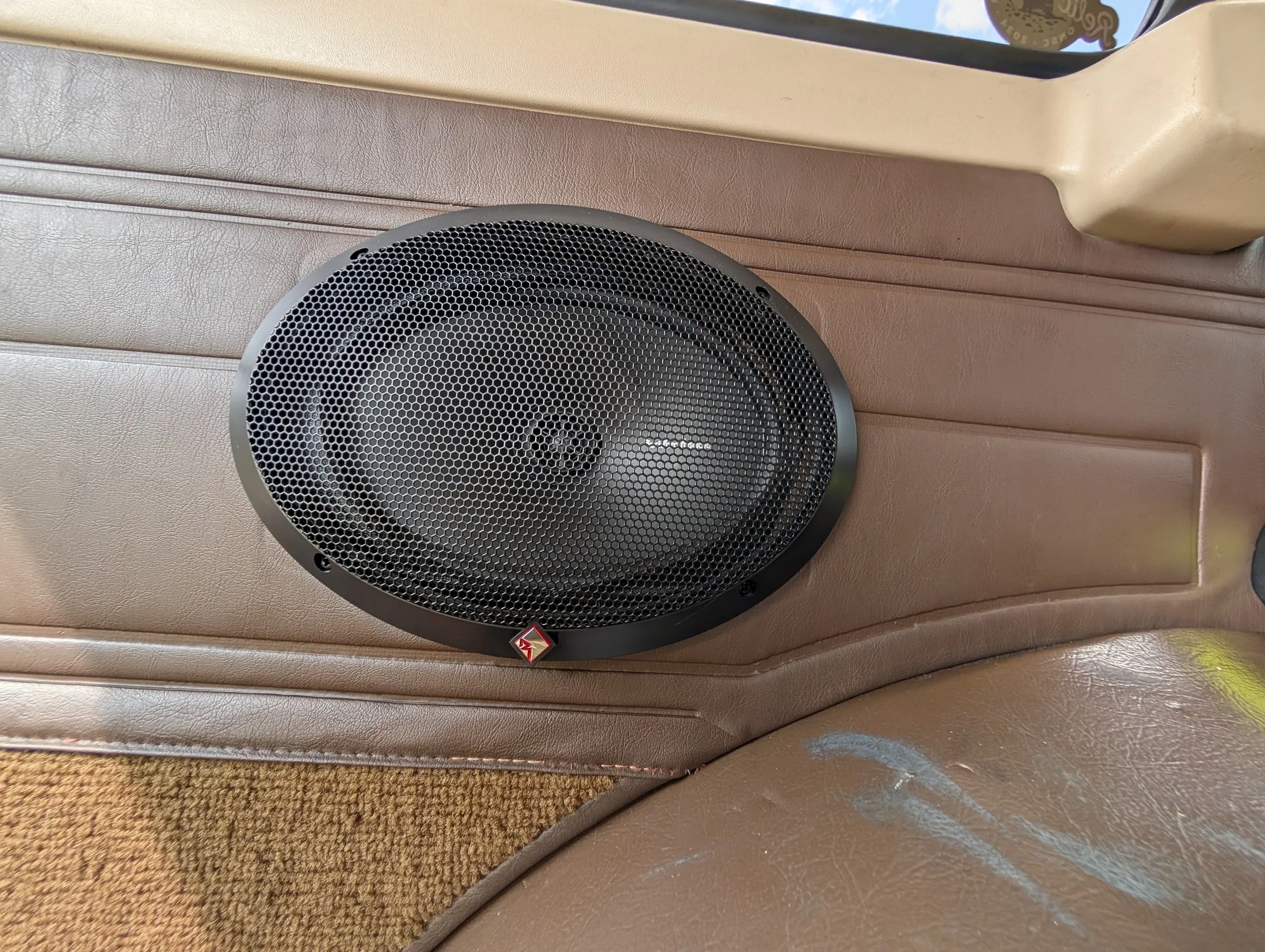
  • The speaker wiring needs replacing

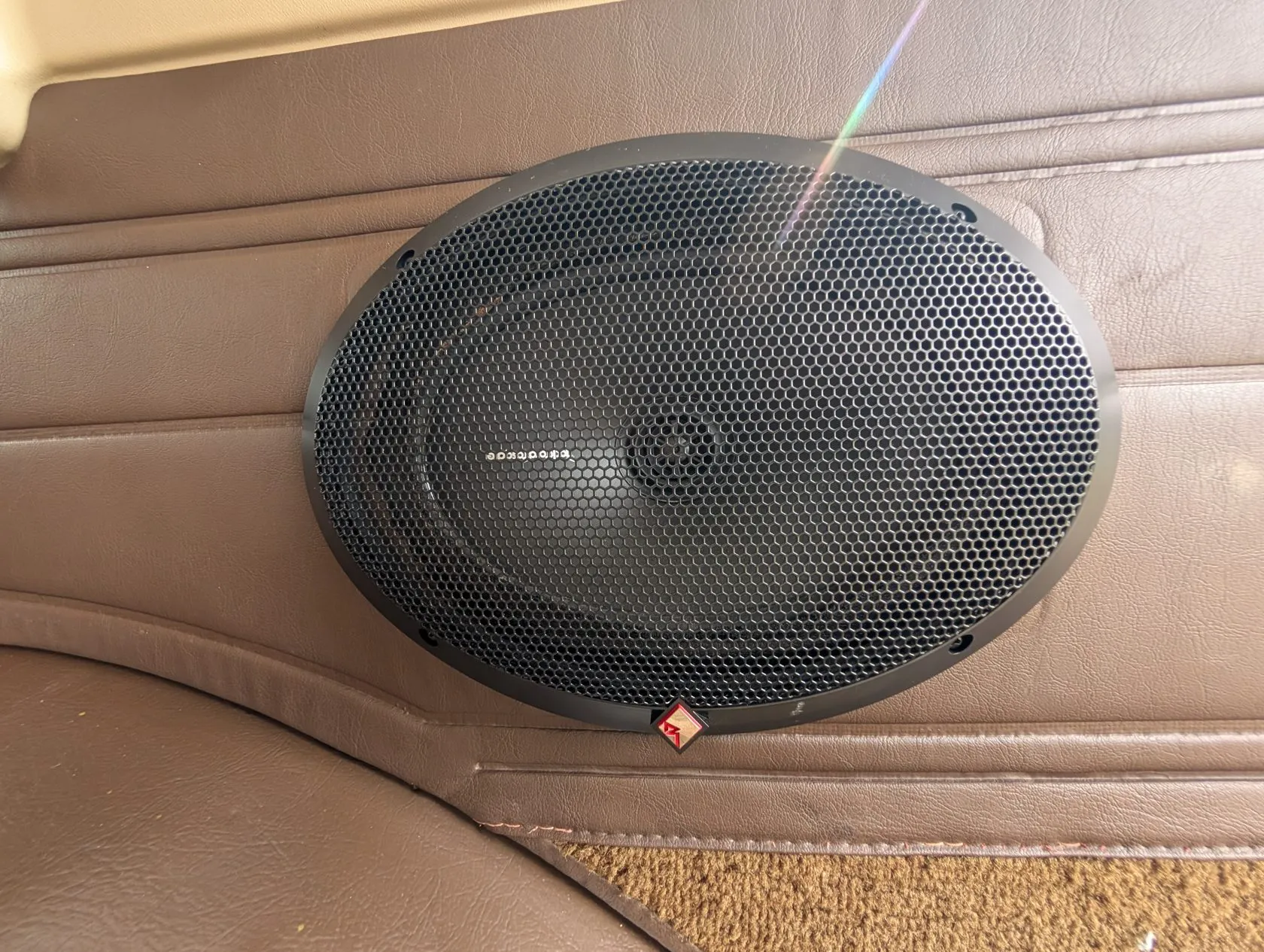
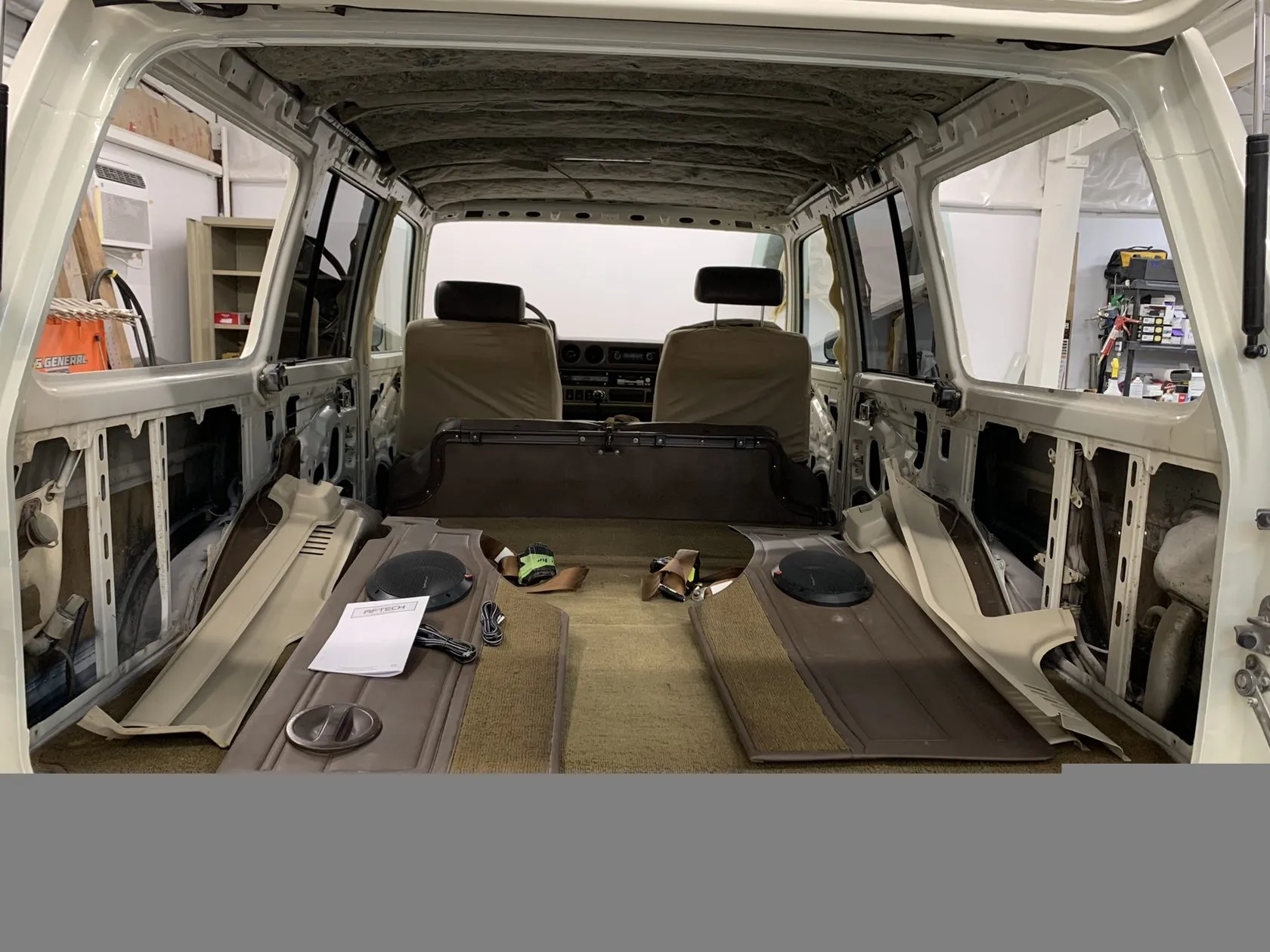
    New Rockford Fosgate speakers went in during the restoration, but the installer reused the old spliced wire. A day-or-two job, because the dash has to come out to do it.

    A speaker in the interior trim. The speakers are new, but the wiring behind them is the old spliced run that needs replacing.
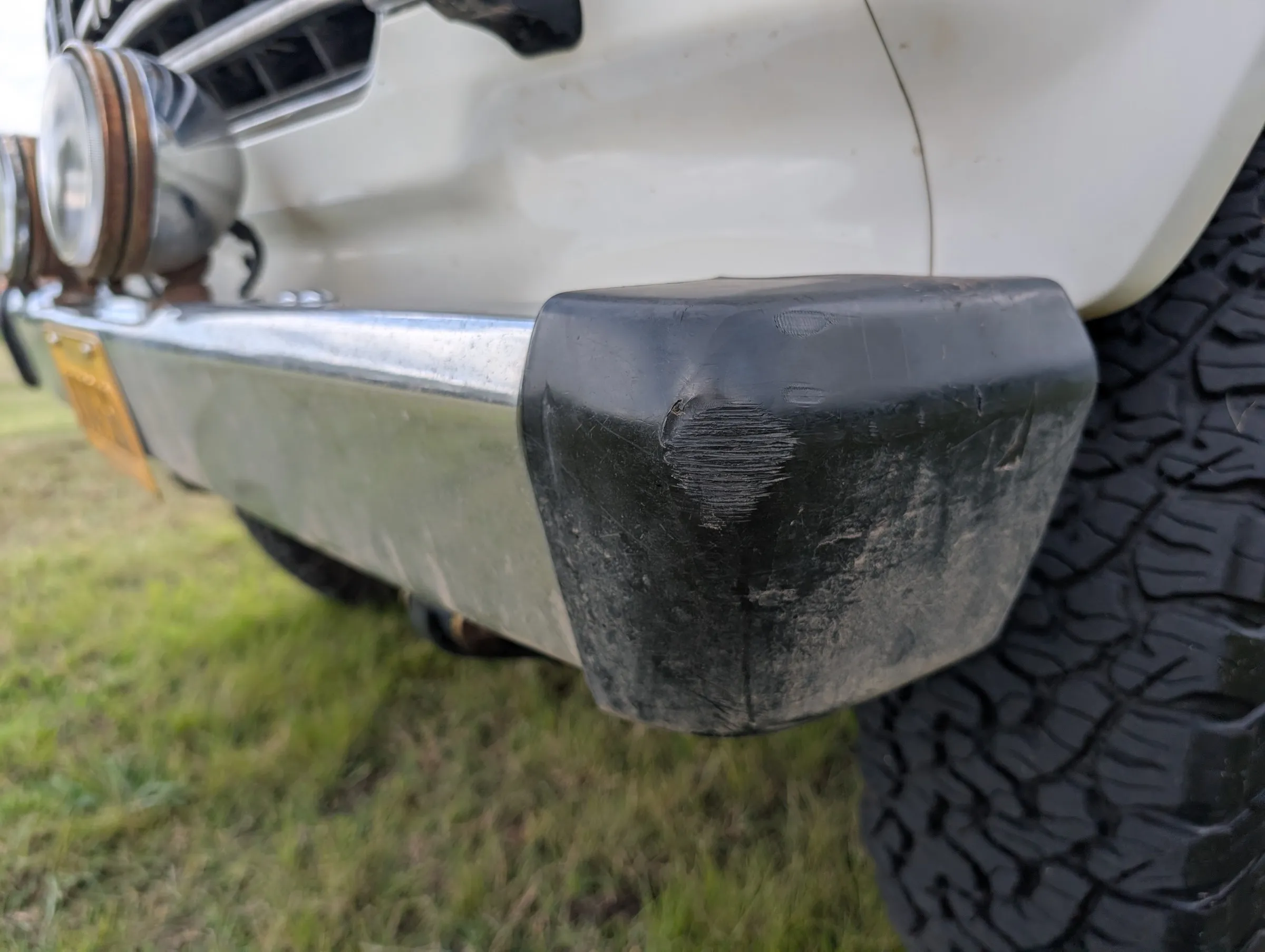
  • The front bumper needs new end caps

    Cosmetic. The bumper itself is sound.

    The black end cap on the front bumper, scuffed and worn at the corner.
  • The fog light housings are rusty on the outside

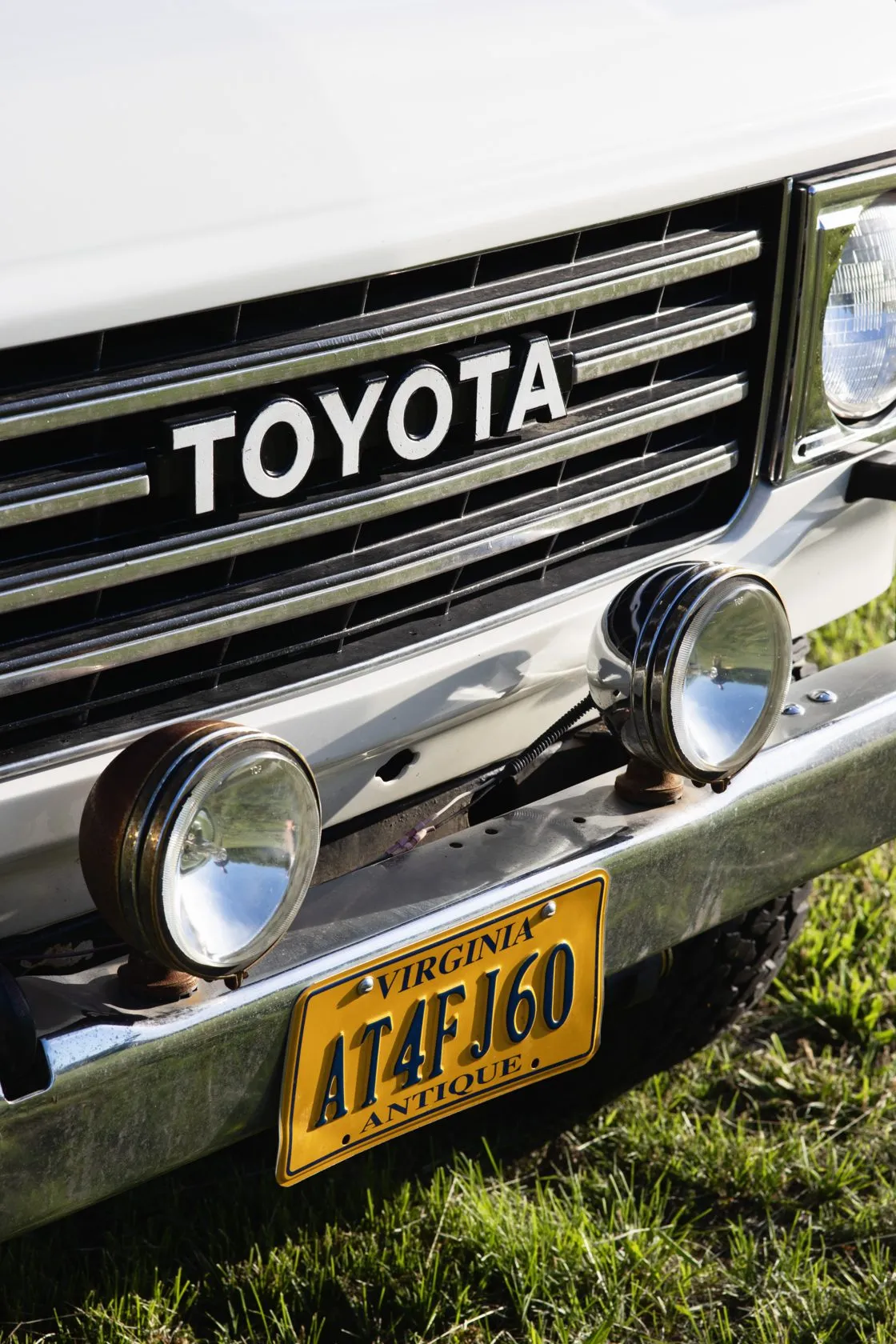
    The fog lights themselves work perfectly well. The rust is on the exterior of the housings. The seller intends to replace them before the sale — if that happens before you get here, the photographs on this page will be updated to show it.

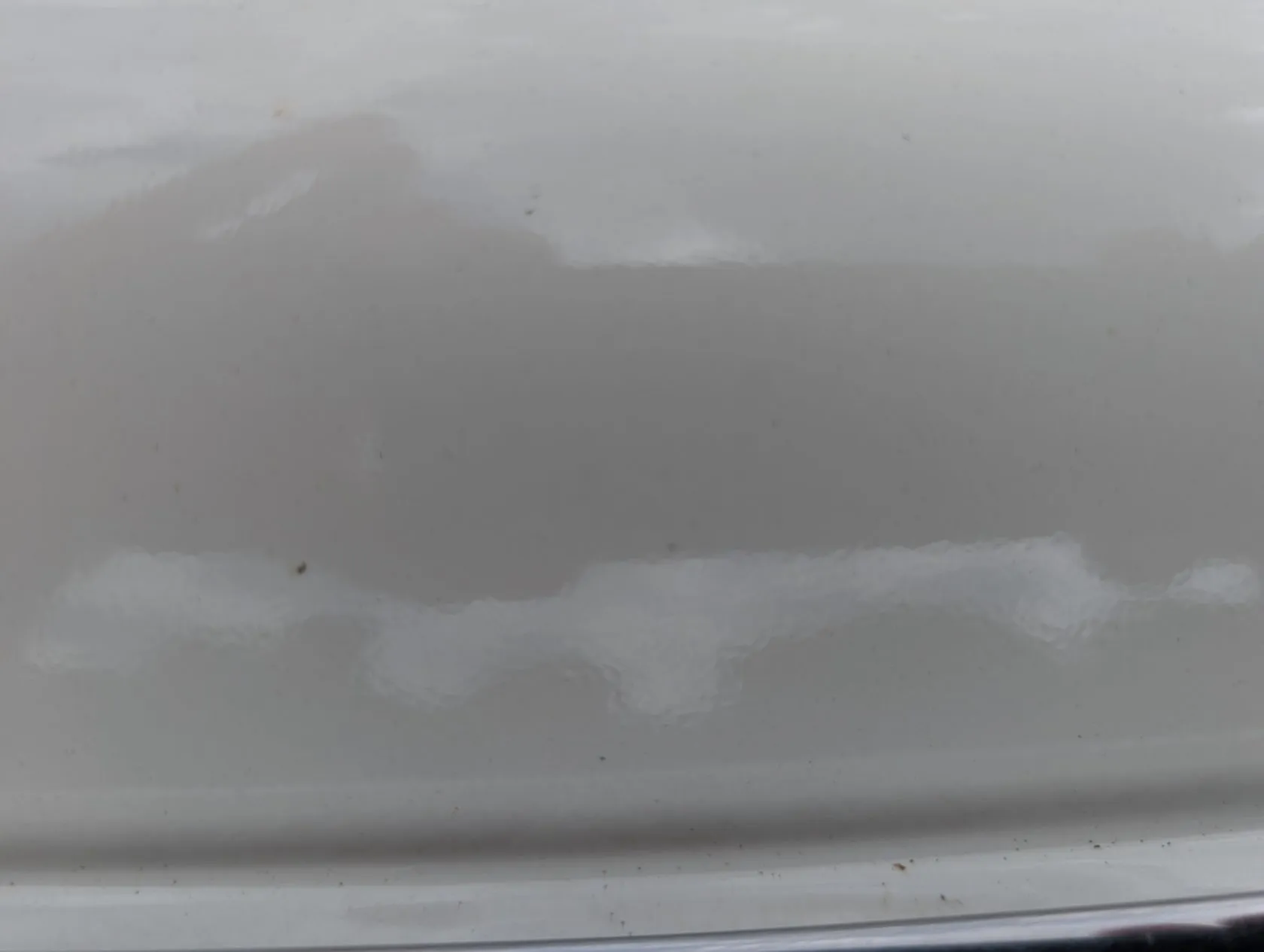
  • Gray splatter on the tailgate

    Cosmetic, noted here because it is there. It should buff off; I just have not gotten around to it.

Cold start, filmed from the driver's seat 1:12 The first item on the list above, shown rather than described. Gas, choke, crank — three or four cycles, then it runs.

Photographs

Exterior32

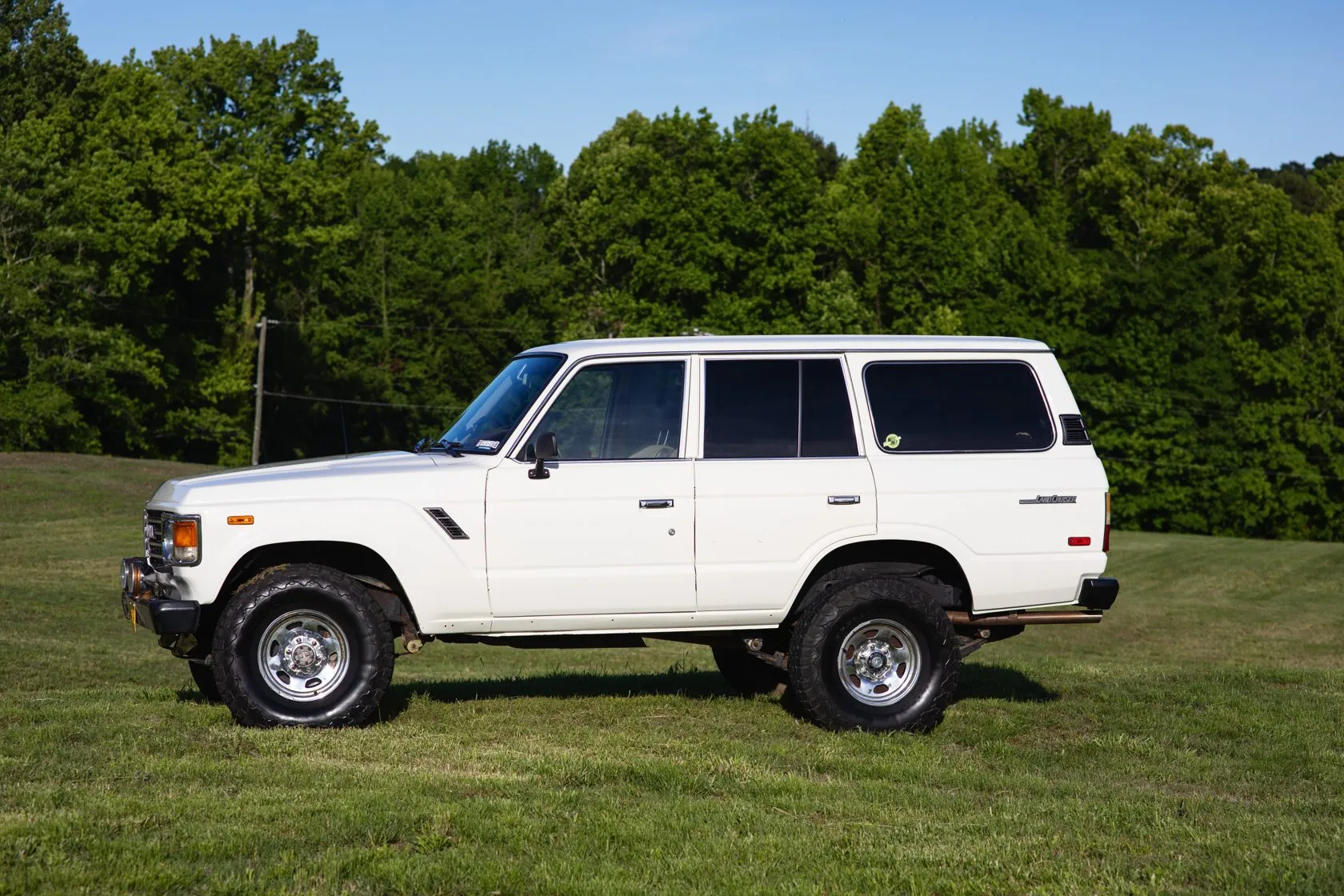
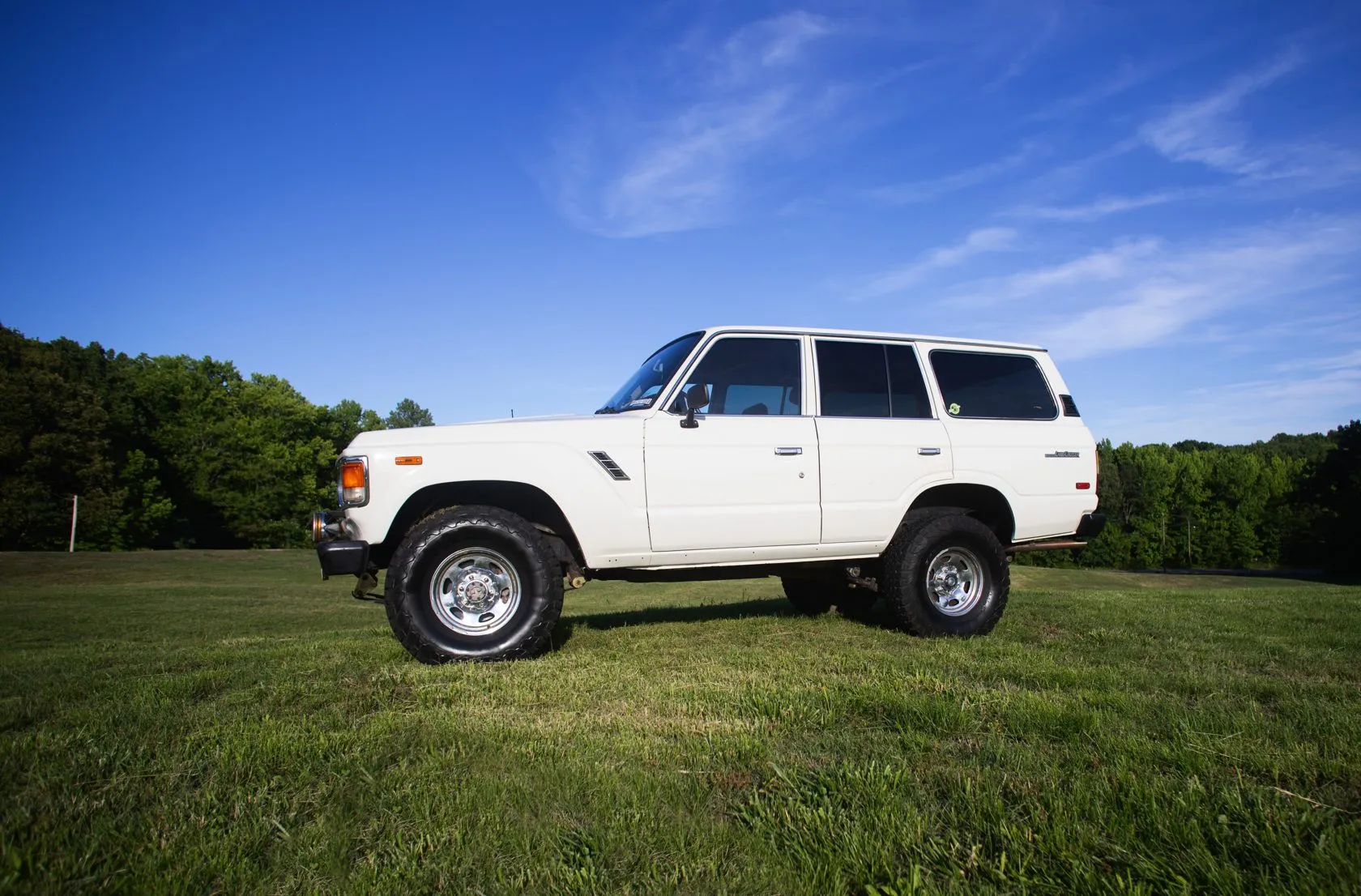
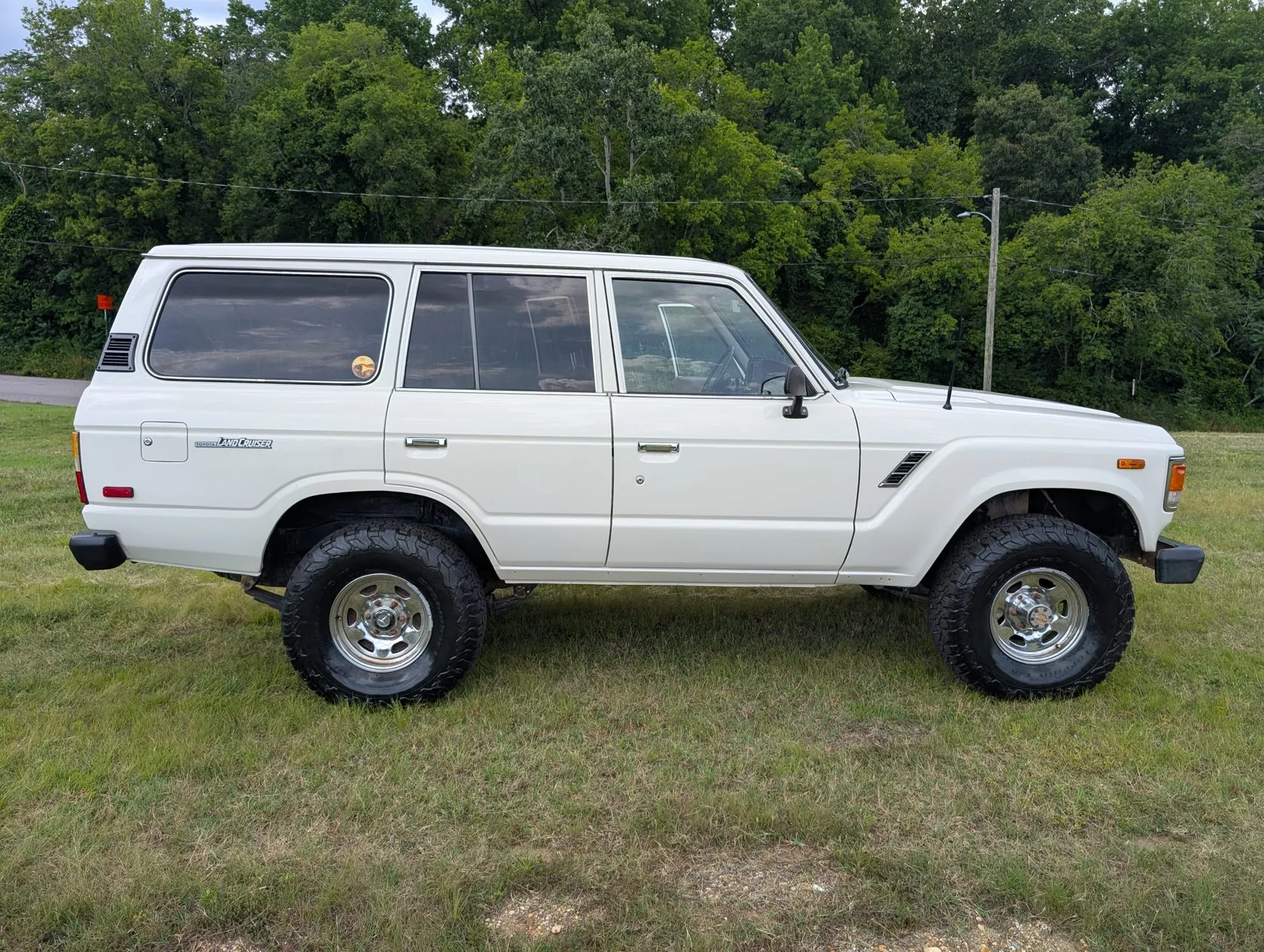
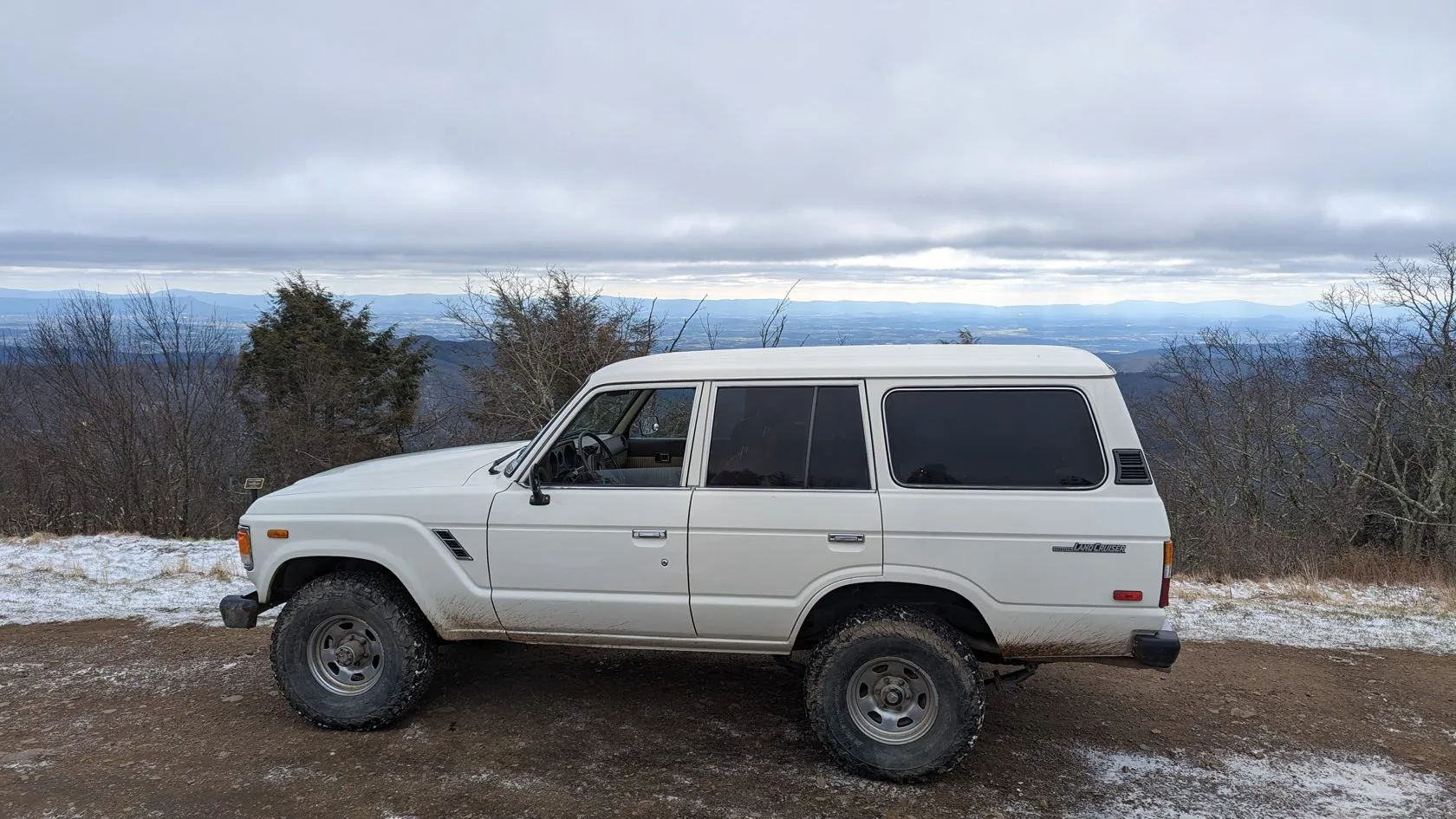
Driver's side profile on grass. The full length of the wagon body, boxy roofline, chrome trim along the rocker, and the raised stance from the suspension lift.
Front three-quarter view from the driver's side, showing the grille, both round headlights and the driver's flank in one frame.
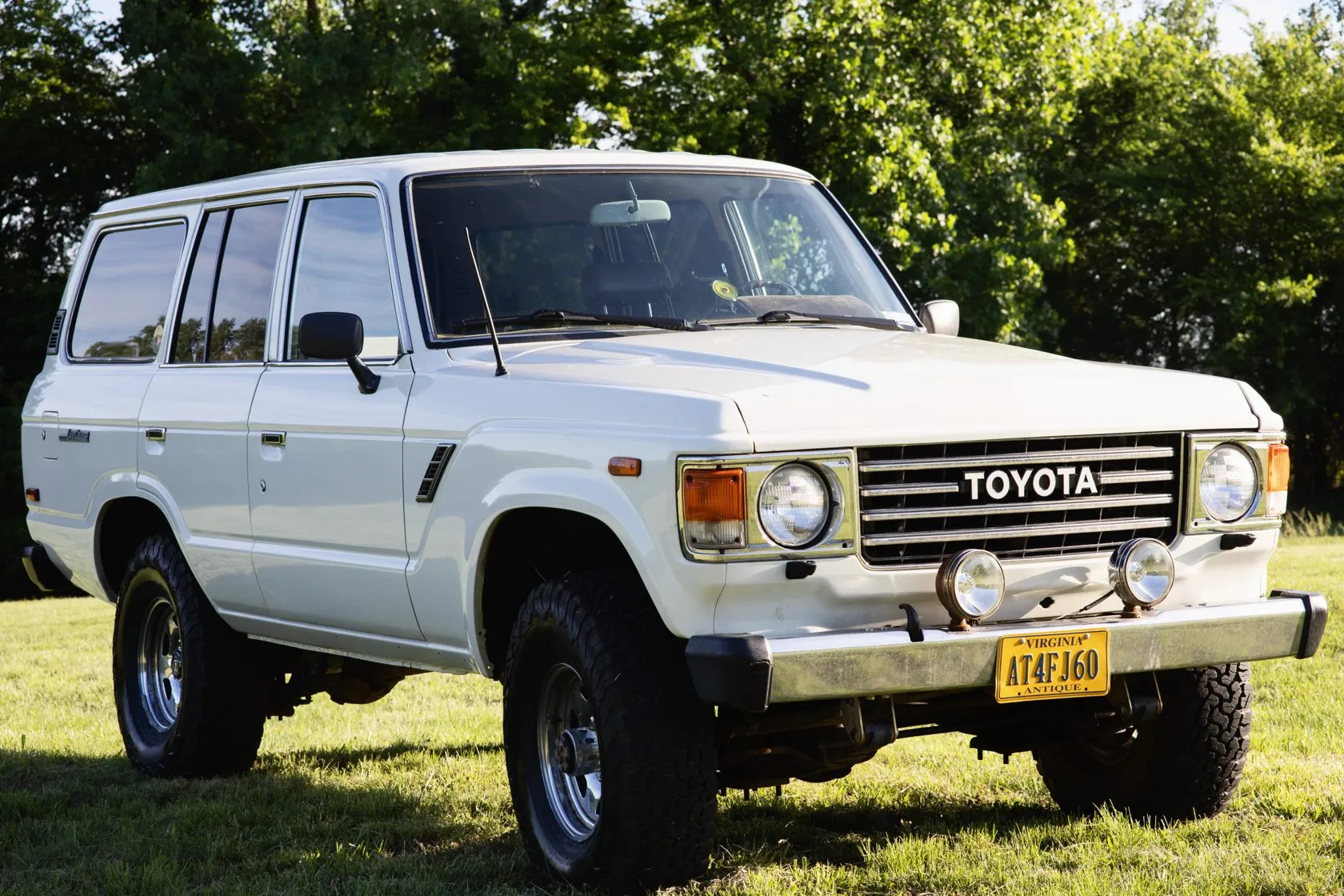
Front three-quarter view from the passenger side, close enough to read the TOYOTA lettering on the grille.
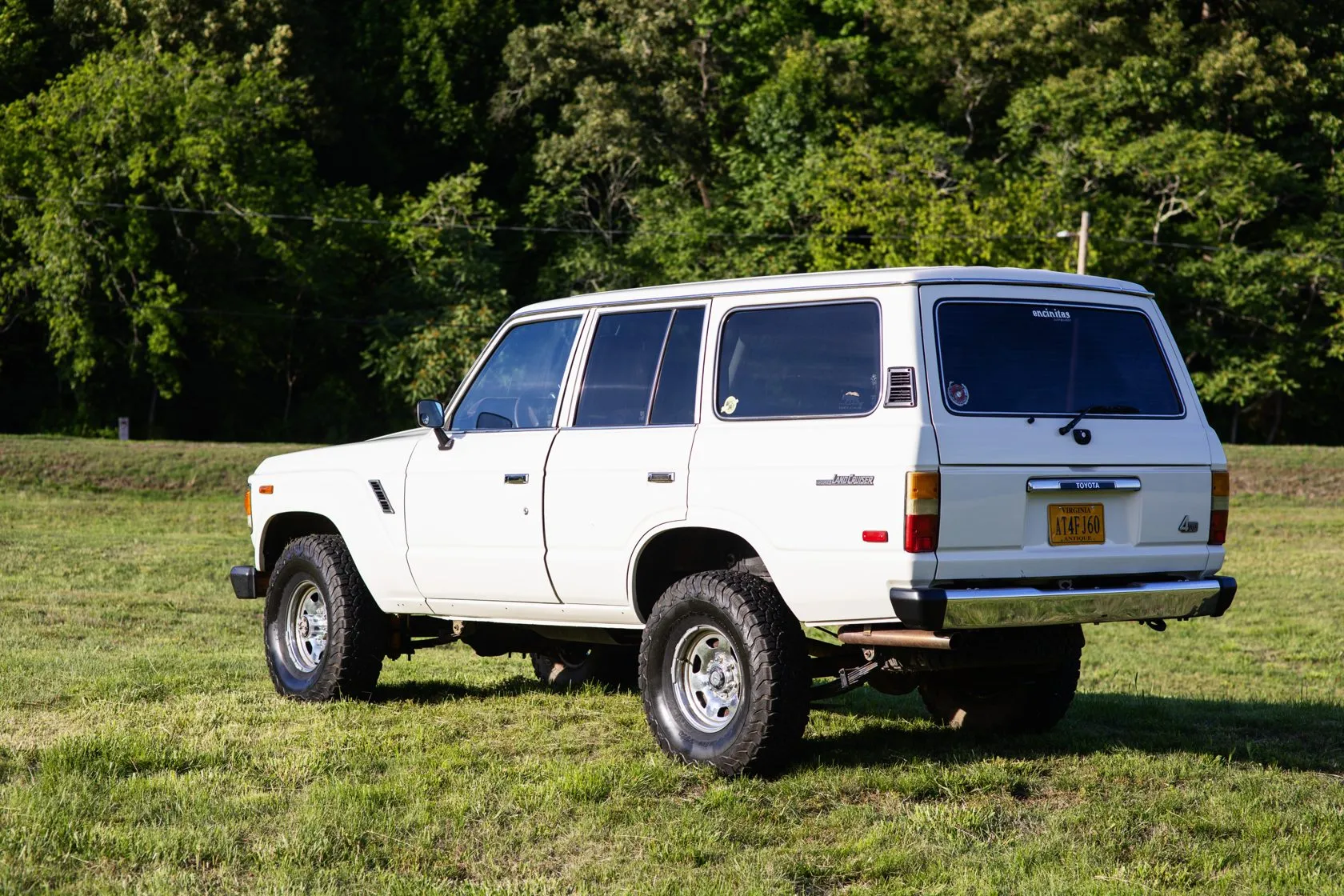
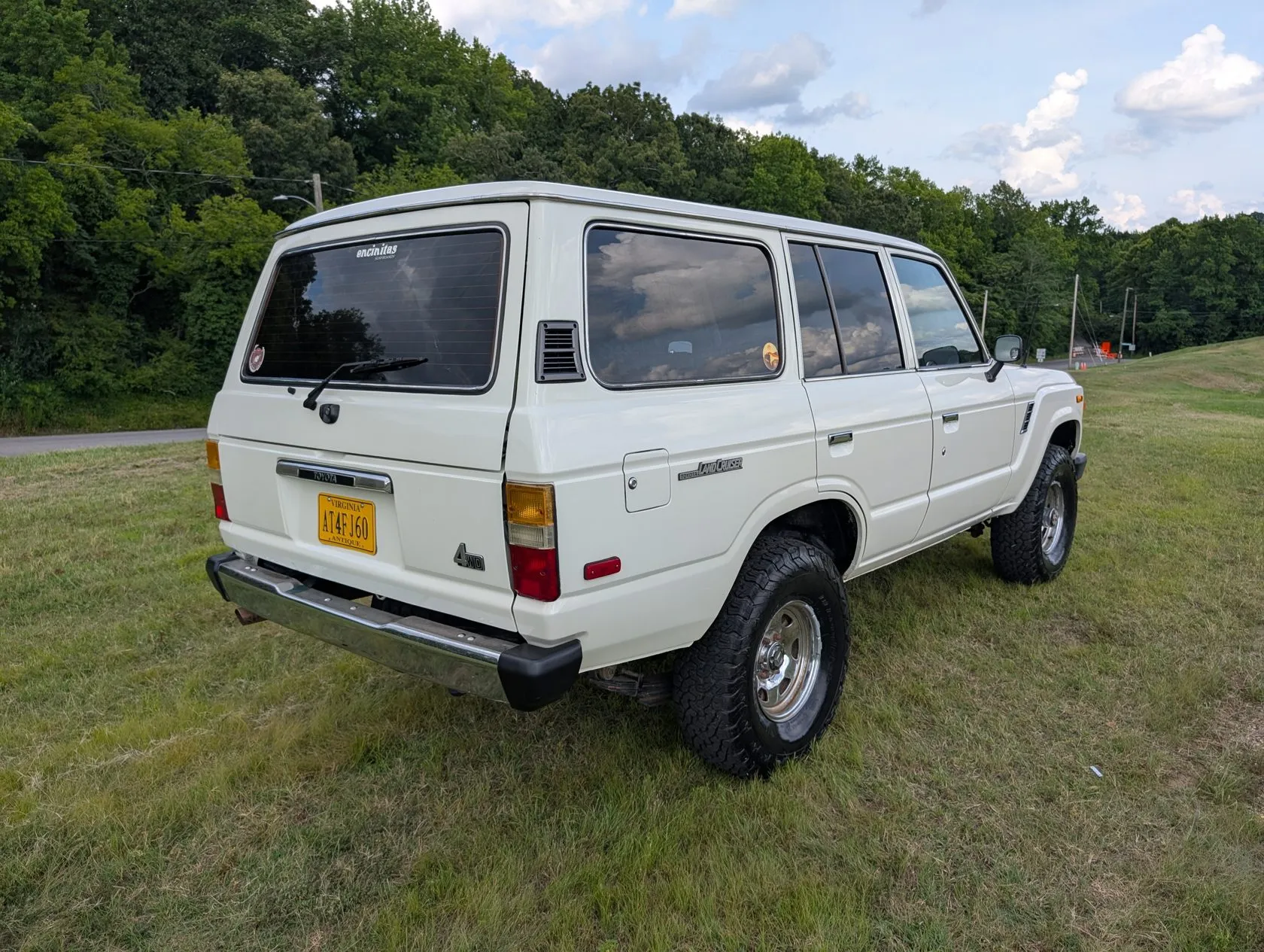
Rear three-quarter from the driver's side, showing the split tailgate, rear quarter panel and taillight.
Rear three-quarter from the passenger side, with the rear quarter window and vent louvres visible.
Side profile against open blue sky, the roofline and window line clear against the background.
Head-on from the front. Grille, both headlights, the chrome bumper, the two auxiliary fog lights and the yellow Virginia plate.
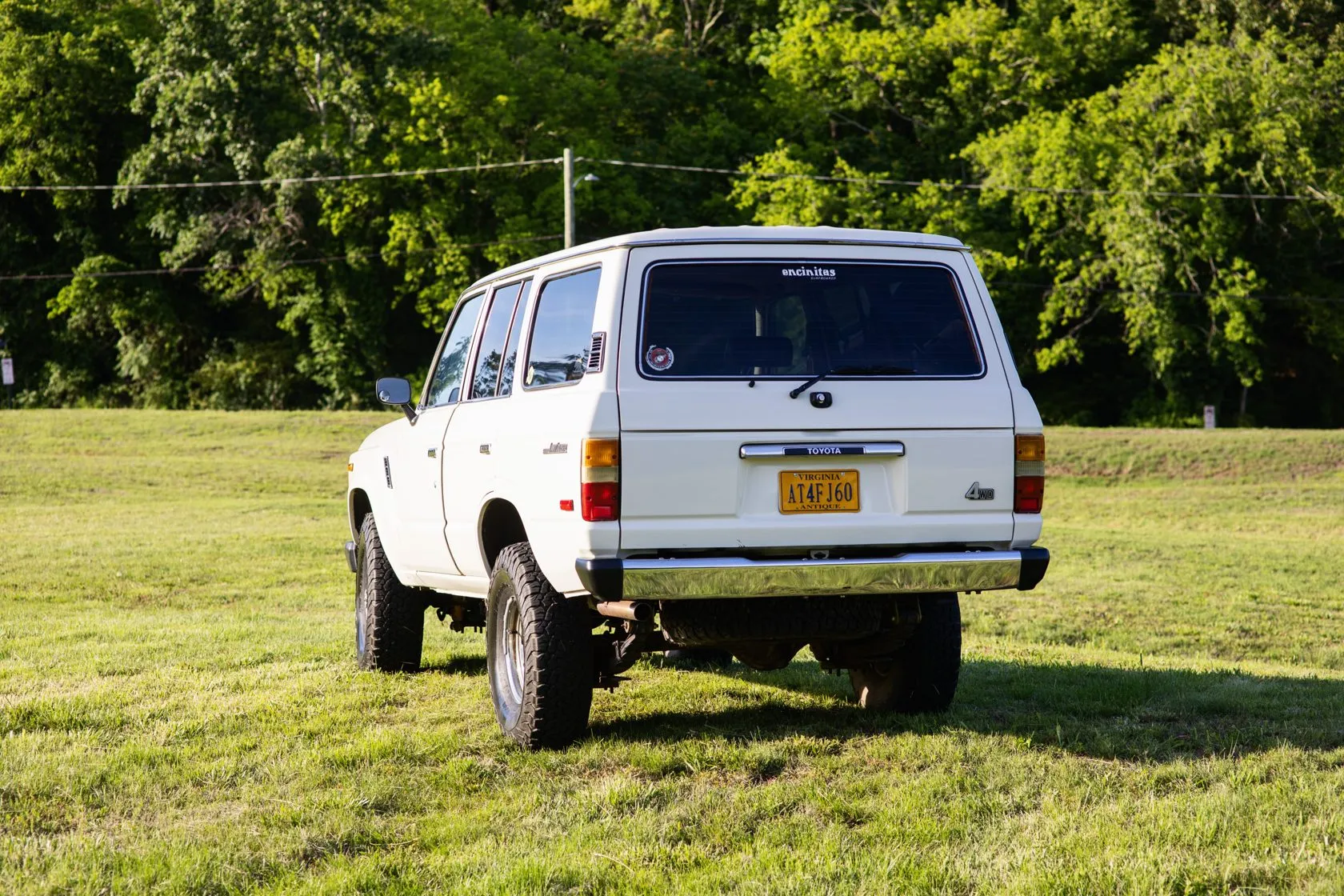
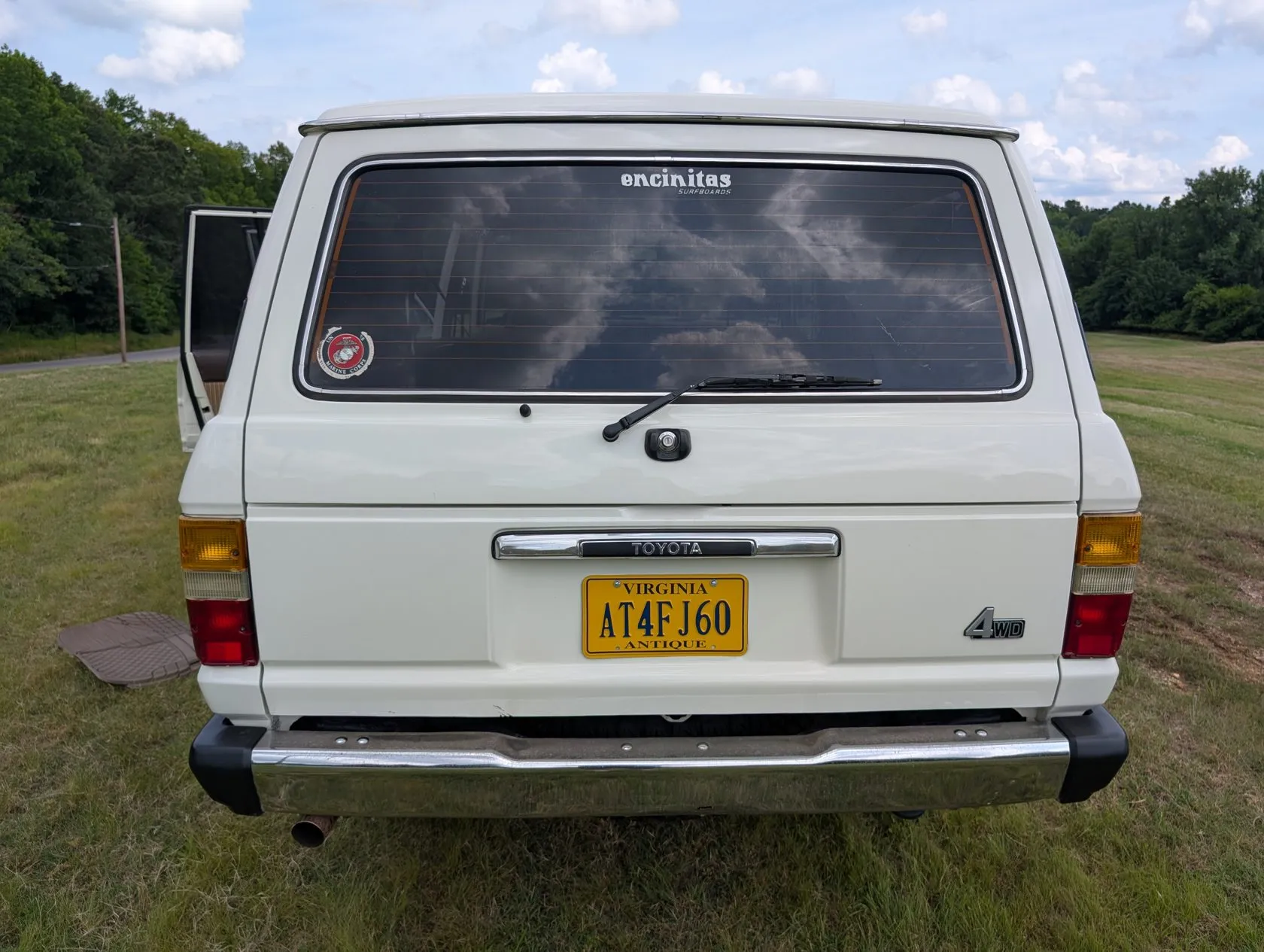
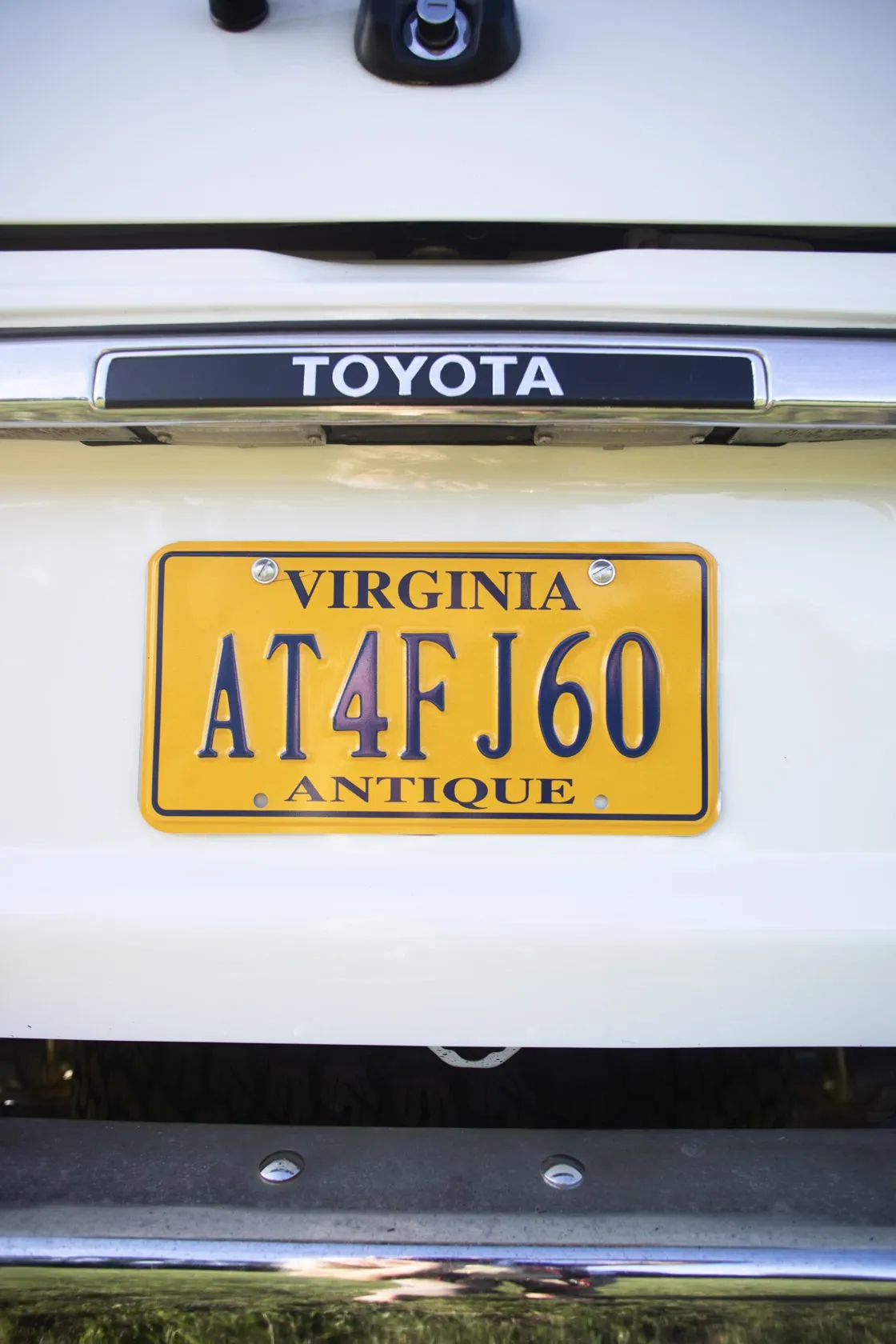
Head-on from the rear, showing the tailgate, both taillights, the rear bumper and the license plate.
Passenger side profile, the full body length with doors and glass in line.
Rear three-quarter view on grass, tailgate and rear quarter in frame.
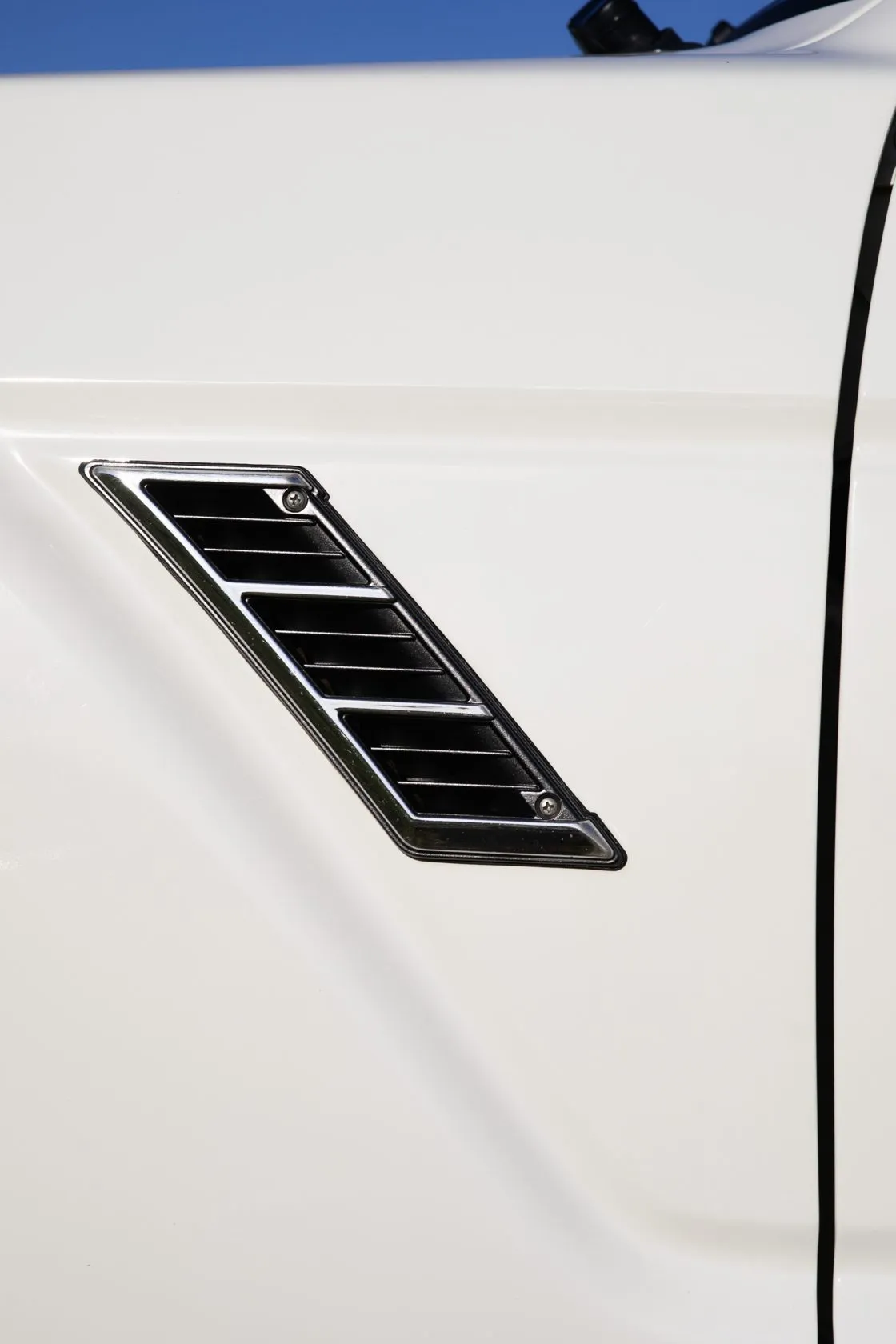
Close view of the vent louvres pressed into the front fender, a detail specific to this body.
The chrome front bumper with two round auxiliary fog lights mounted below it.
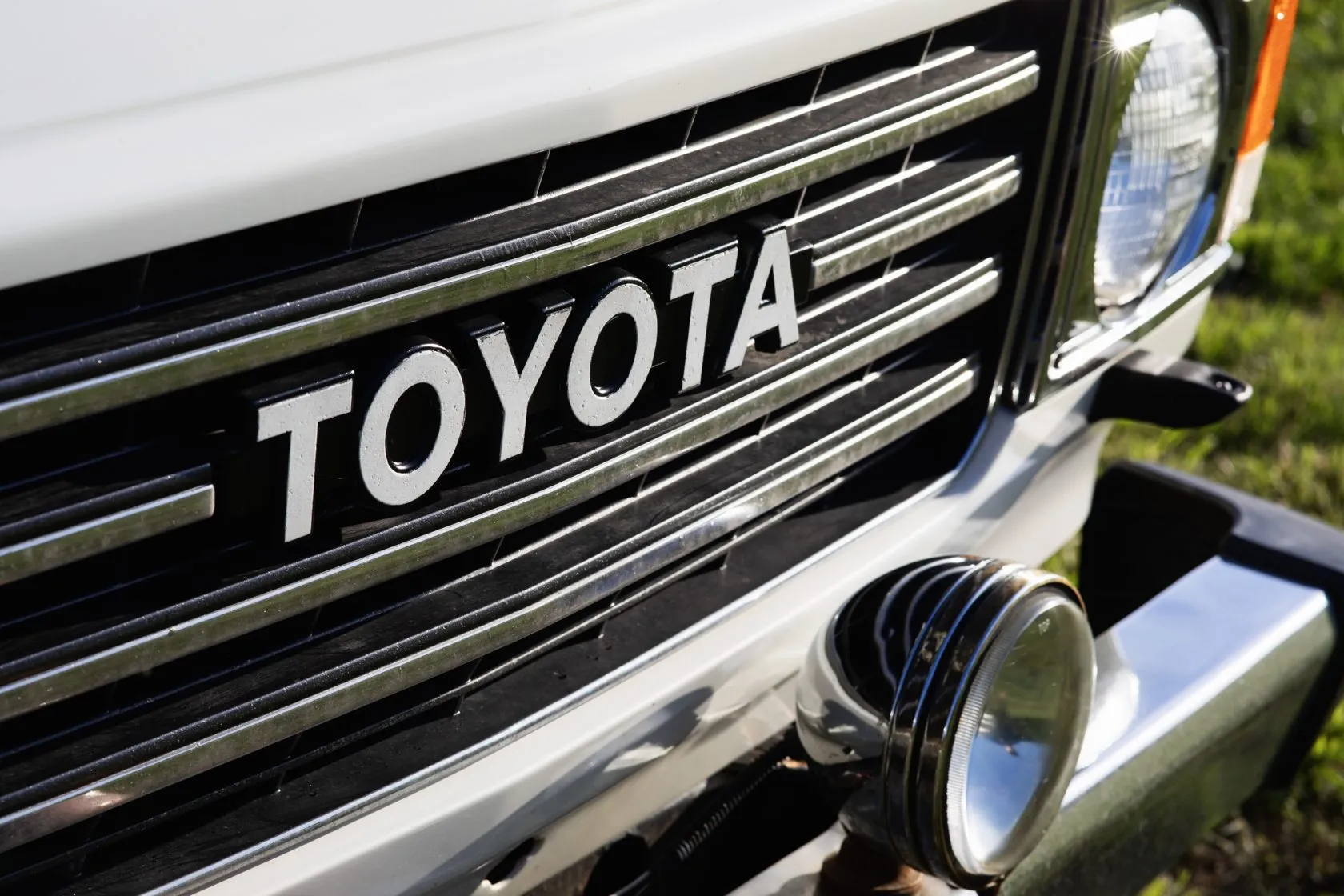
Close view of the horizontal-slat grille with raised TOYOTA lettering across it.
Grille and one round fog light together, showing the chrome finish and the condition of the lens.
The yellow Virginia license plate reading AT4FJ60, marked ANTIQUE, mounted on the chrome bumper.
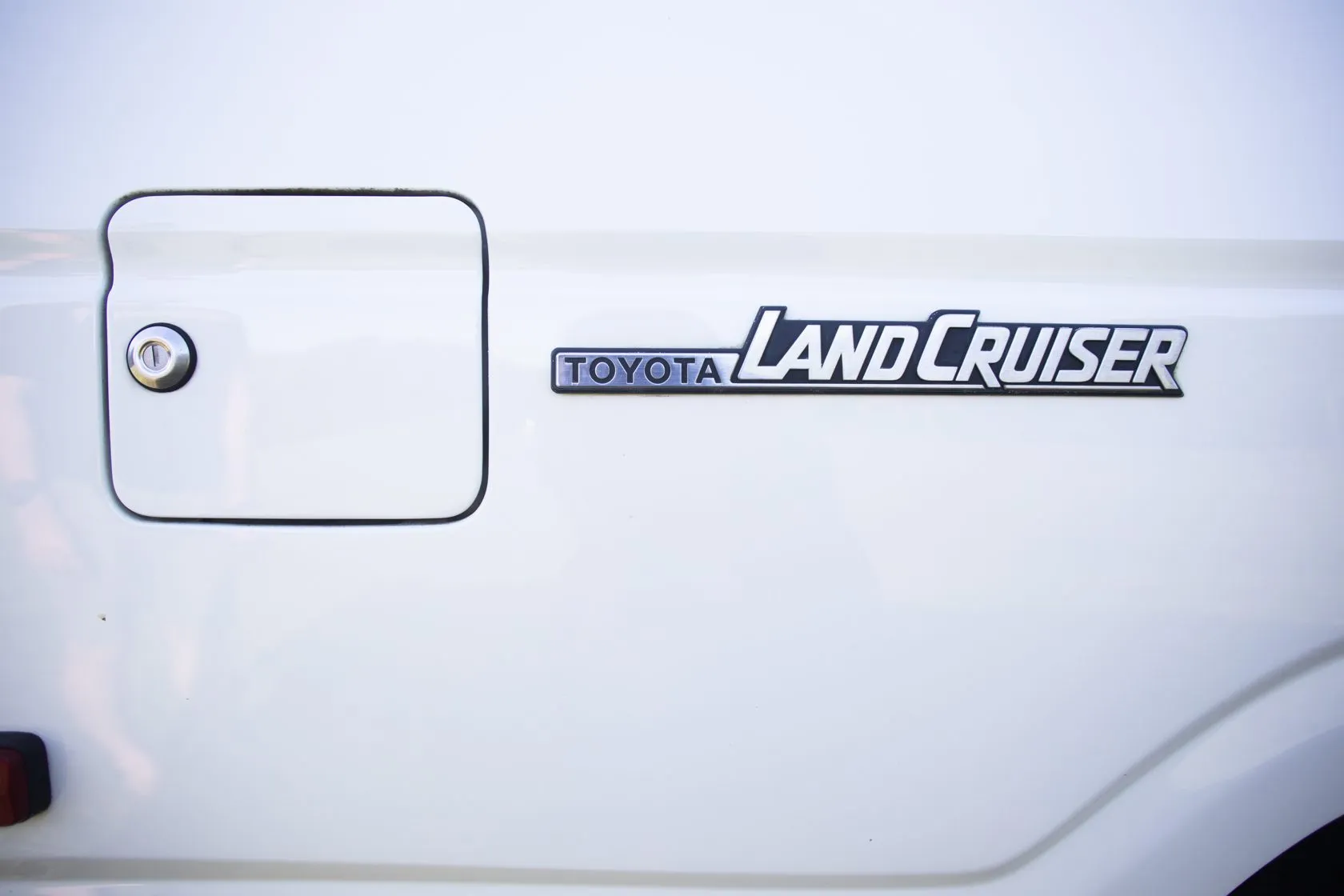
The fuel filler door on the rear quarter, beside the TOYOTA LAND CRUISER script badge.
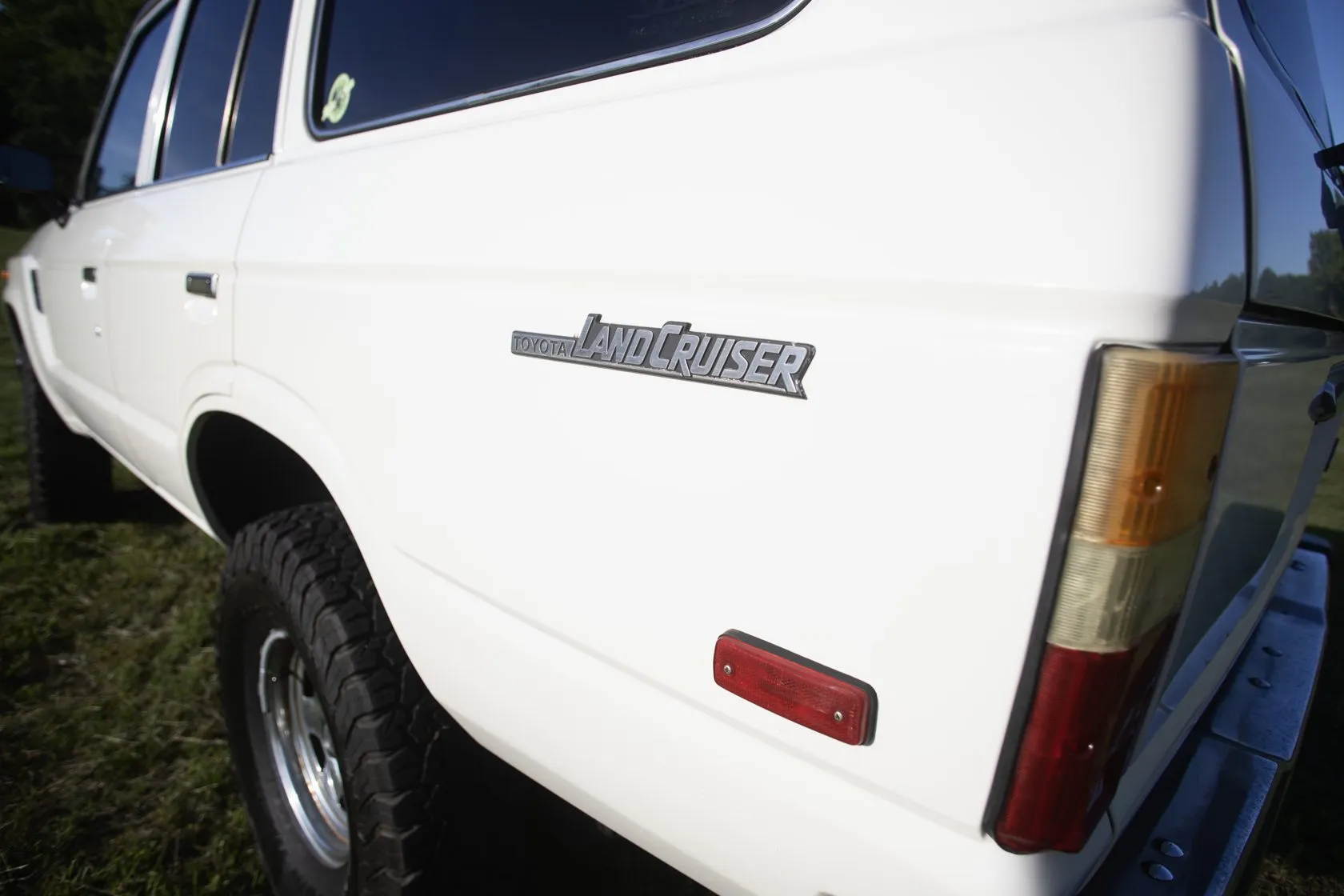
Rear quarter panel showing the Land Cruiser badge and the taillight housing.
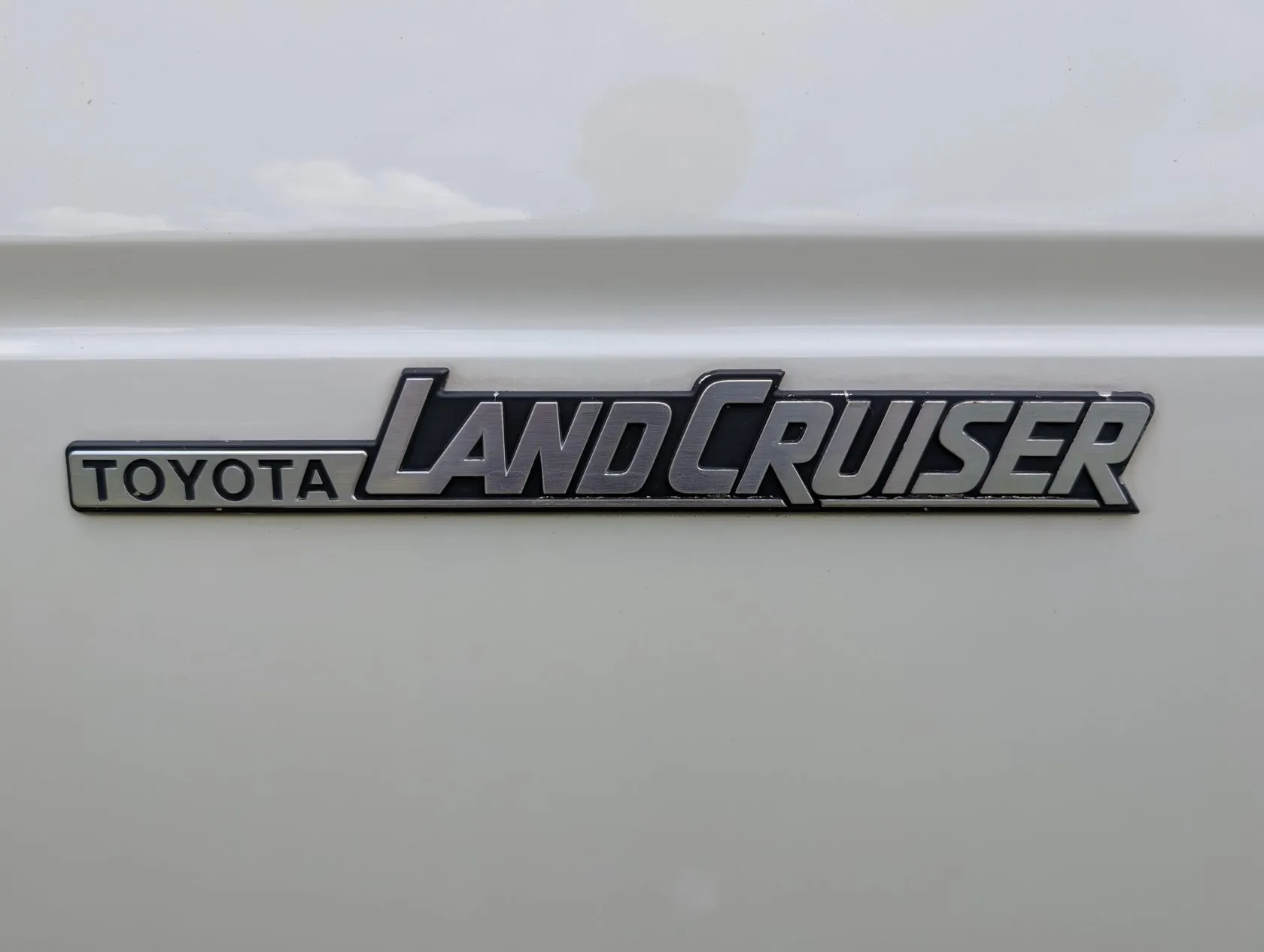
The TOYOTA LAND CRUISER script badge close up against white paint.
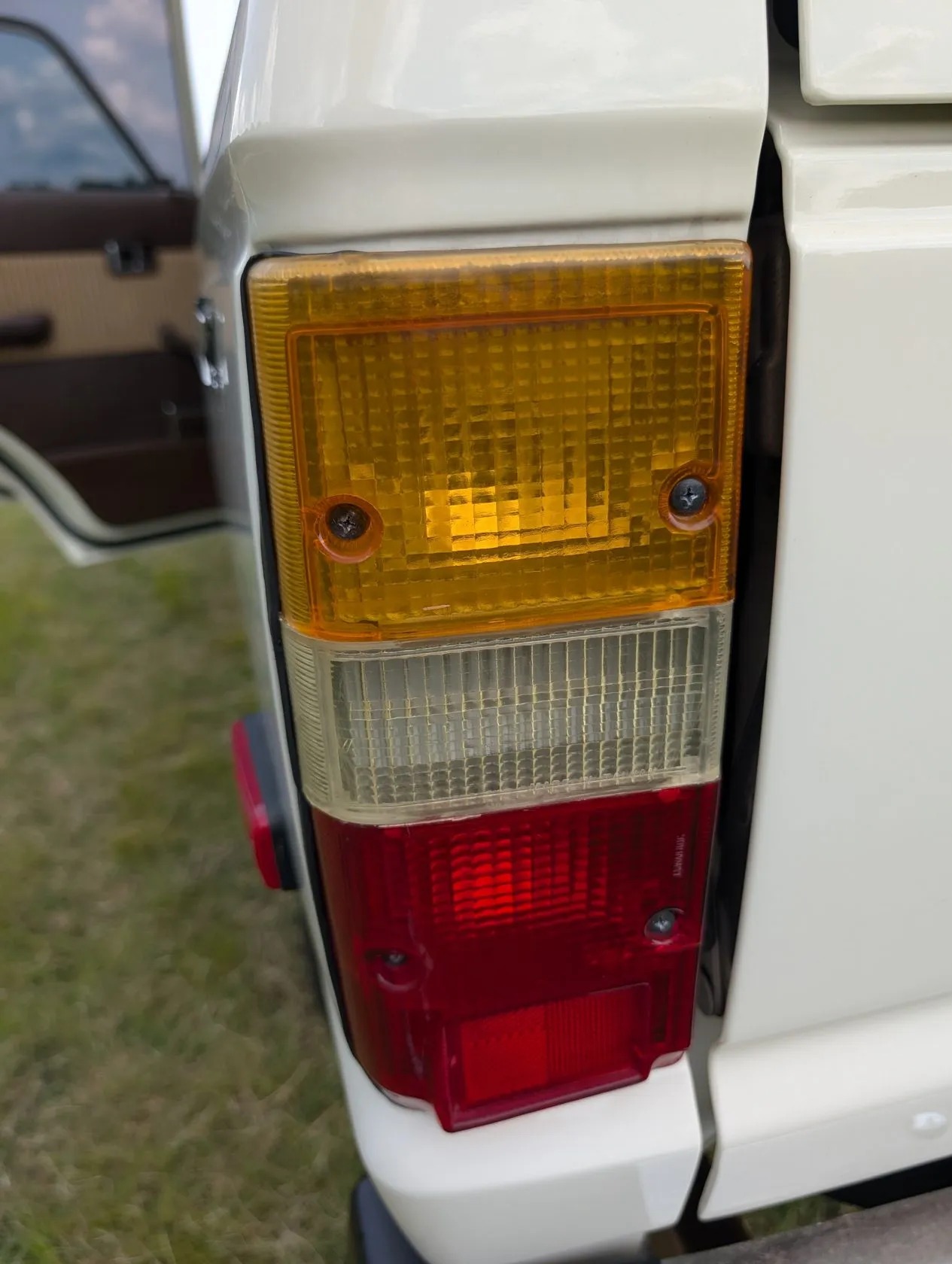
A taillight unit close up, amber over red lenses, in a chrome-edged housing.
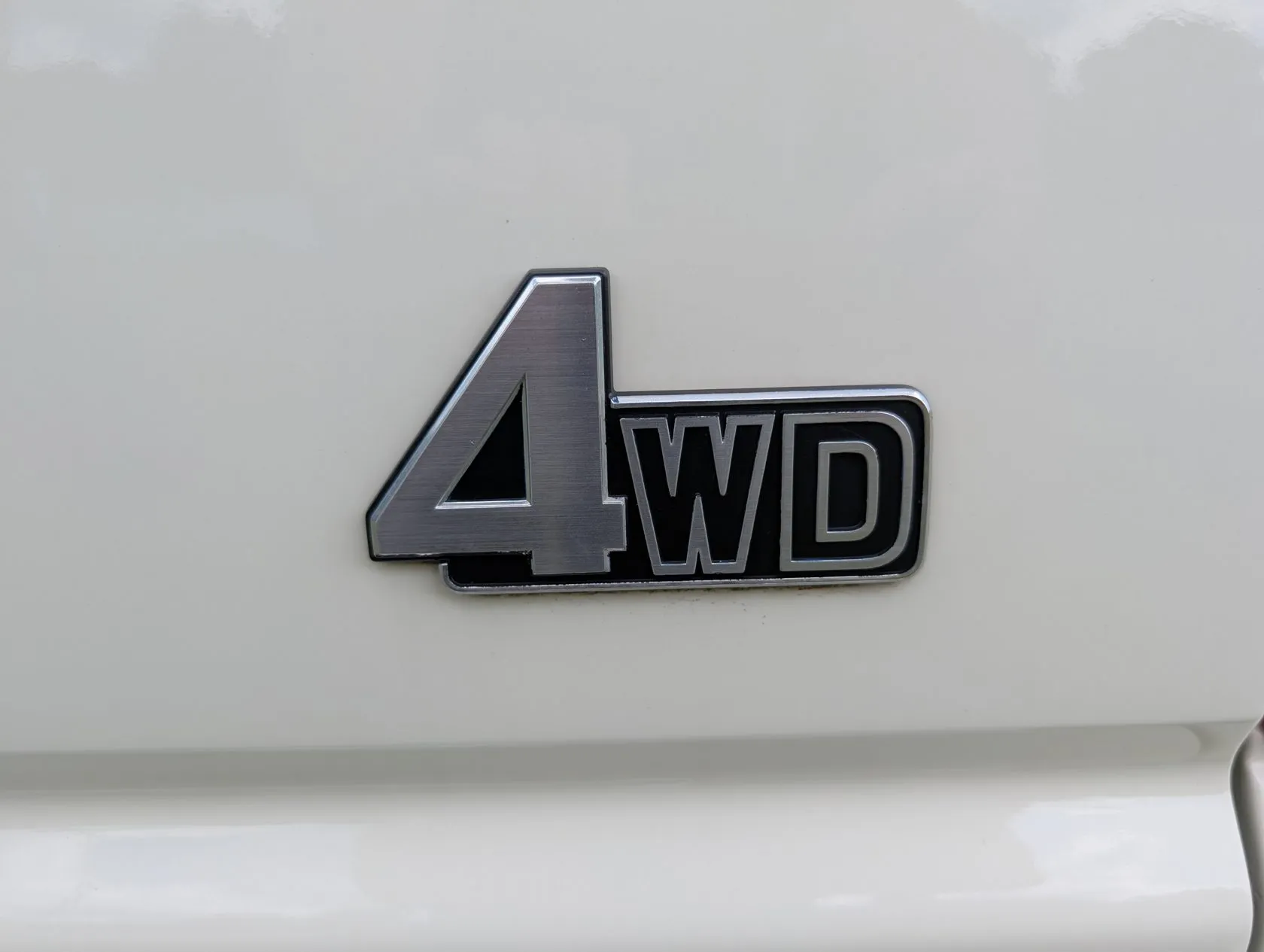
The raised 4WD badge on the body panel.
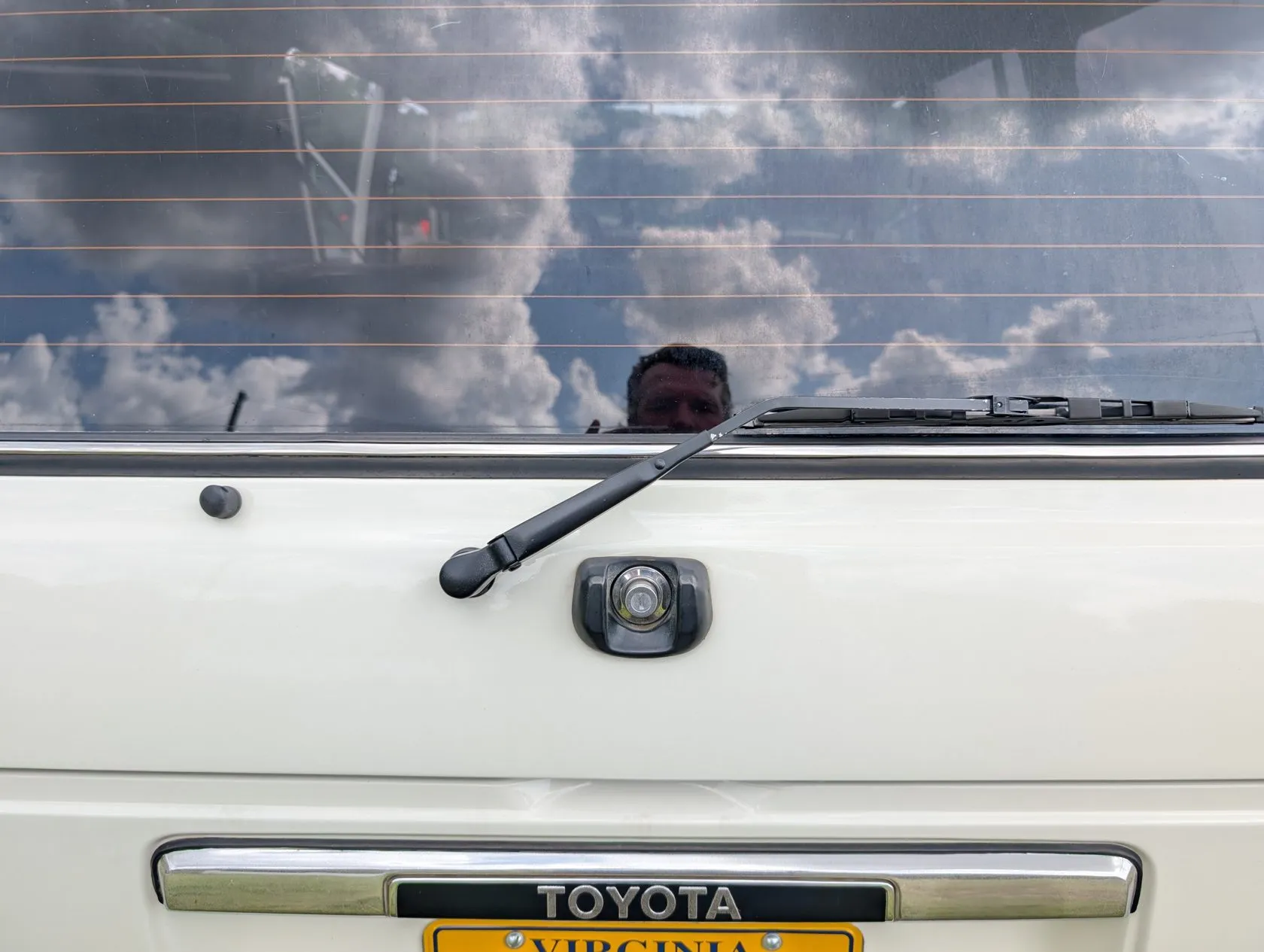
The rear window with its wiper arm and blade fitted.
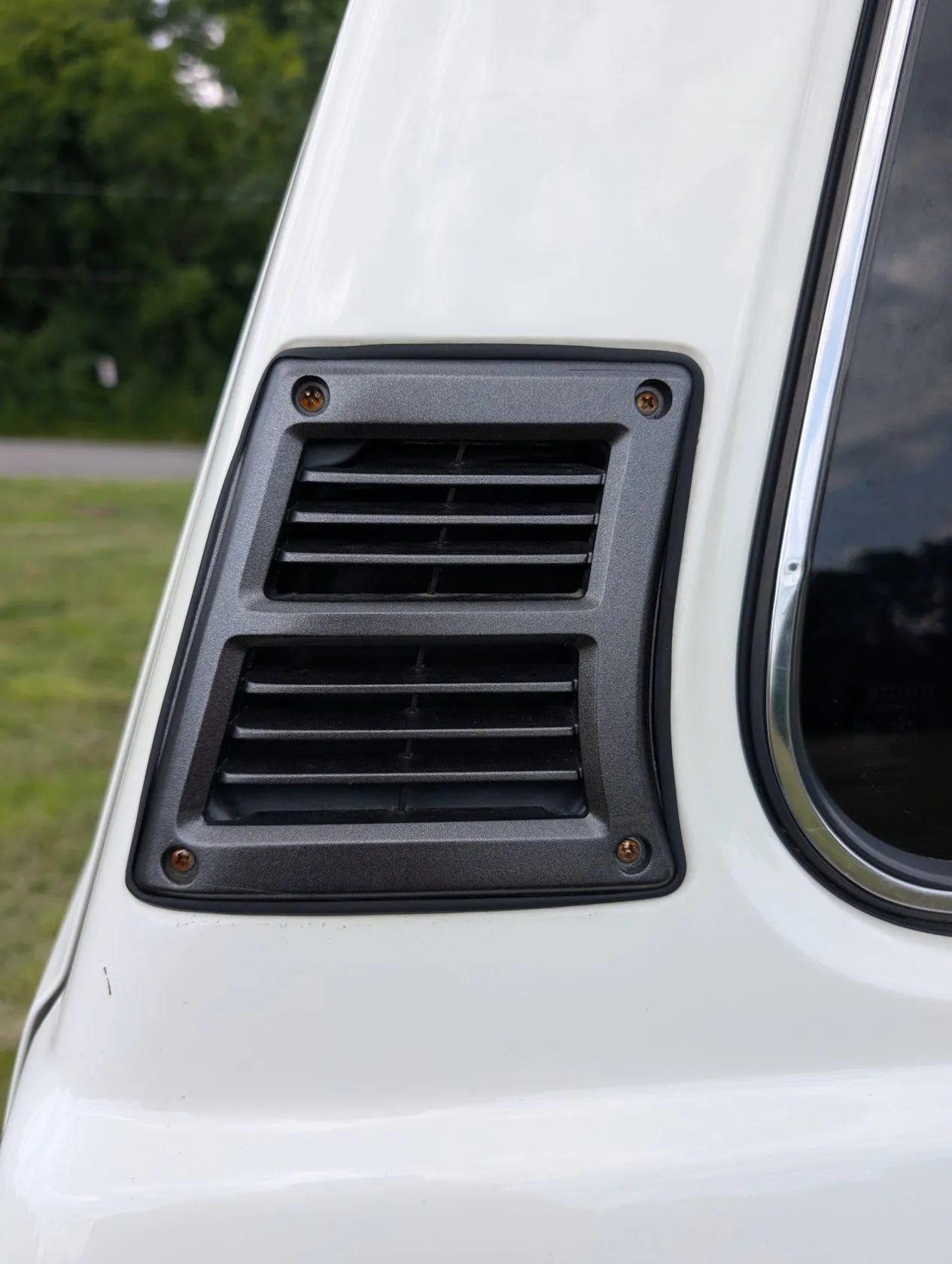
The louvred vent panel set into the rear quarter beside the glass.
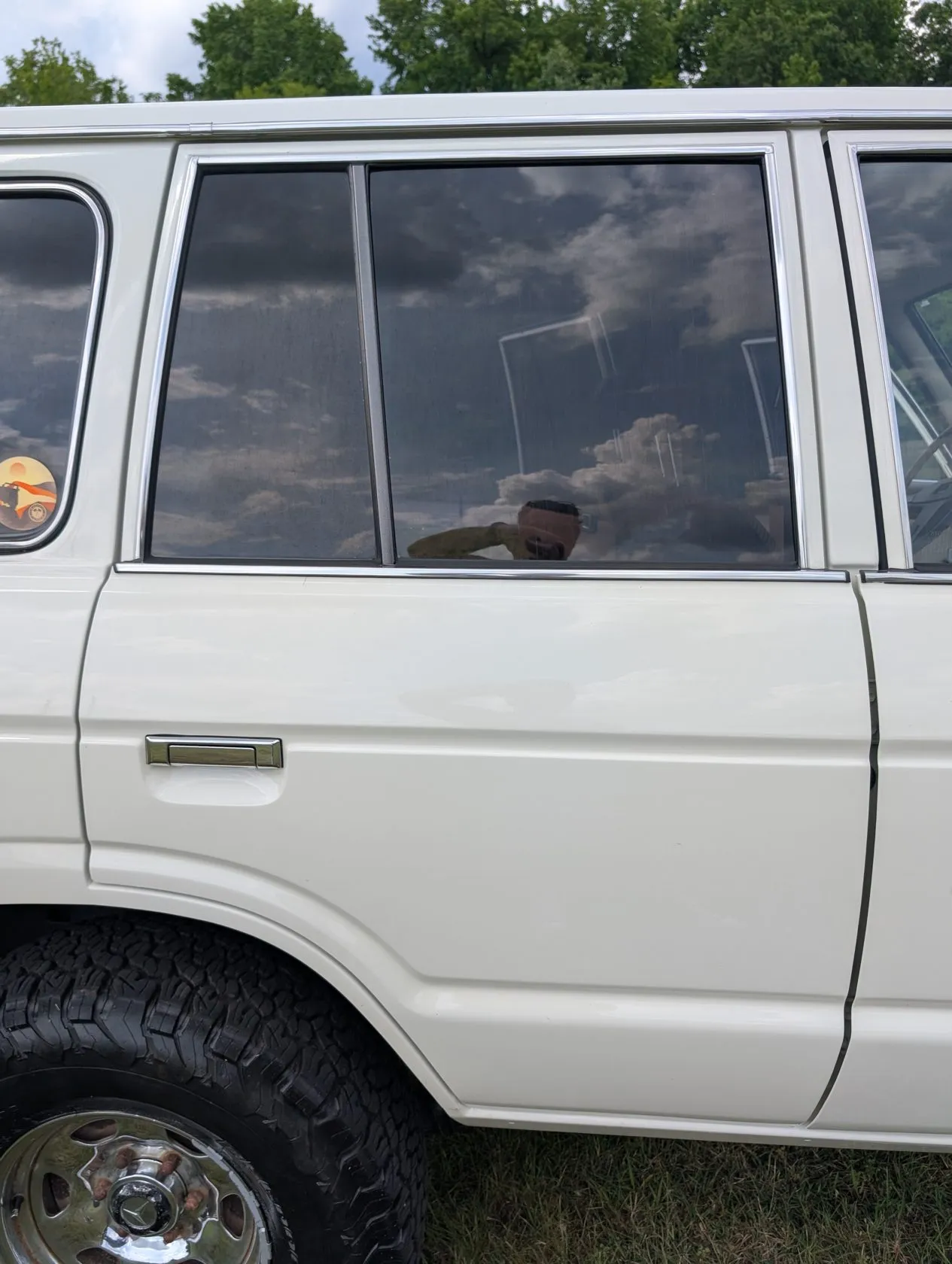
The side of the wagon showing both door handles and the door gaps along the flank.
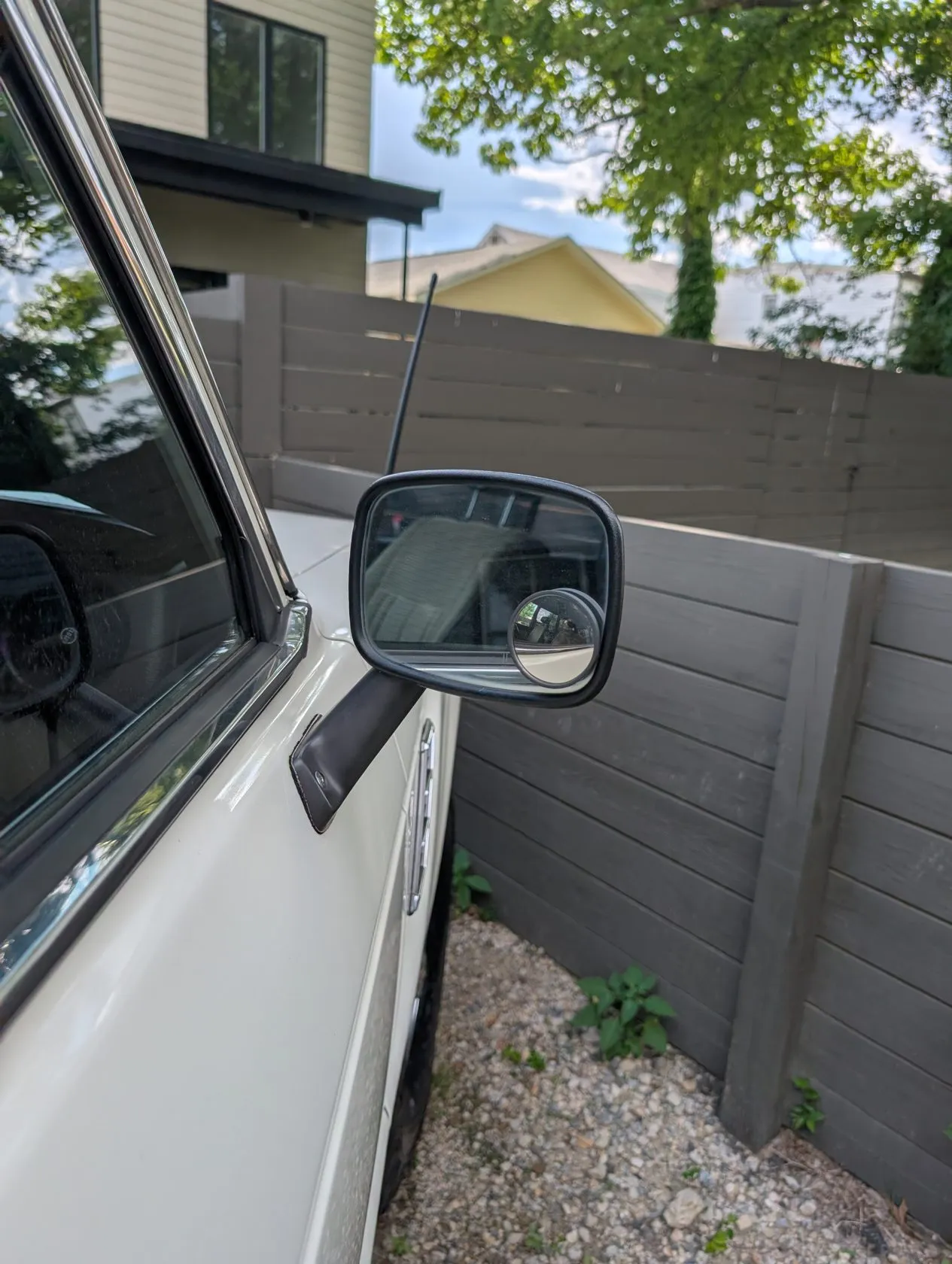
A door mirror on its arm, with the body and glass behind it.
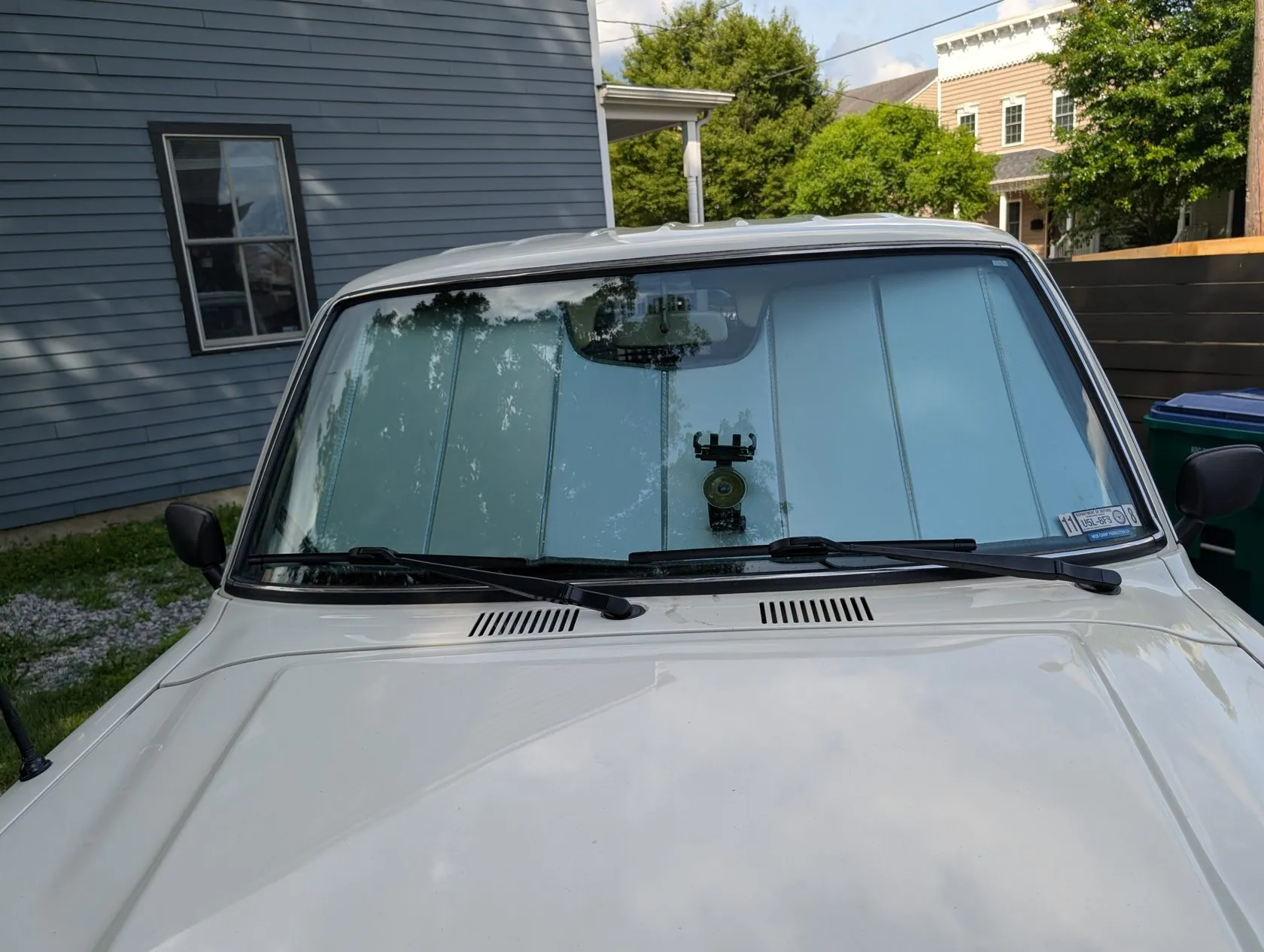
The windshield and the cowl panel below it, with the wiper arms parked.
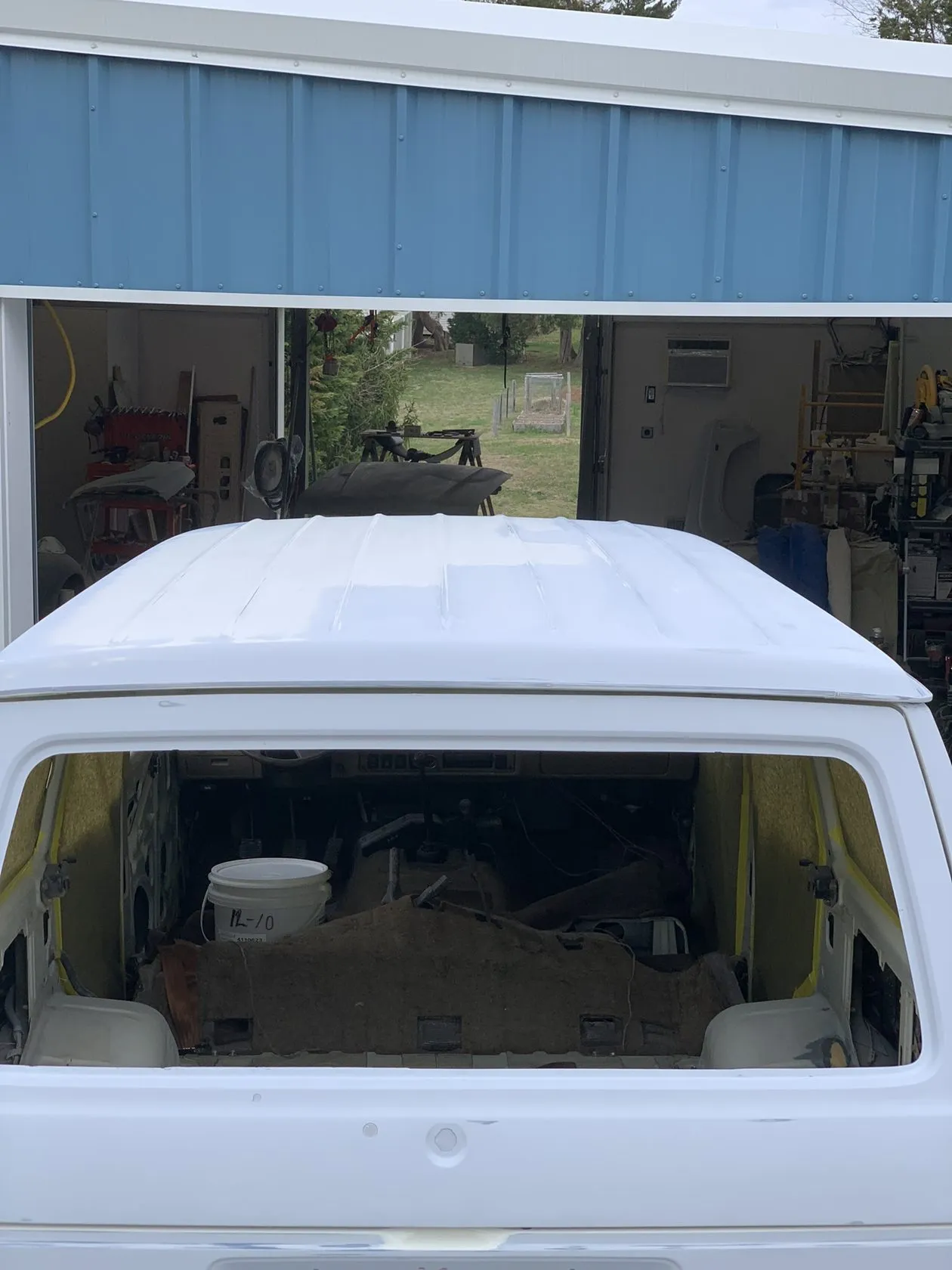
The roof panel seen along its length, showing the pressed ribs running front to back. The roof section was replaced during the restoration.
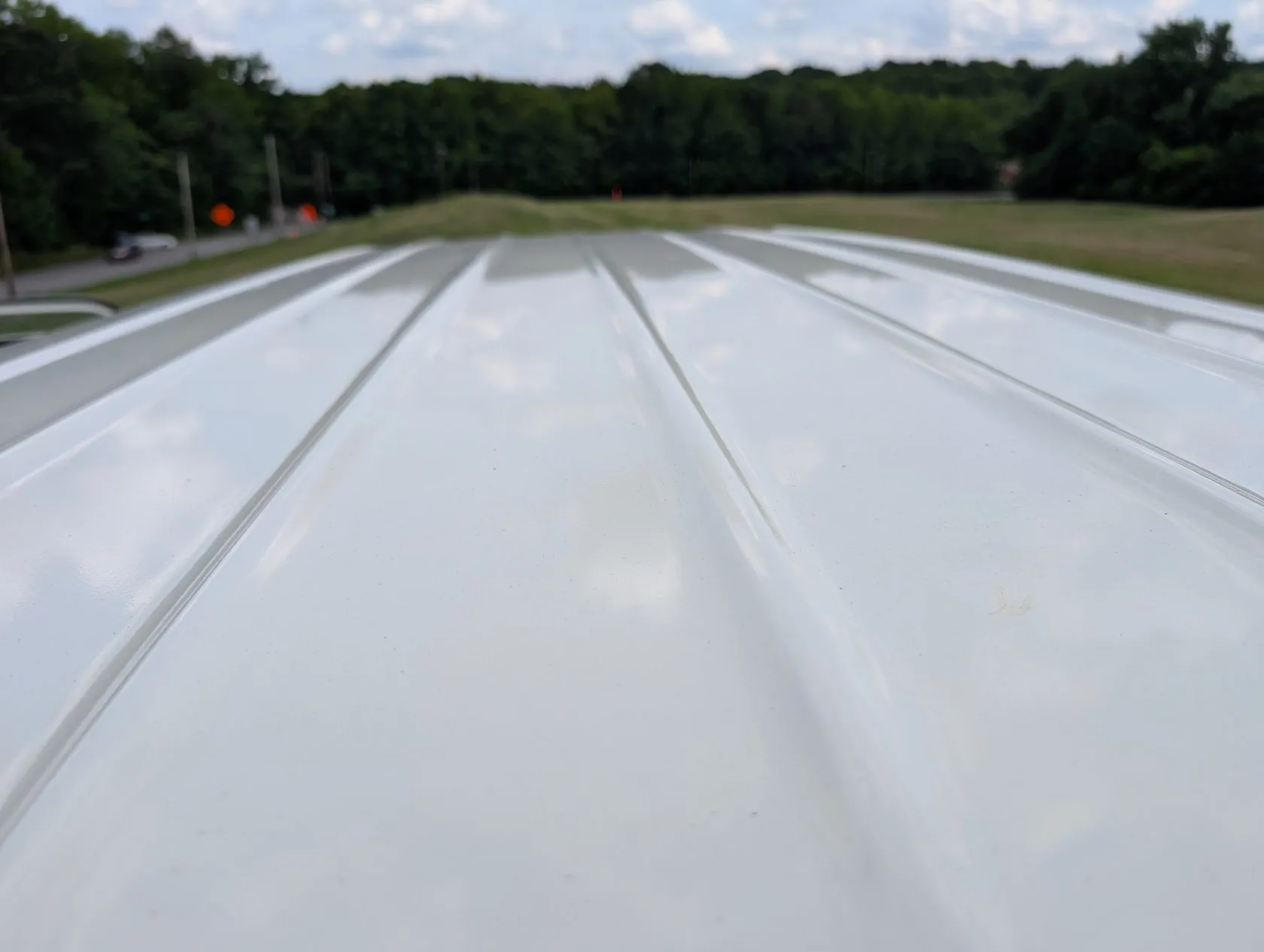
A closer view along the roof panel and its ribs.
A flat expanse of the white paint photographed close, showing the surface finish of the respray.
The wagon parked at a mountain overlook with a long view behind it.
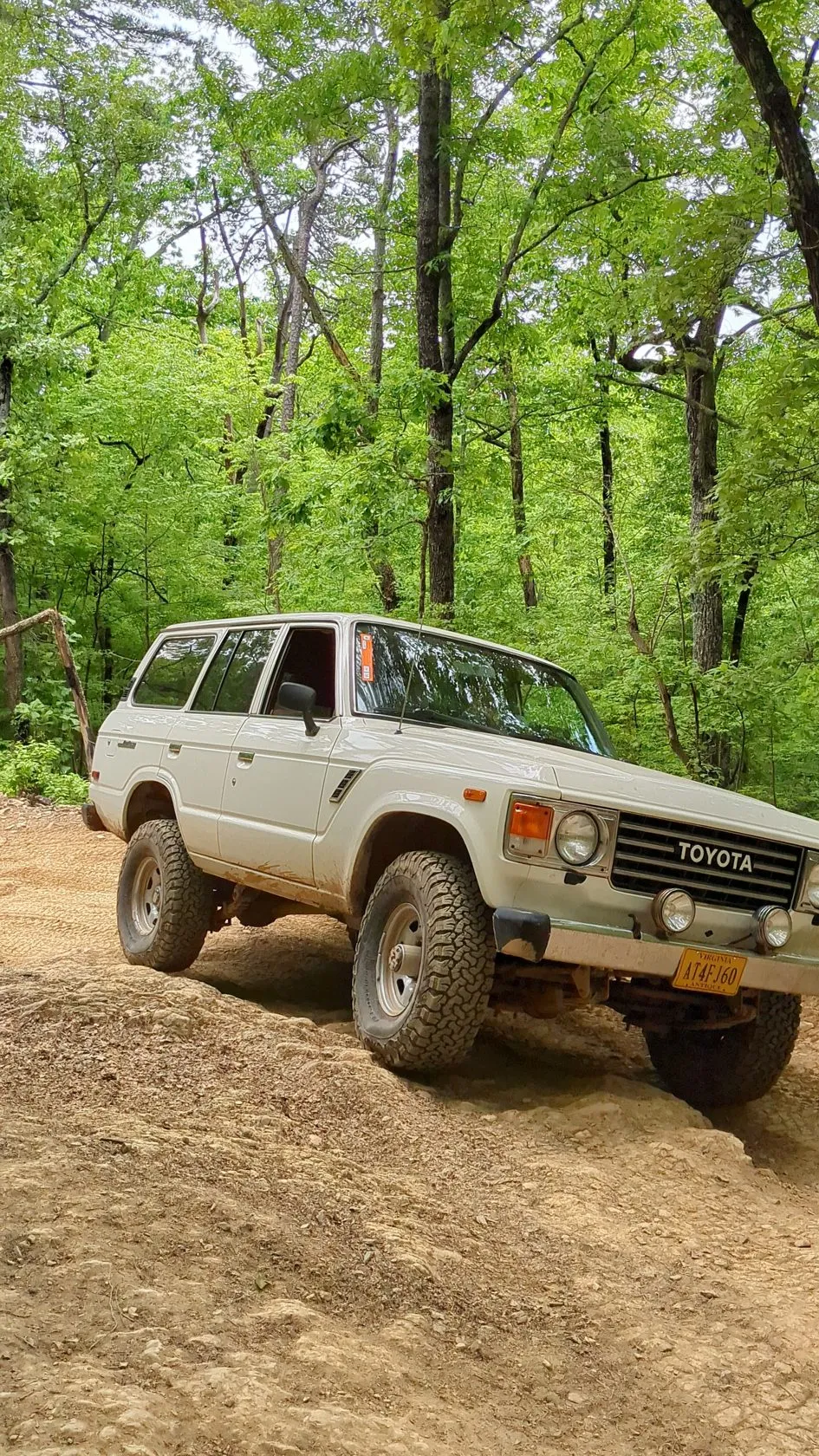
The wagon on a dirt trail among trees, angled on uneven ground.
The wagon on a dirt track in woodland, front three-quarter view.
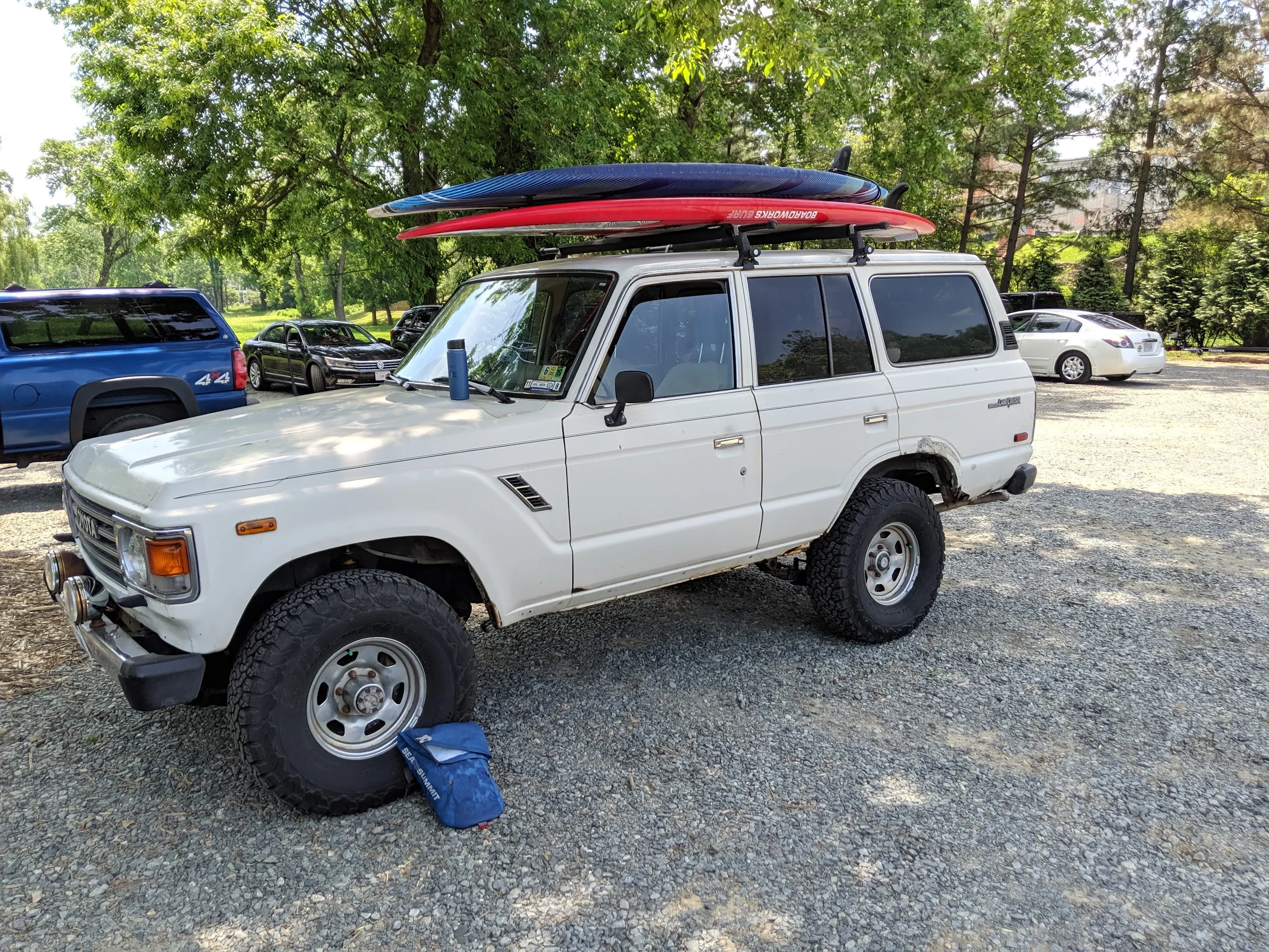
The wagon in May 2019, loaded with two stand-up paddleboards on the Yakima roof rack at a gravel put-in. This is before the bodywork: the filler in the rear quarter and the rust along the rocker and rear arch are both visible.

Interior25

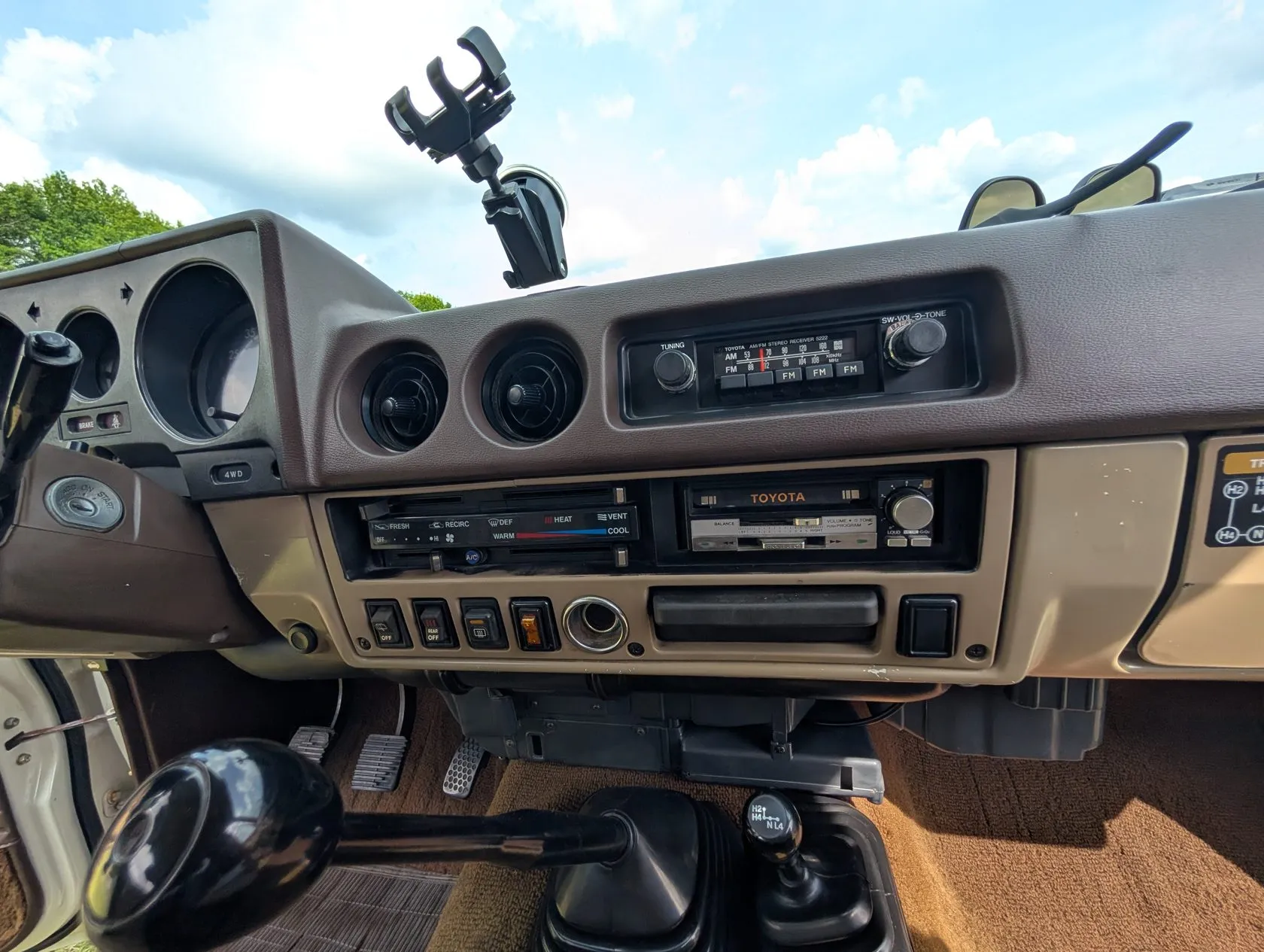
The dashboard from the driver's seat: instrument cluster, centre stack with radio, heater controls, and the steering wheel.
The two floor levers between the seats, the four-speed gear lever and the transfer case lever, in their rubber boots.
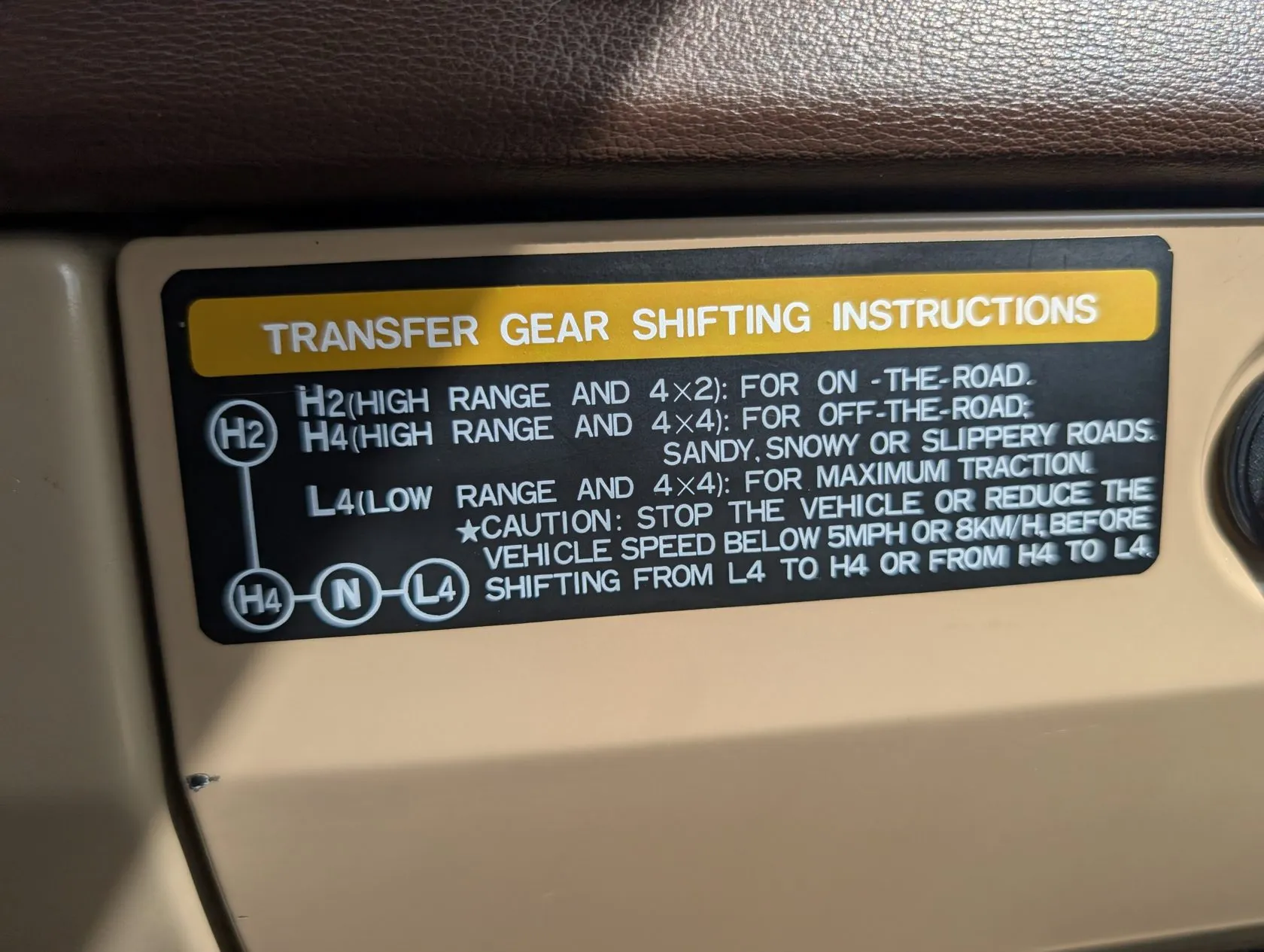
The transfer gear shifting instructions plate, listing the H2, H4, N and L4 positions.
The front bucket seats seen from the open driver's door, in patterned tan cloth with brown vinyl sides.
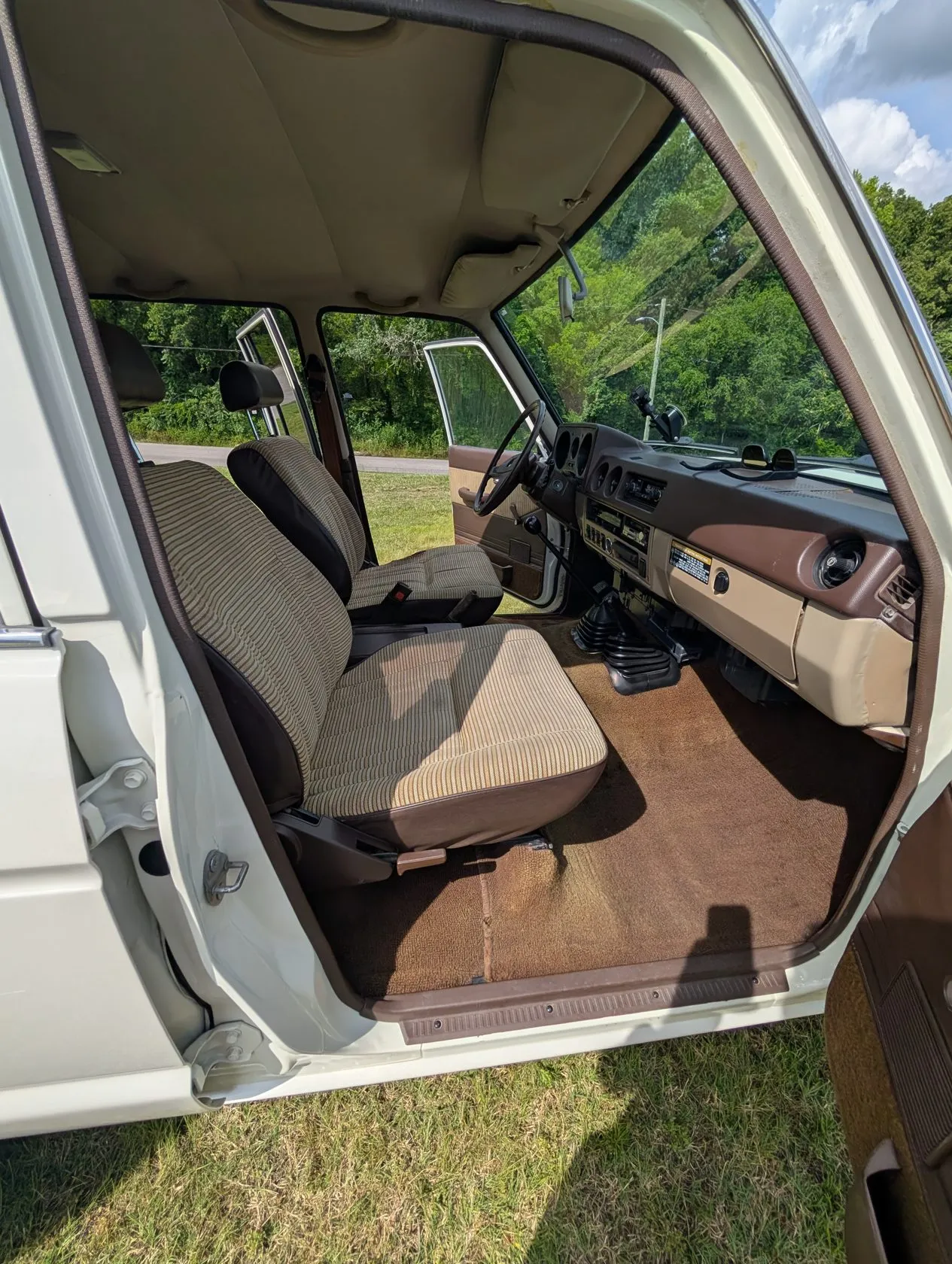
The front seats and the centre console from the passenger side.
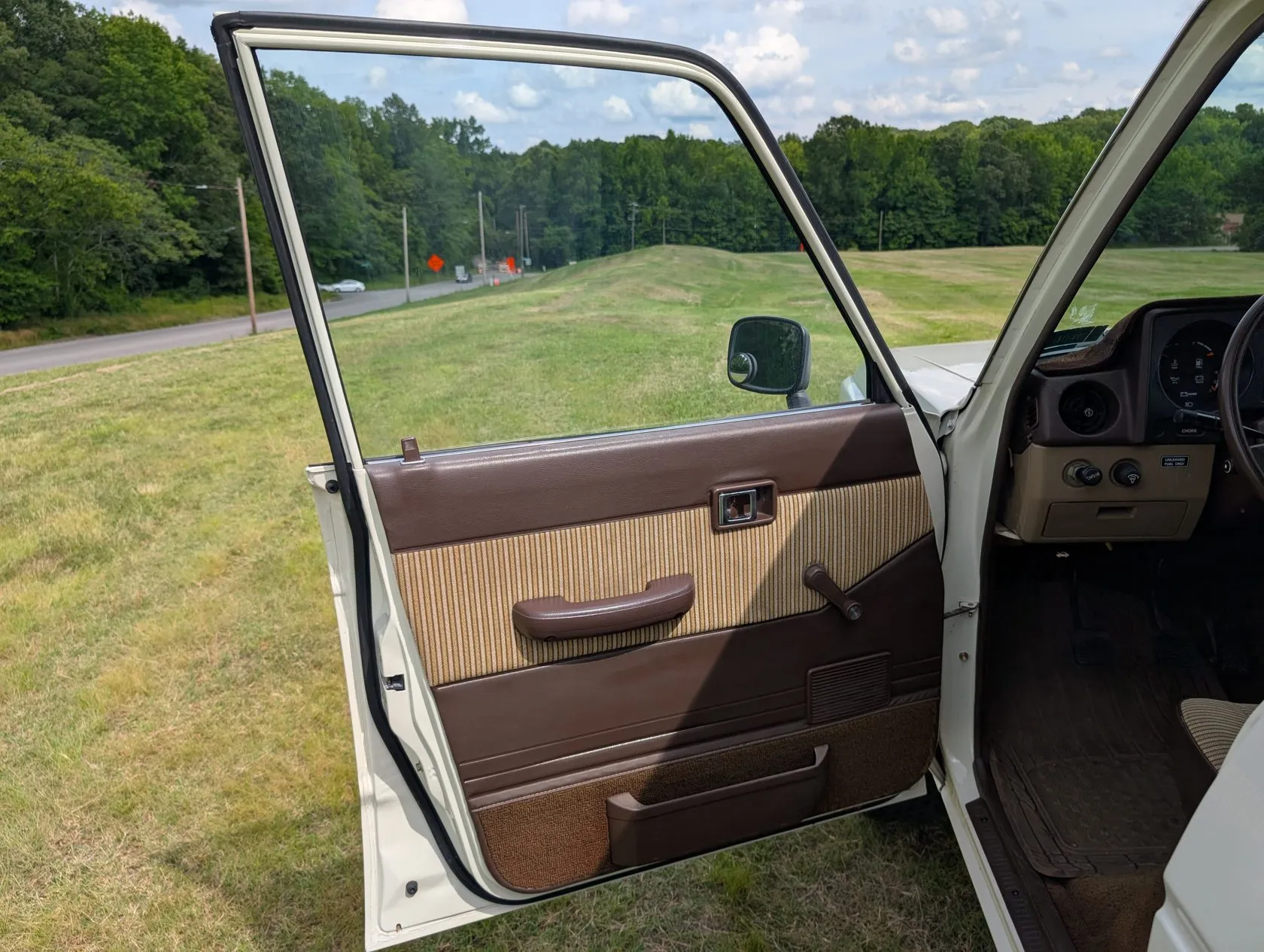
The driver's door panel, brown vinyl with a cloth insert, showing the handle and armrest.
A rear door panel in matching brown vinyl and tan cloth.
A front door panel with the window winder and door pull.
The folding rear bench in tan cloth, fitted with shoulder belts that were added by the current owner.
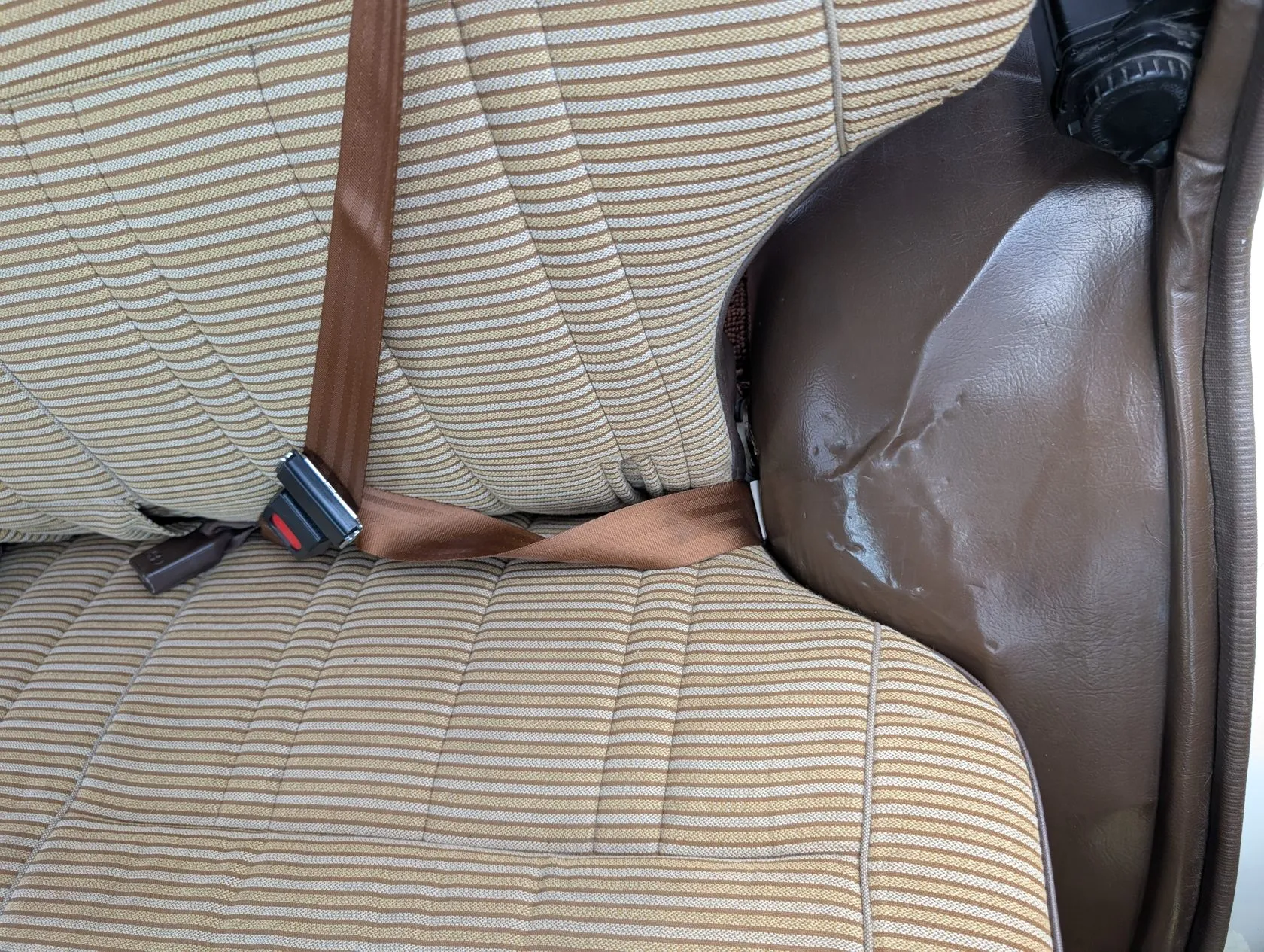
Closer view of the rear bench and the added shoulder belt webbing.
The rear seat belt buckles and stalks at the base of the bench.
The rear bench seen from the side, showing the brown vinyl seat back.
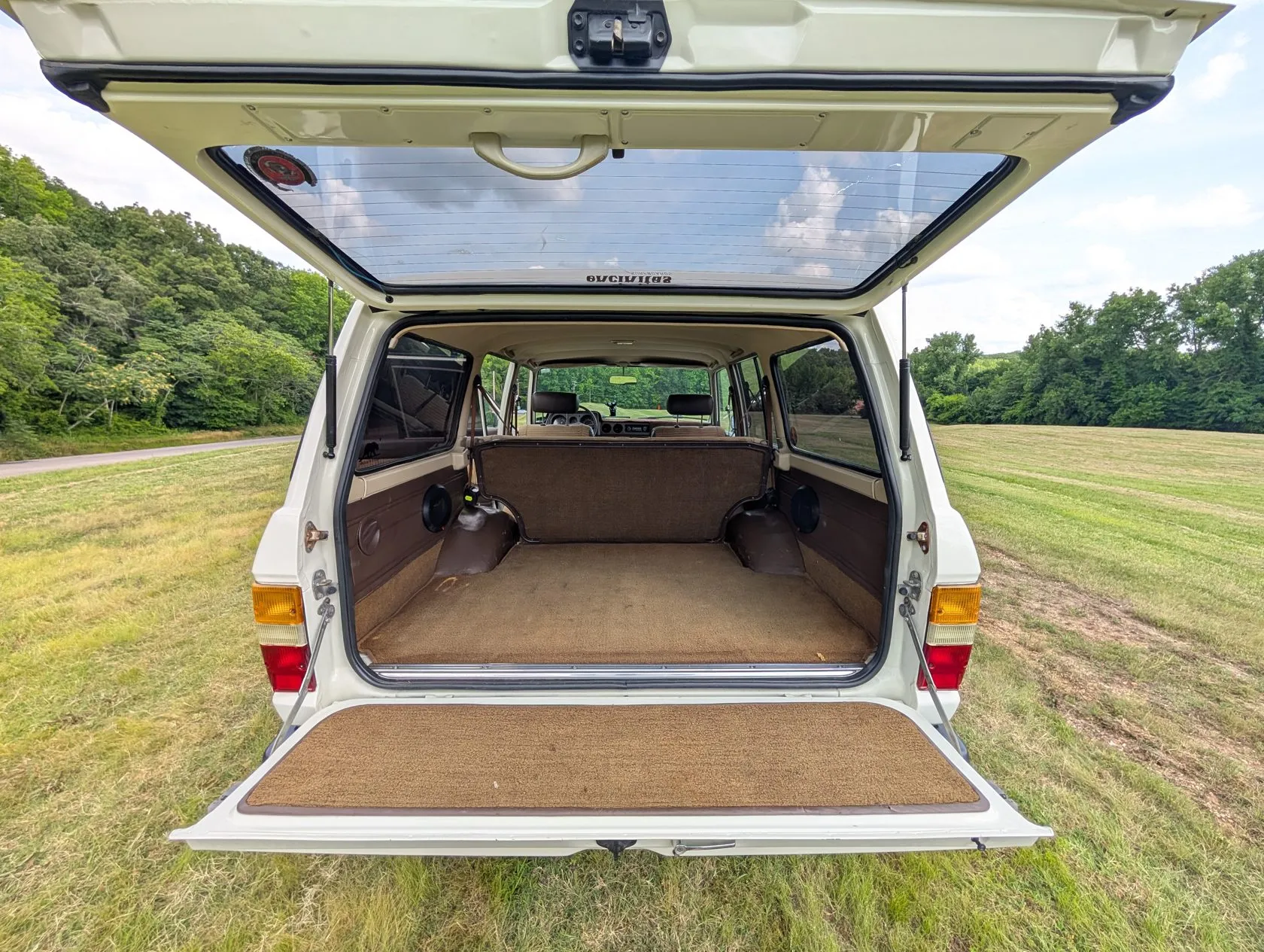
The cargo area with the tailgate open, looking in from behind the wagon.
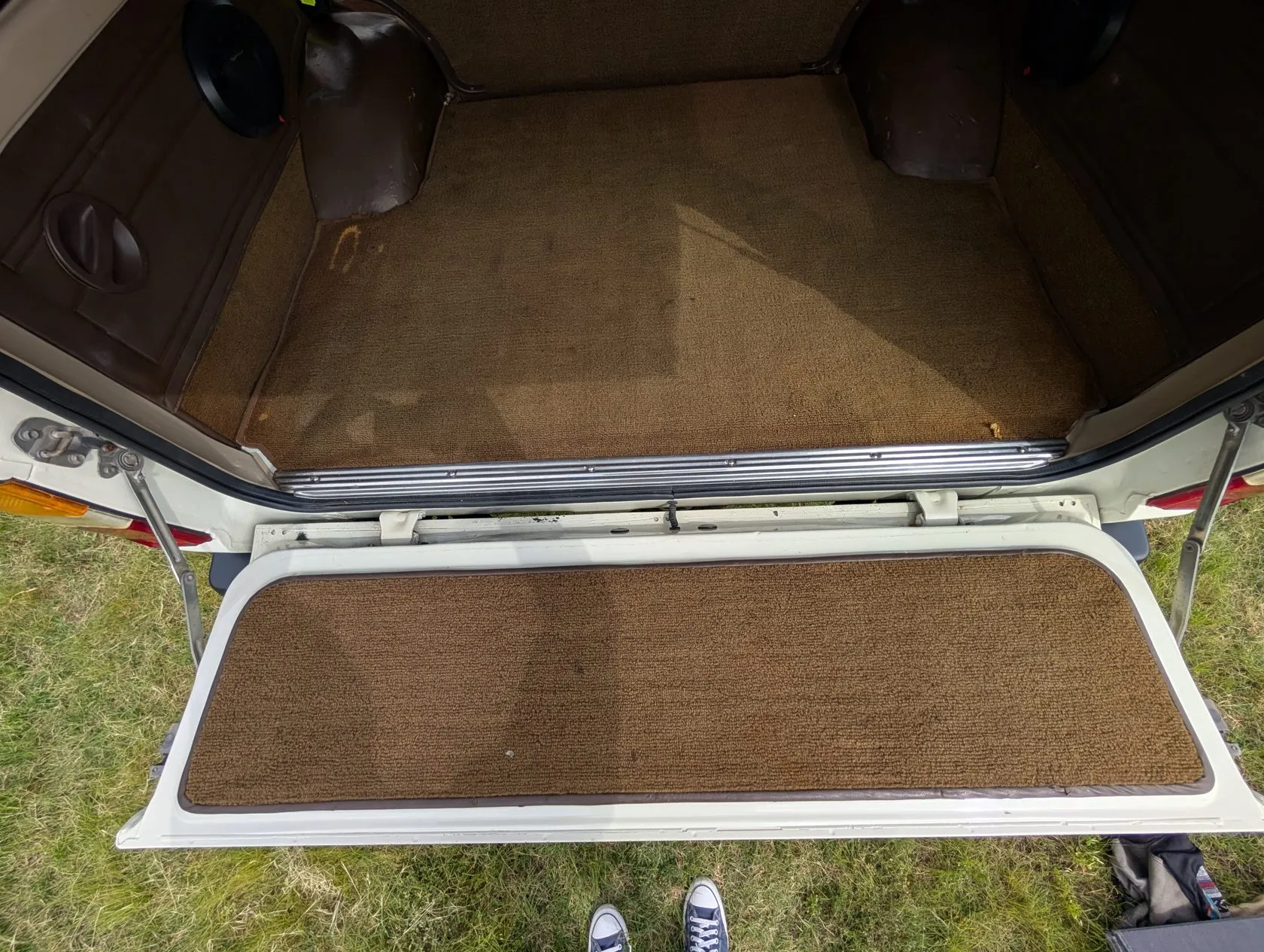
The carpeted cargo floor behind the rear seat.
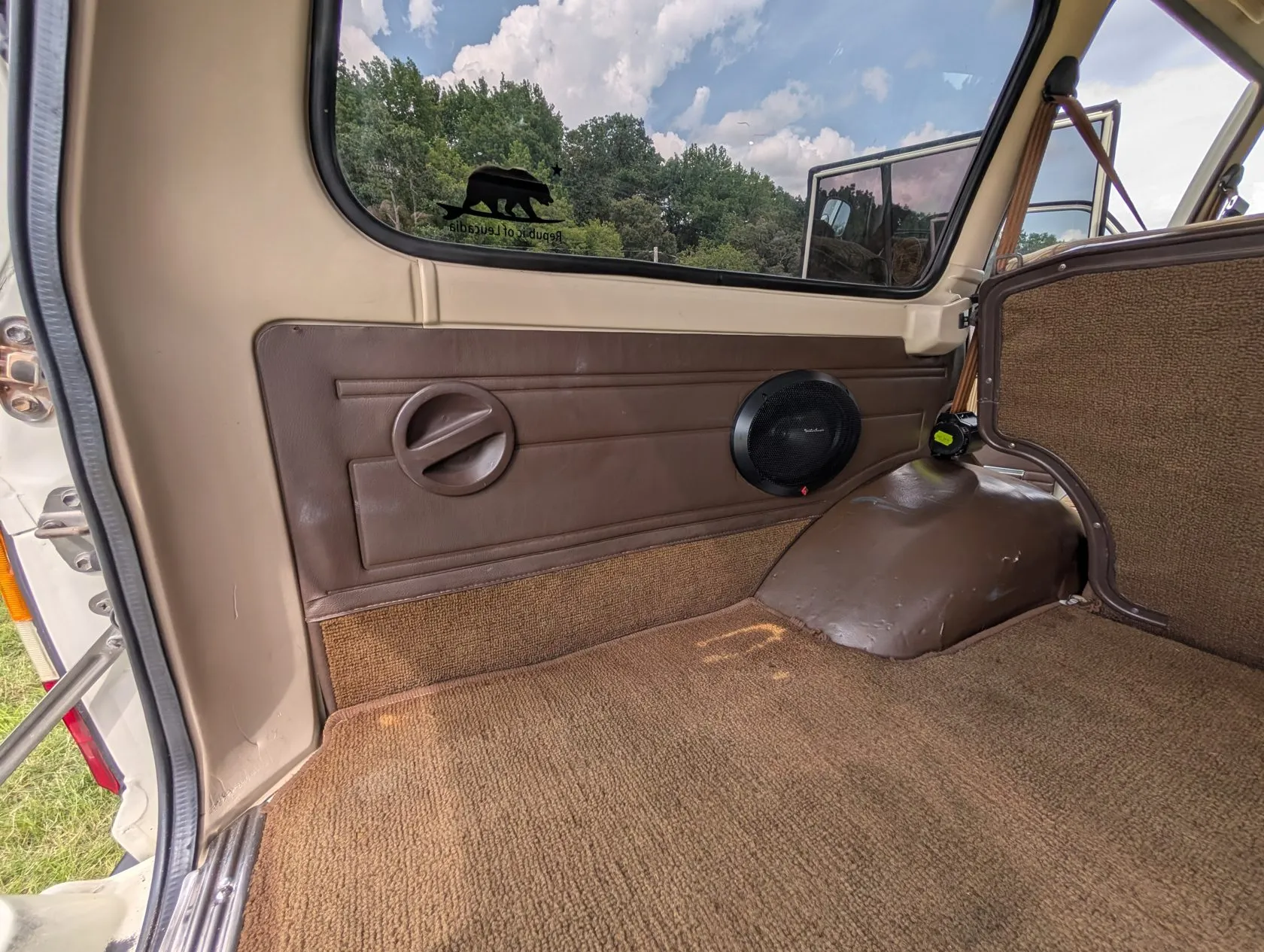
A cargo area side panel with a speaker mounted in it.
A Rockford Fosgate speaker in its grille, fitted into the interior trim.
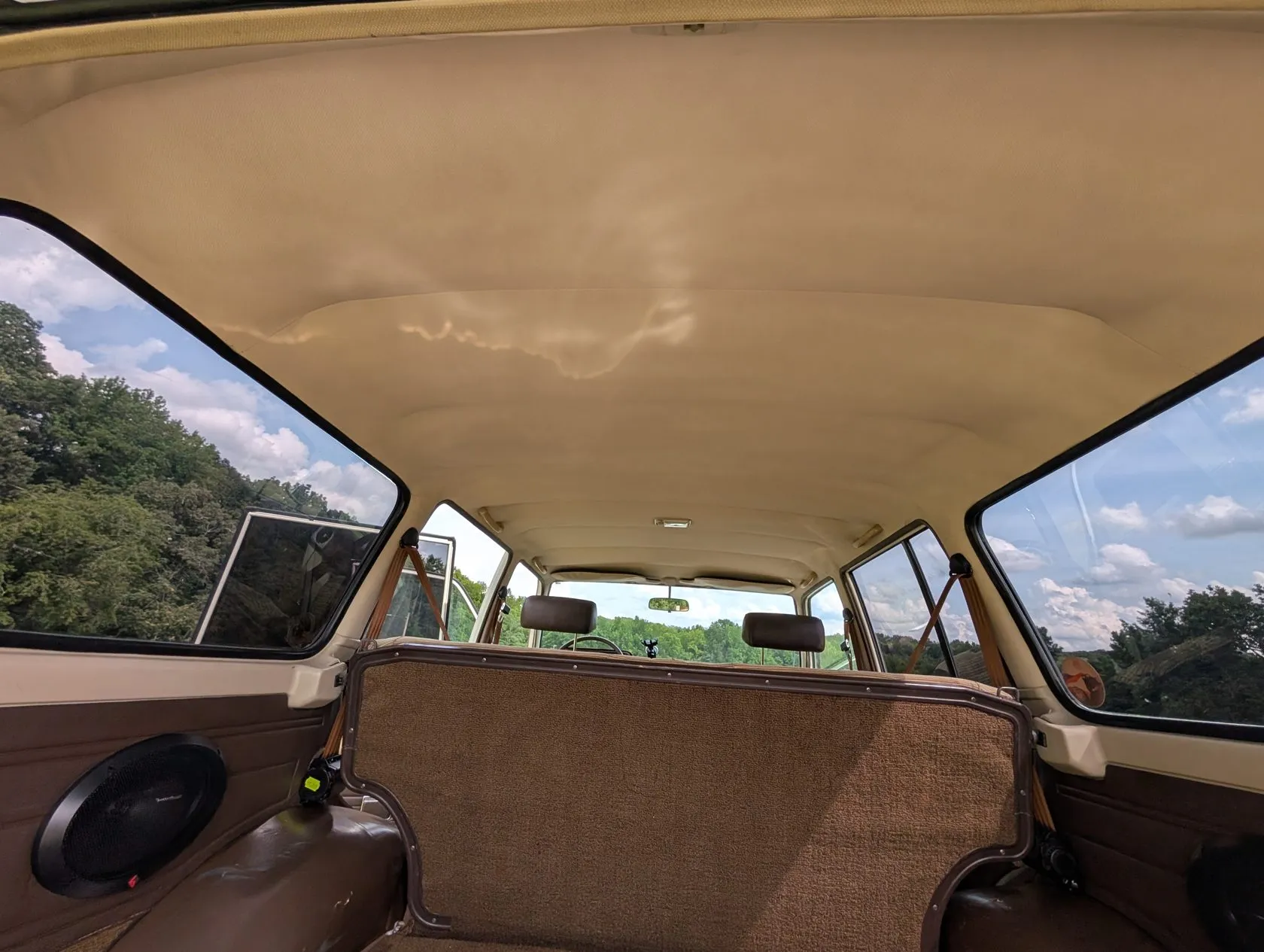
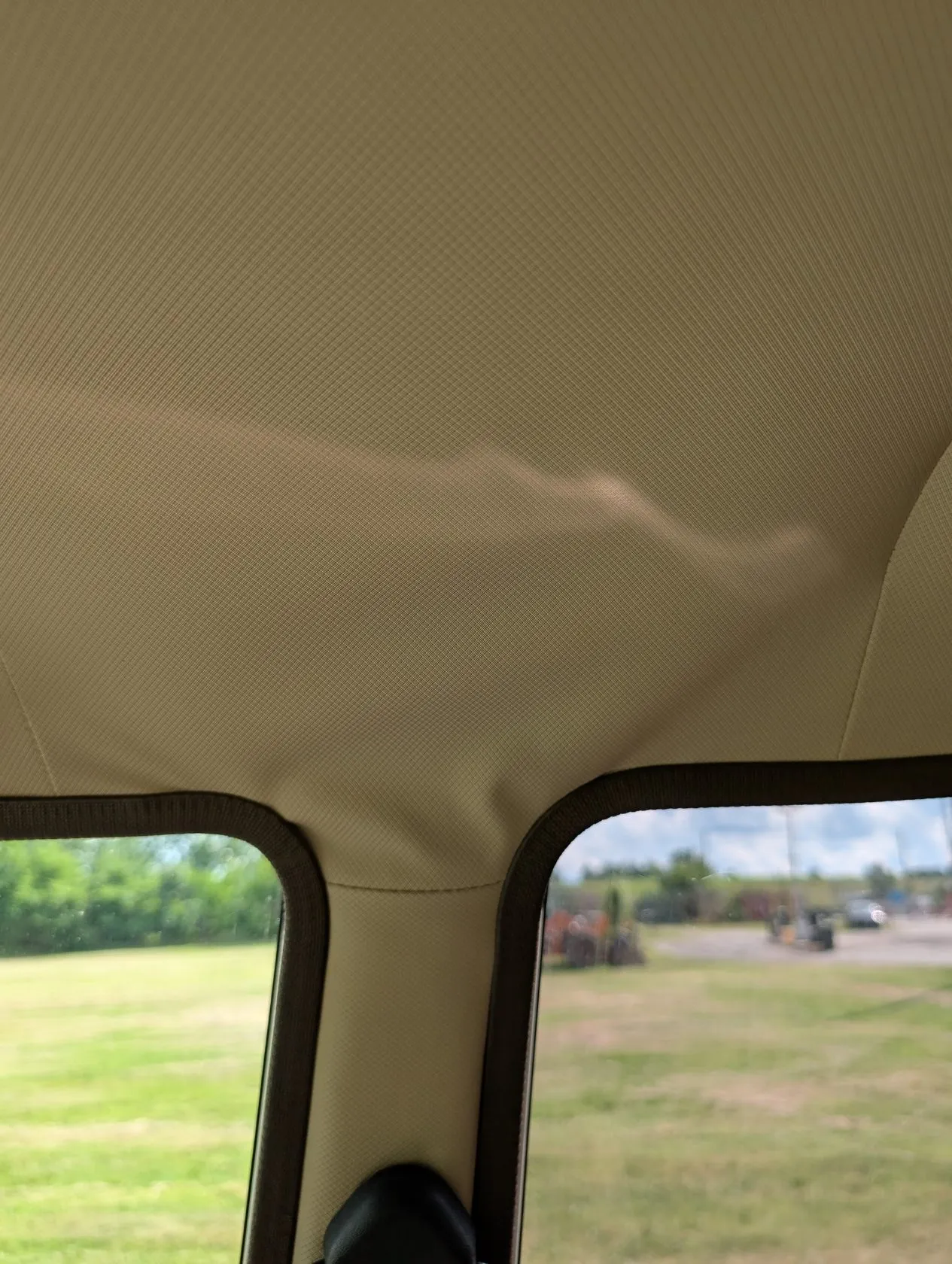
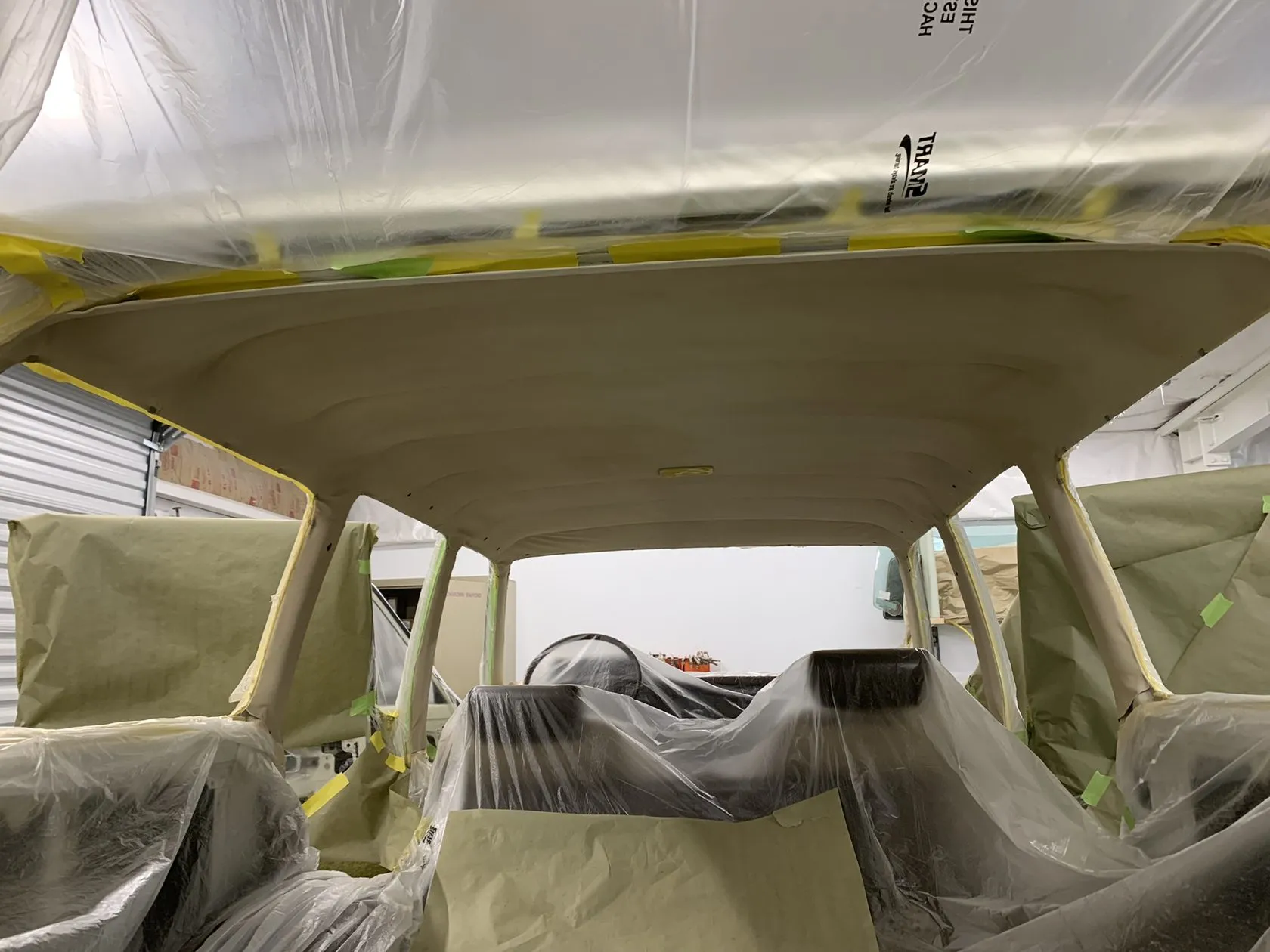
The headliner, dyed tan to match the original interior color.
The cabin looking forward from the rear, showing seat backs, headrests and the headliner.
The headliner above the rear of the cabin, beside the quarter windows.
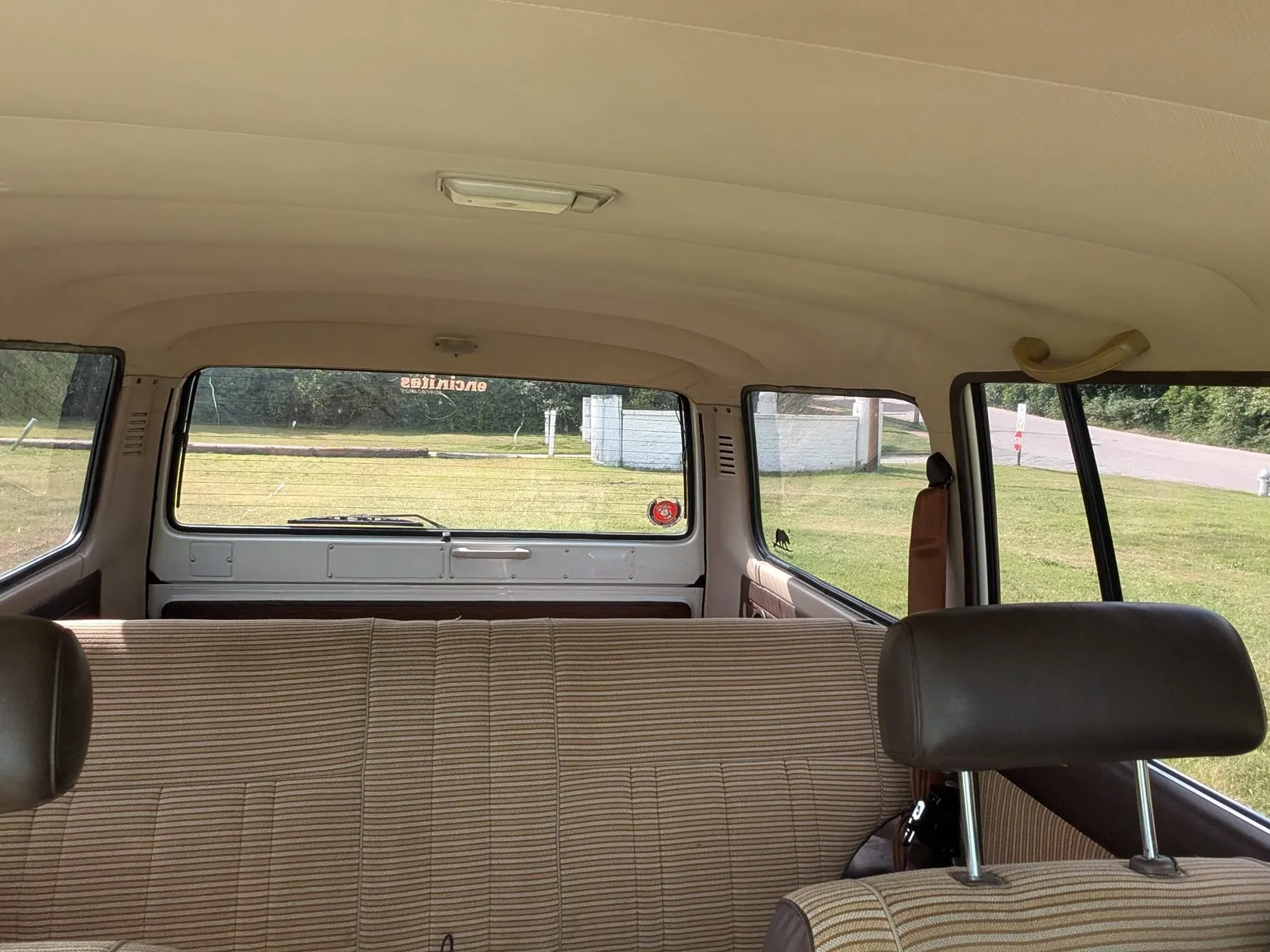
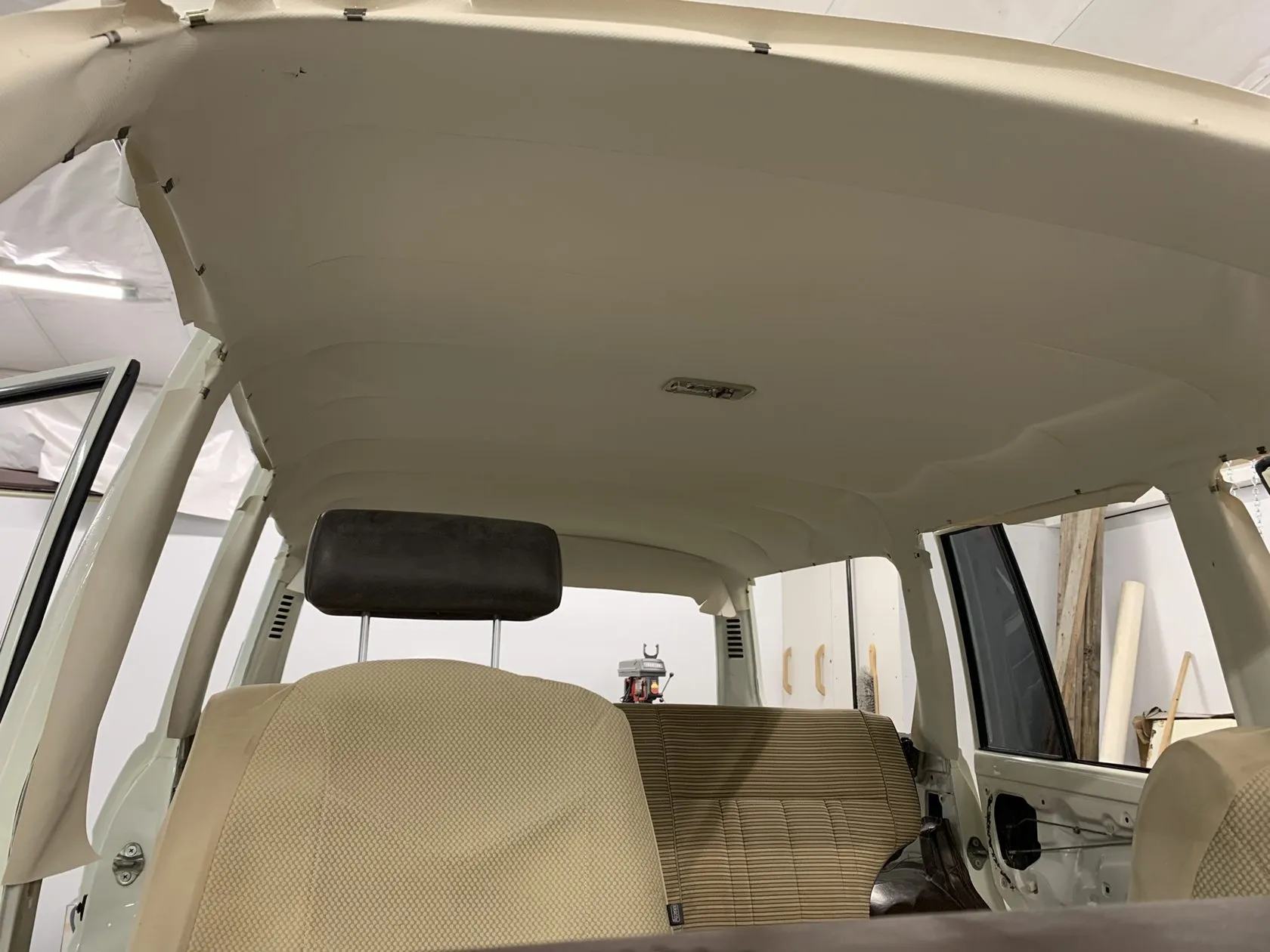
The headliner fitted, seen across the width of the cabin.
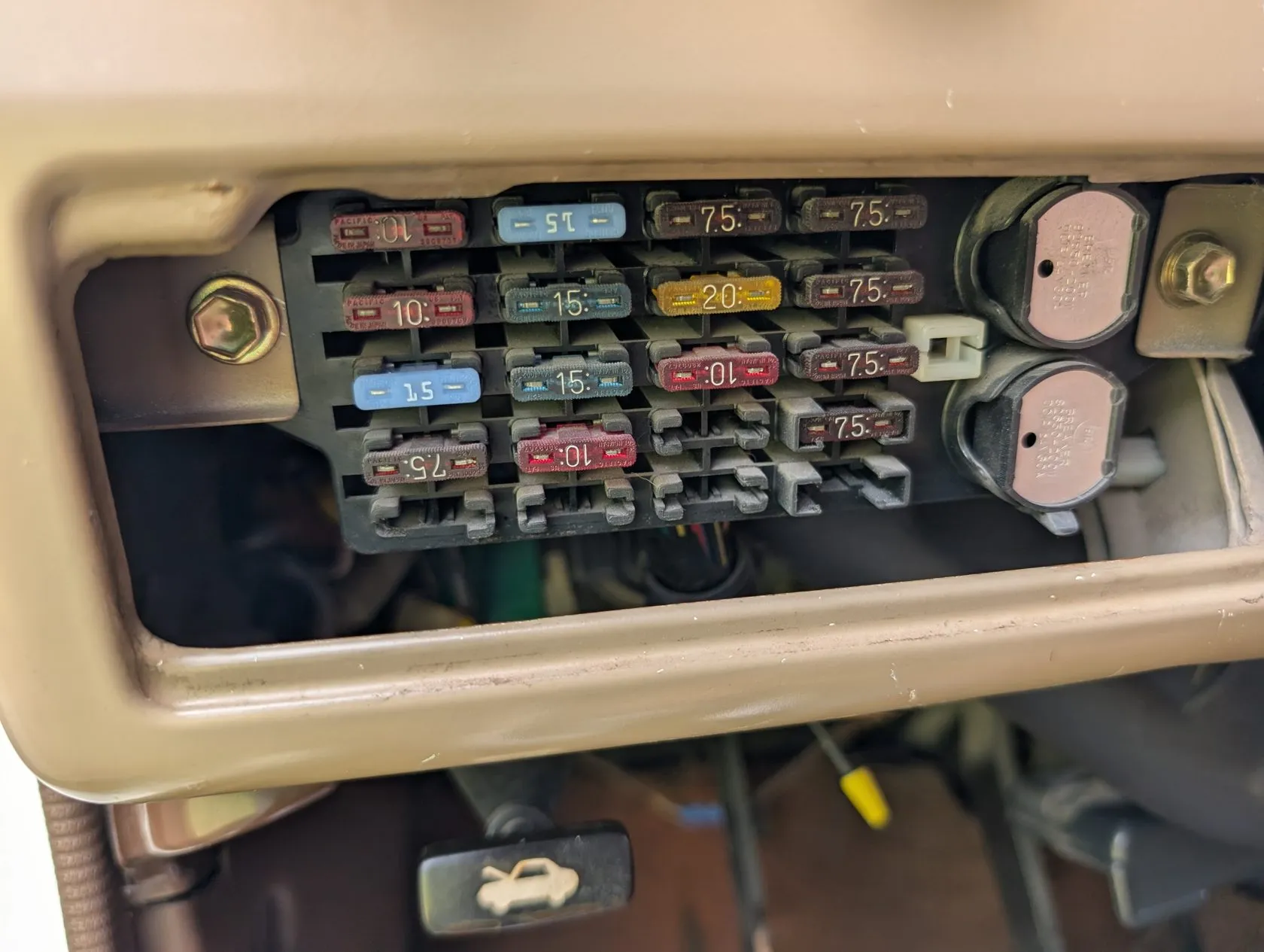
The fuse box with its cover off, fuses and labels visible.
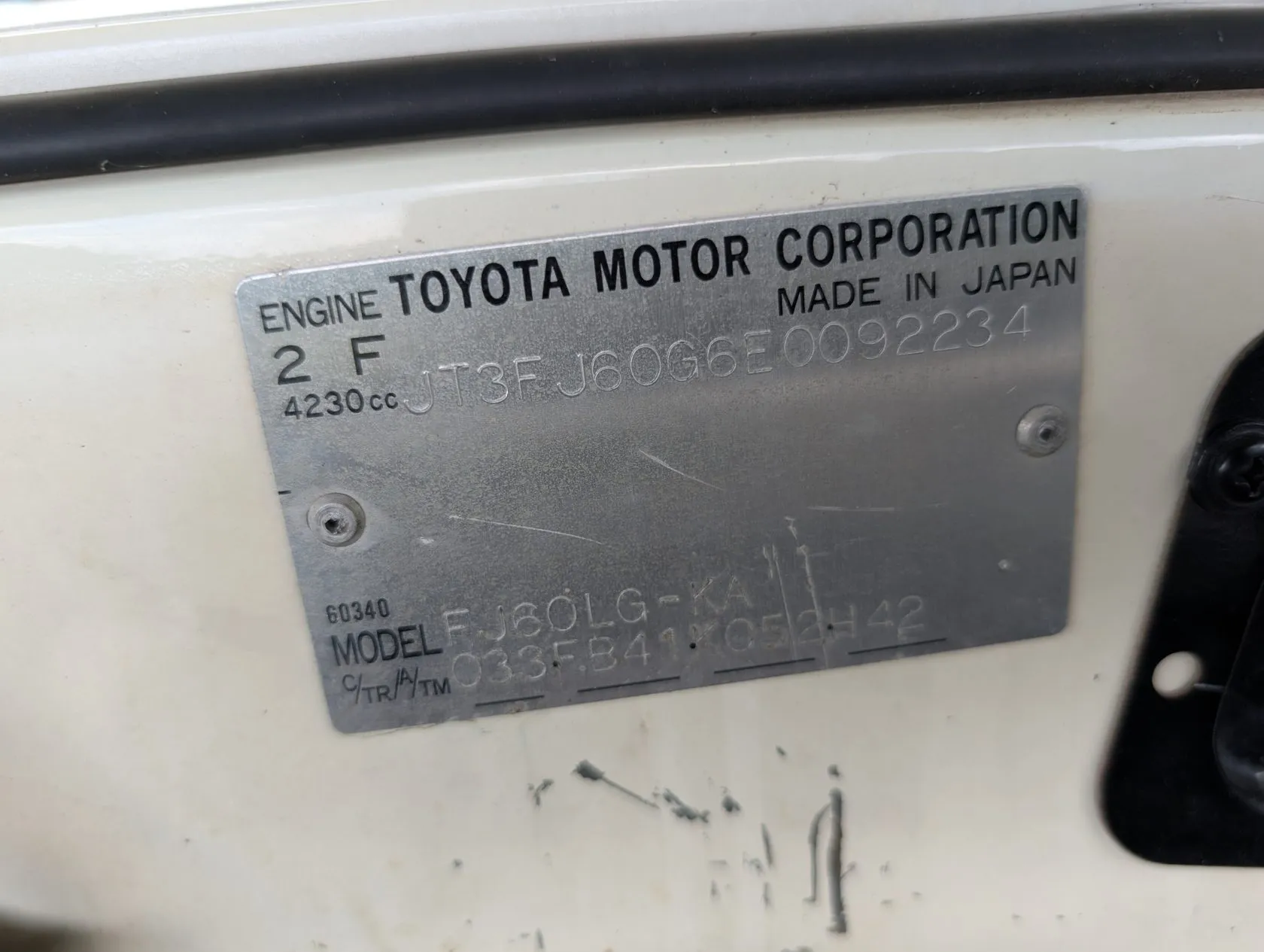
The engine identification plate reading TOYOTA MOTOR CORPORATION, MADE IN JAPAN, 2F, 4230cc.
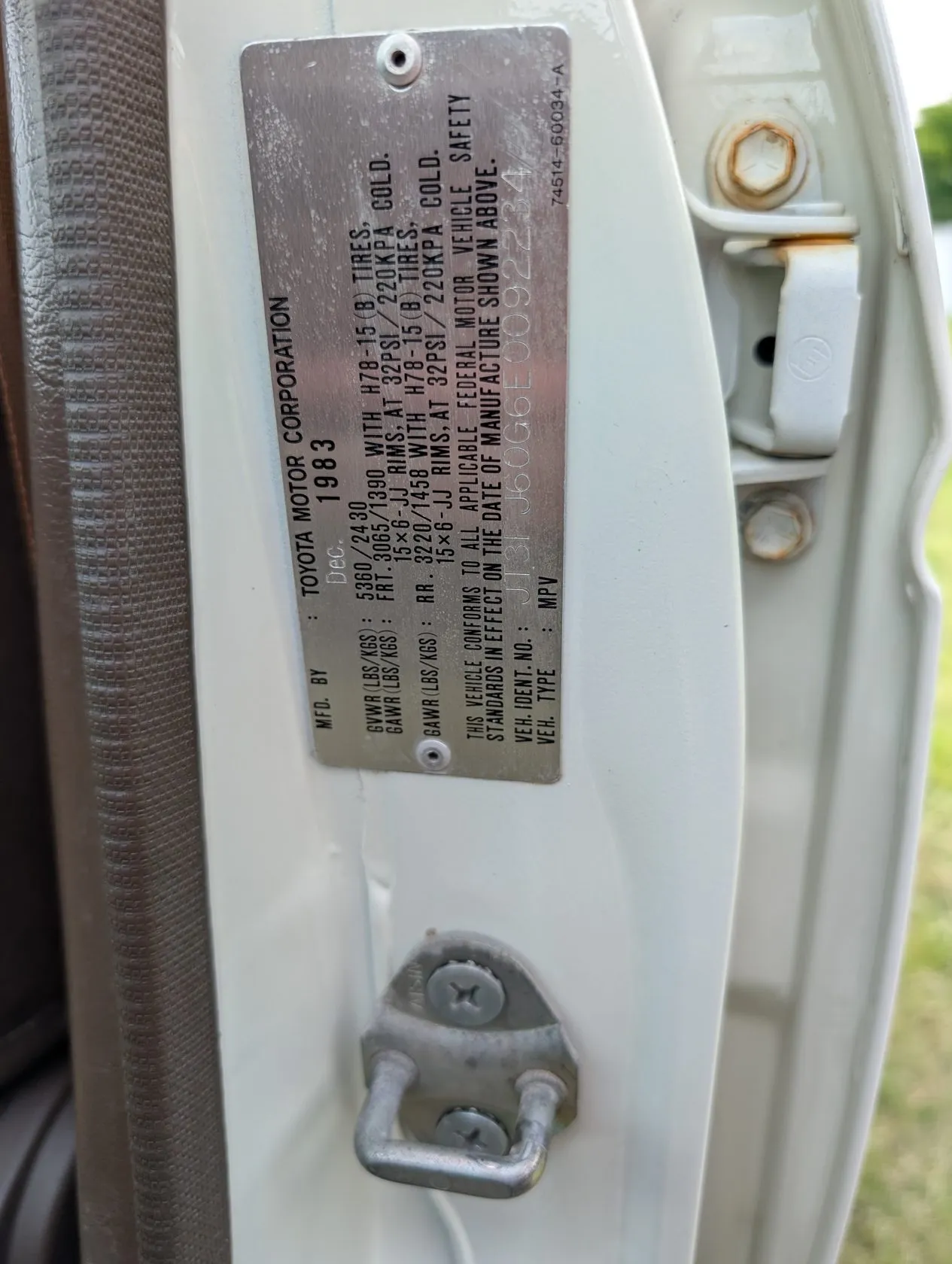
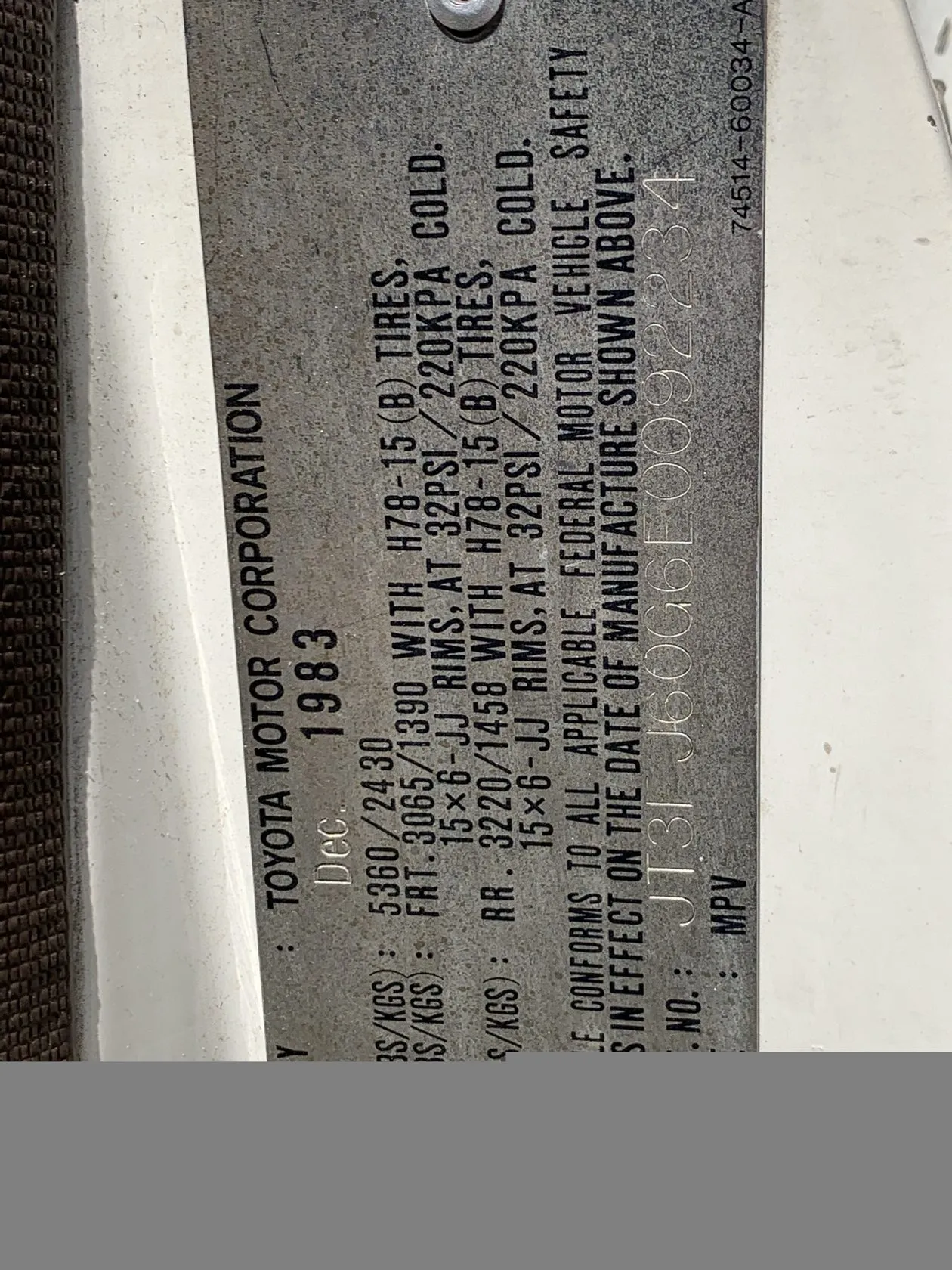
The manufacturer's plate in the door jamb. The build date reads 1983, which is normal for a 1984 model year.
The door jamb tire and rim plate, specifying 15x6 JJ rims and the recommended cold inflation pressures.
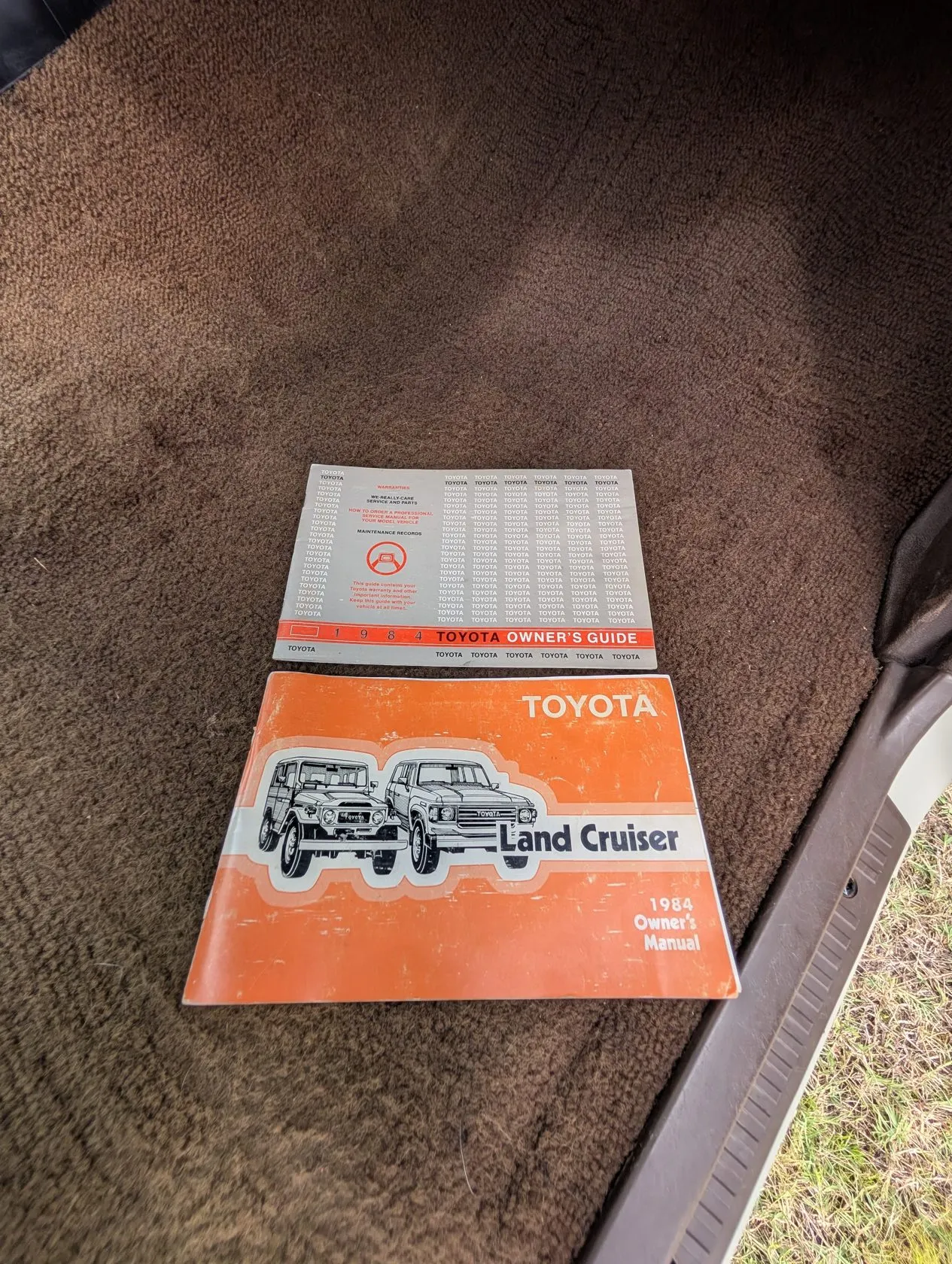
The original Toyota Land Cruiser owner's manual in its orange cover.

Engine5

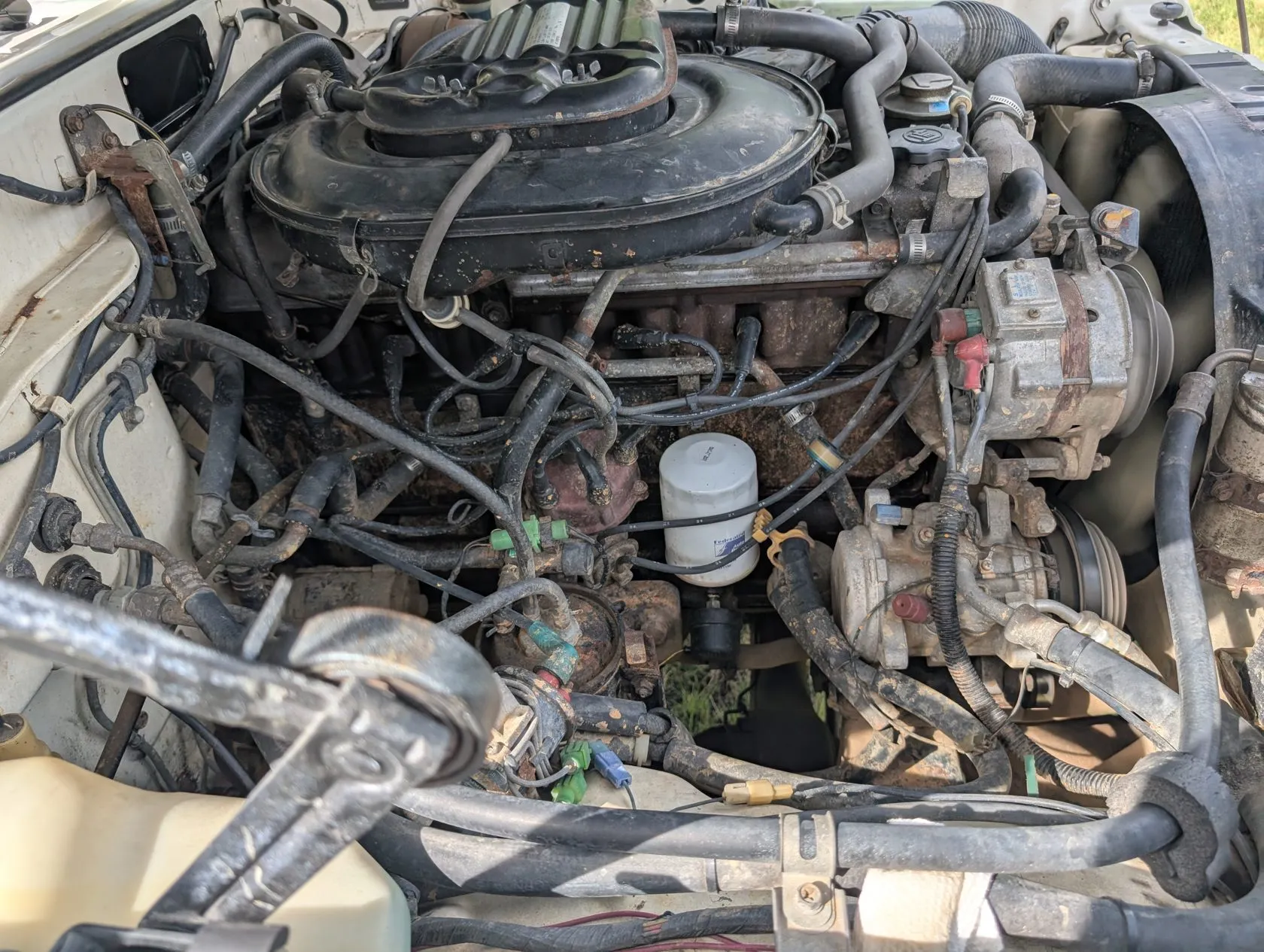
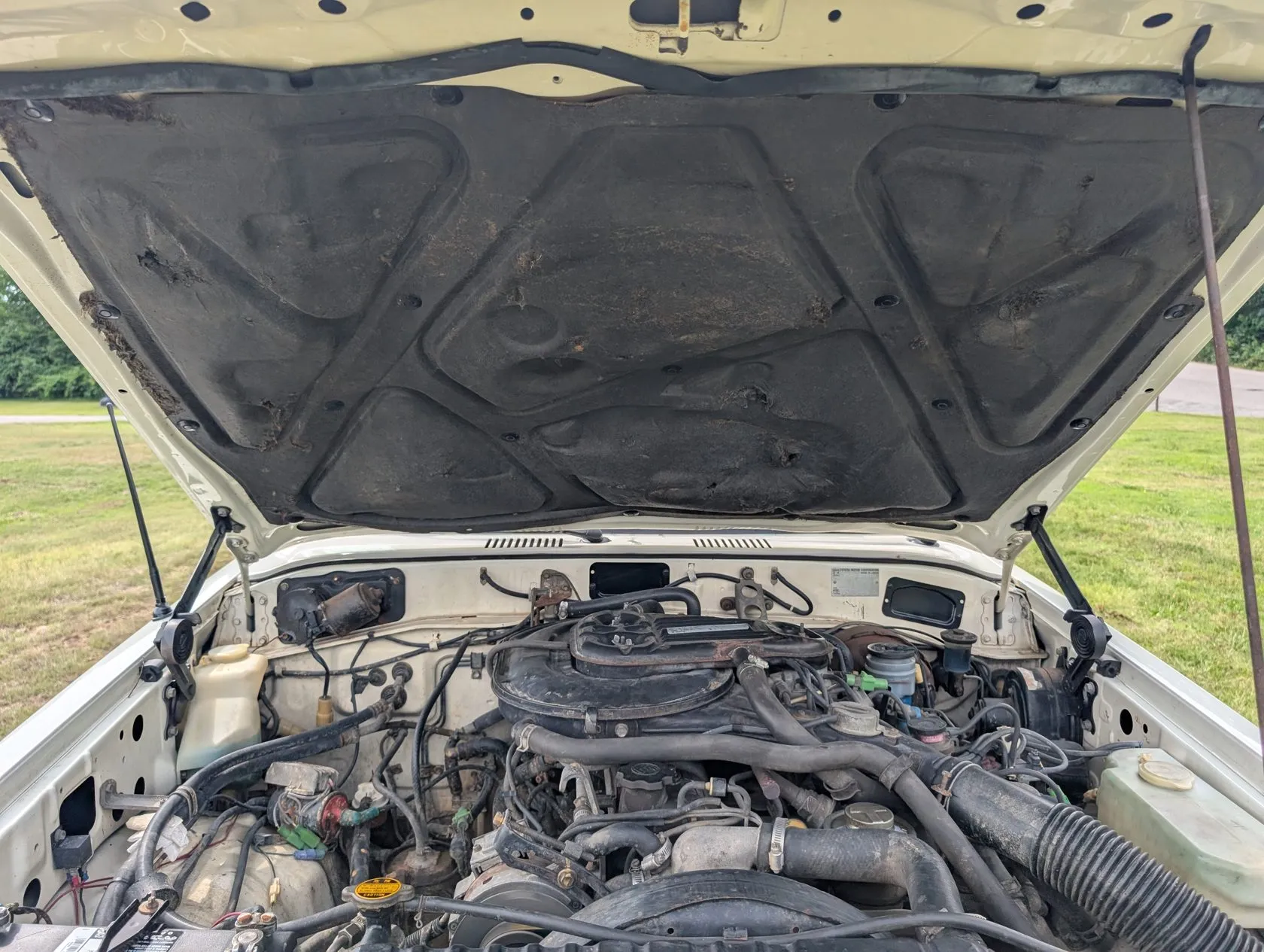
The engine bay with the hood open, showing the 4.2-liter 2F inline-six across the width of the compartment.
A wider view into the engine bay with the hood raised and its insulation pad visible.
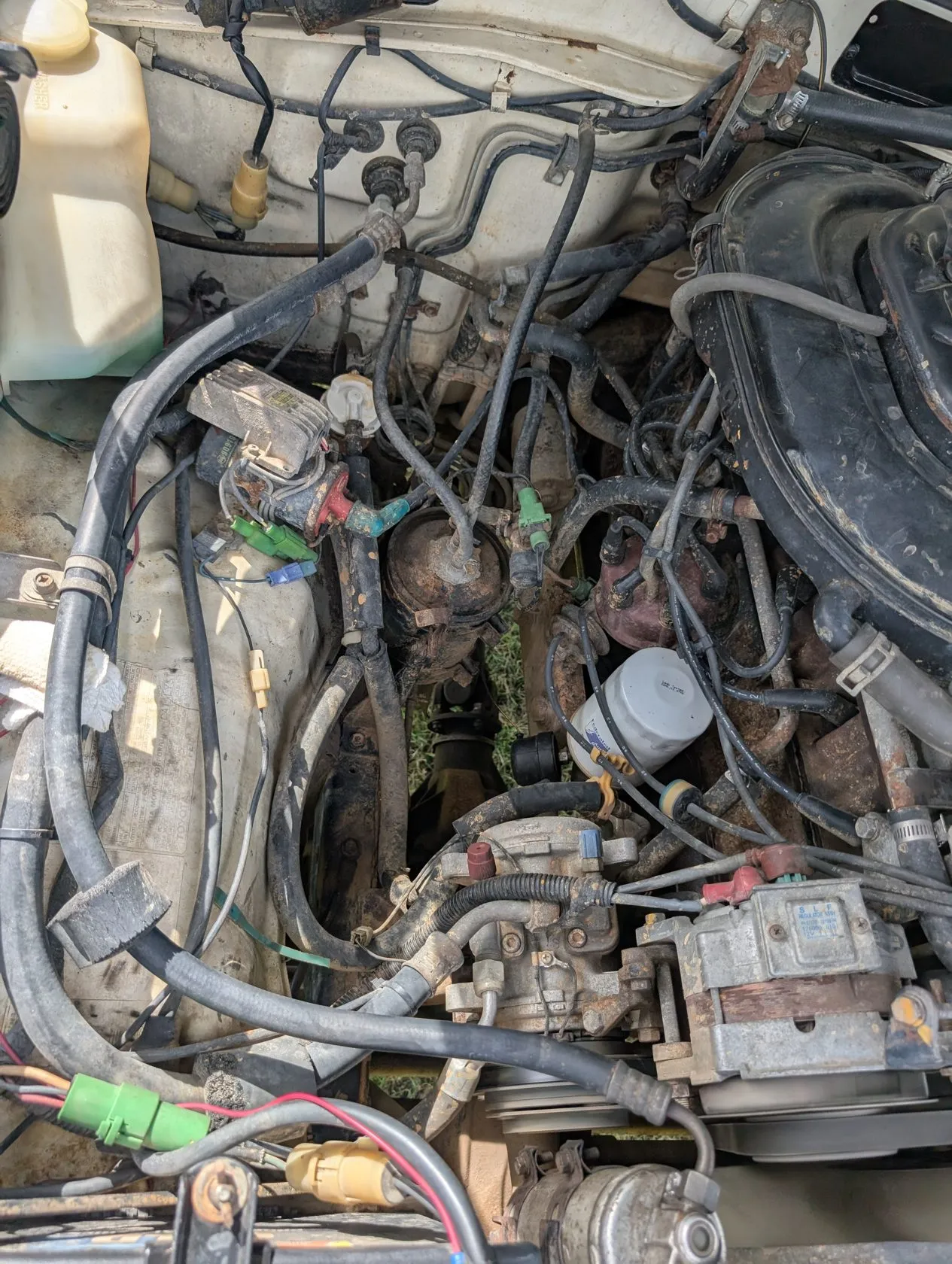
The passenger side of the engine bay, with hoses, wiring and ancillaries.
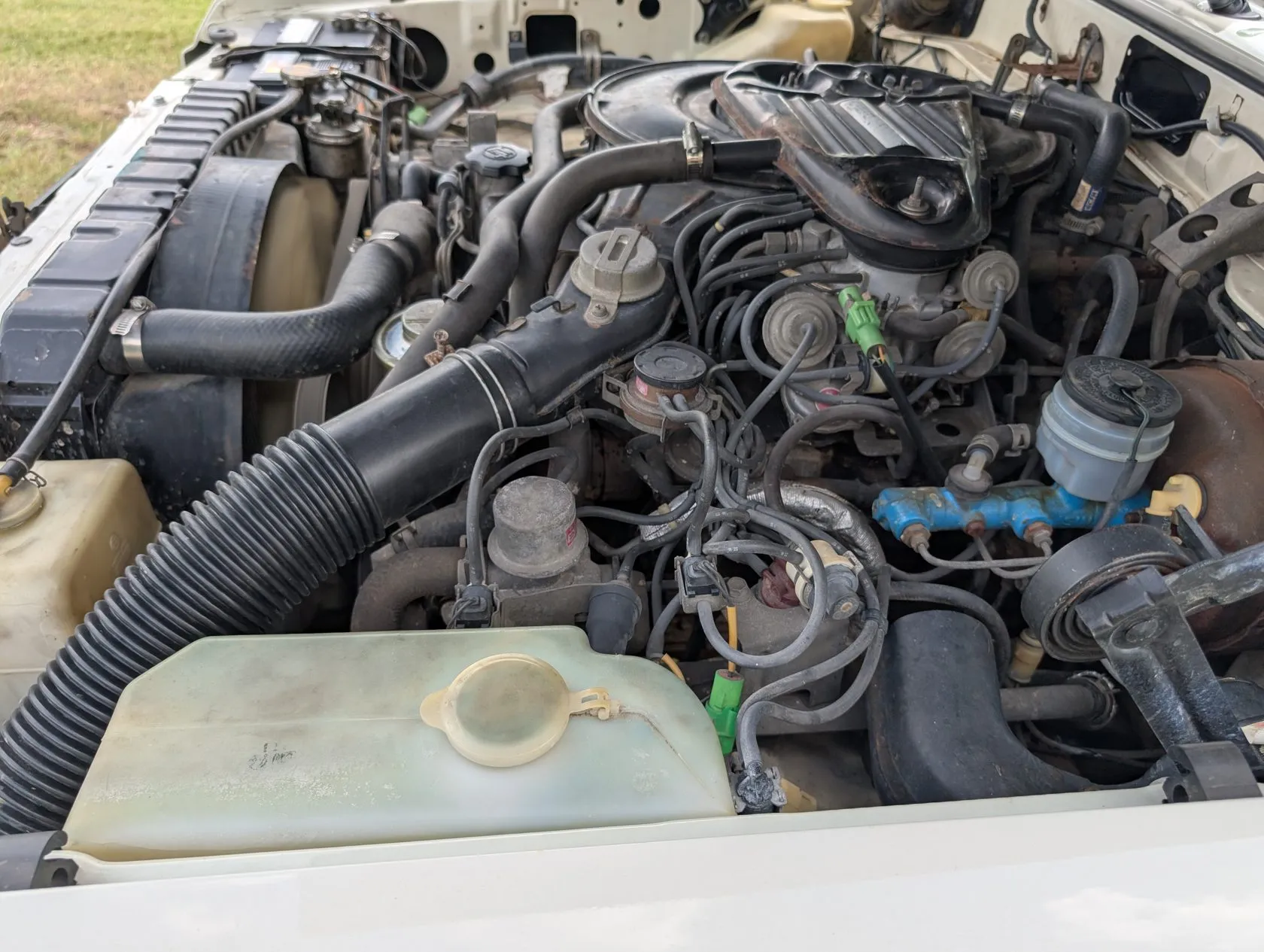
The coolant overflow reservoir and the hoses running to it.
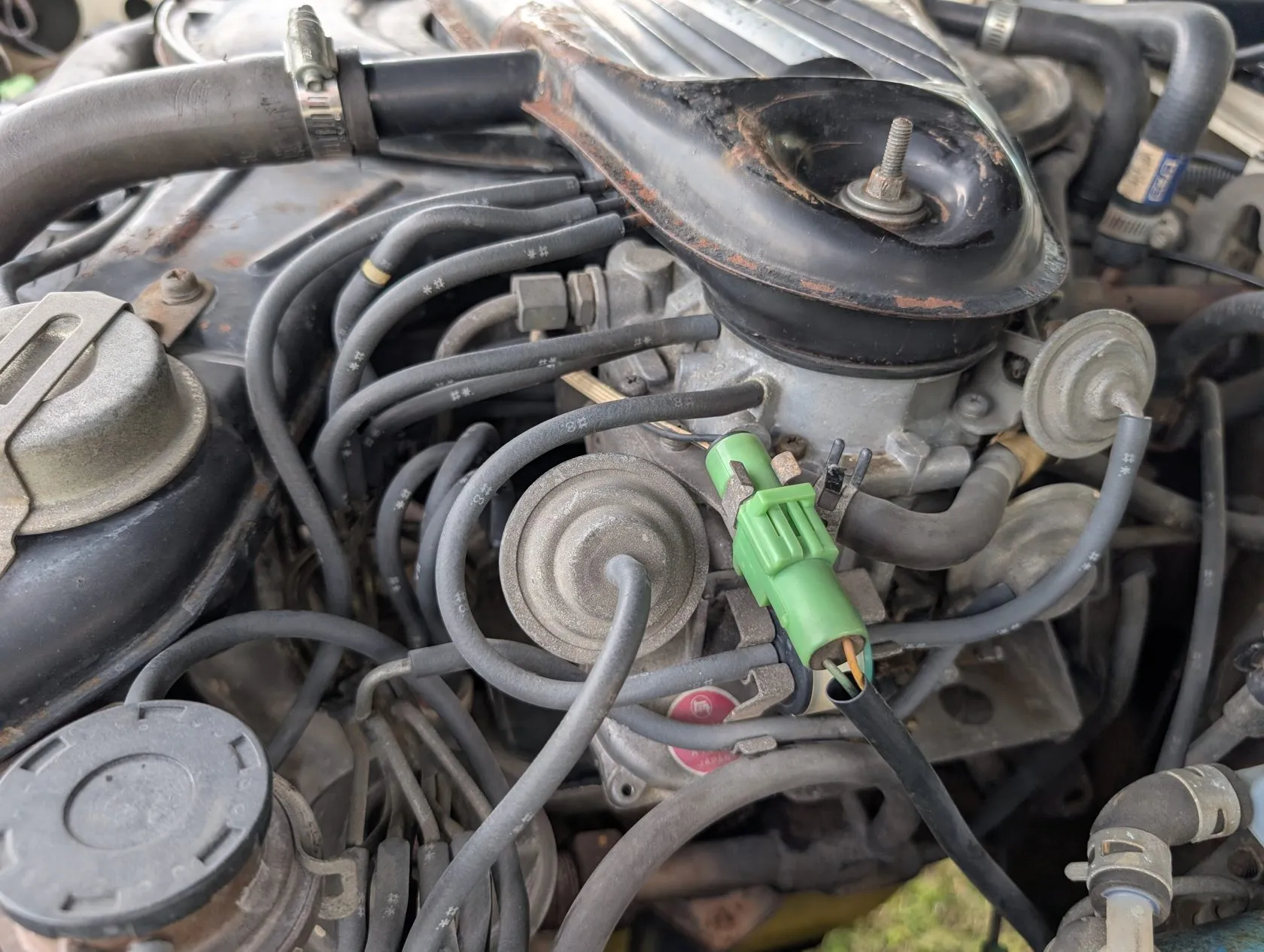
The single carburetor on top of the engine with its linkage and vacuum lines. This is the fuelling that makes the cold start take three or four cycles.

Wheels and tires5

A front wheel: factory chrome steel wheel with six oval slots, six lug nuts, and an all-terrain tire.
A chrome wheel photographed straight on, showing the slot pattern and the centre cap.
Wheel and tire from the side, with the BFGoodrich All-Terrain markings and the 33x10.50R15LT size legible on the sidewall.
A rear wheel and tire in the wheel arch.
A wheel seen within the arch, showing the gap and the tire's tread shoulder.

Underside10

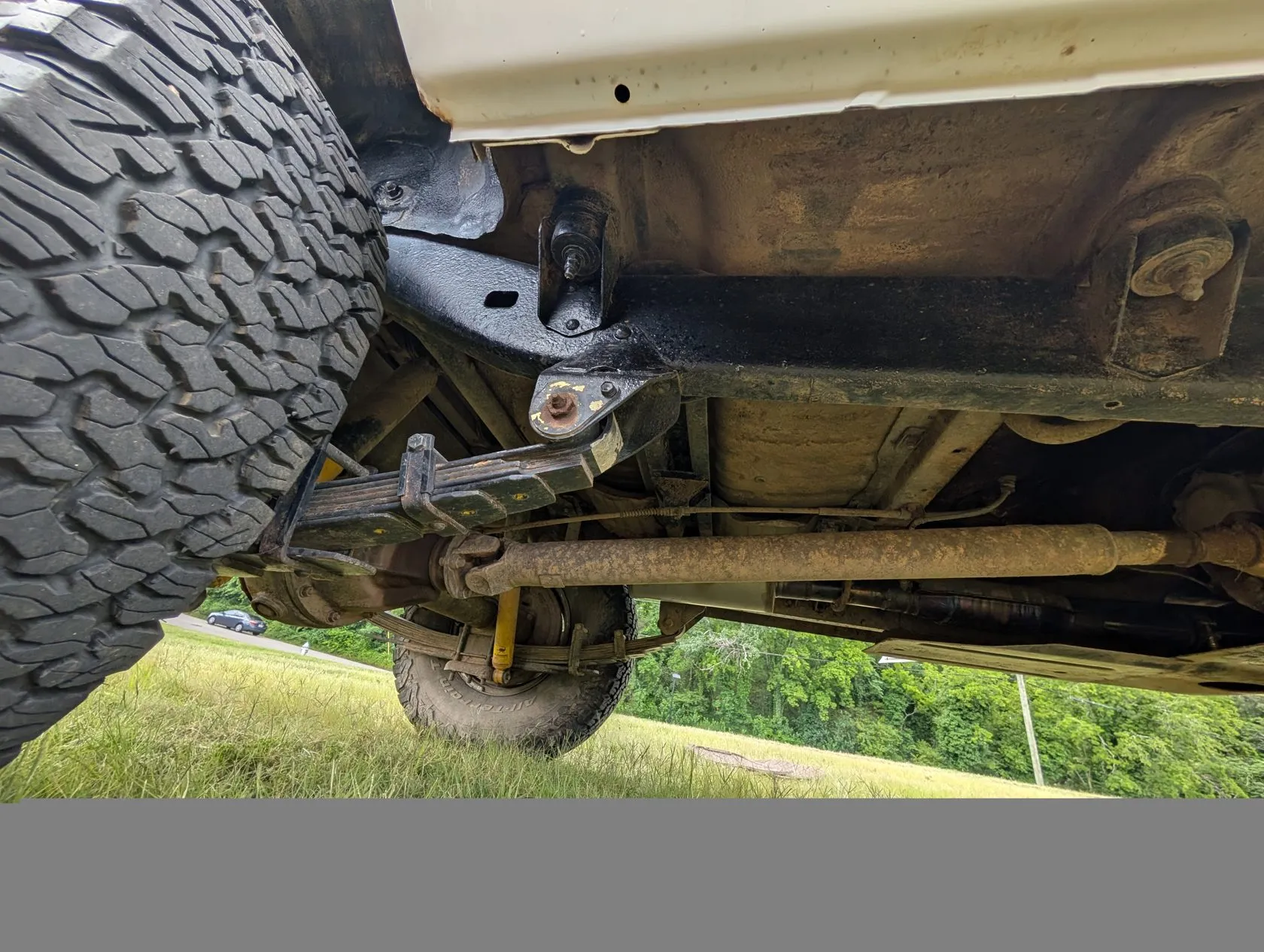
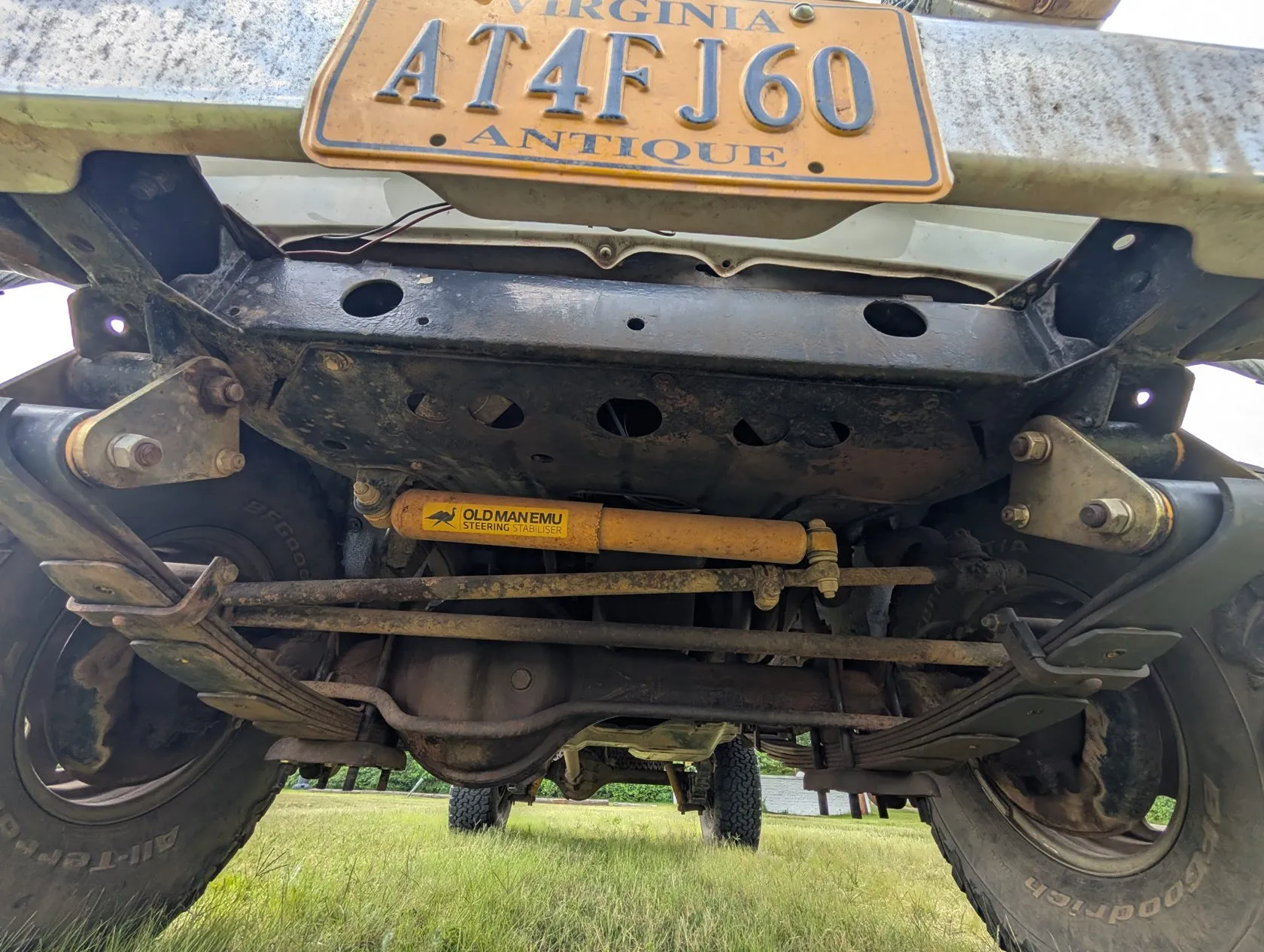
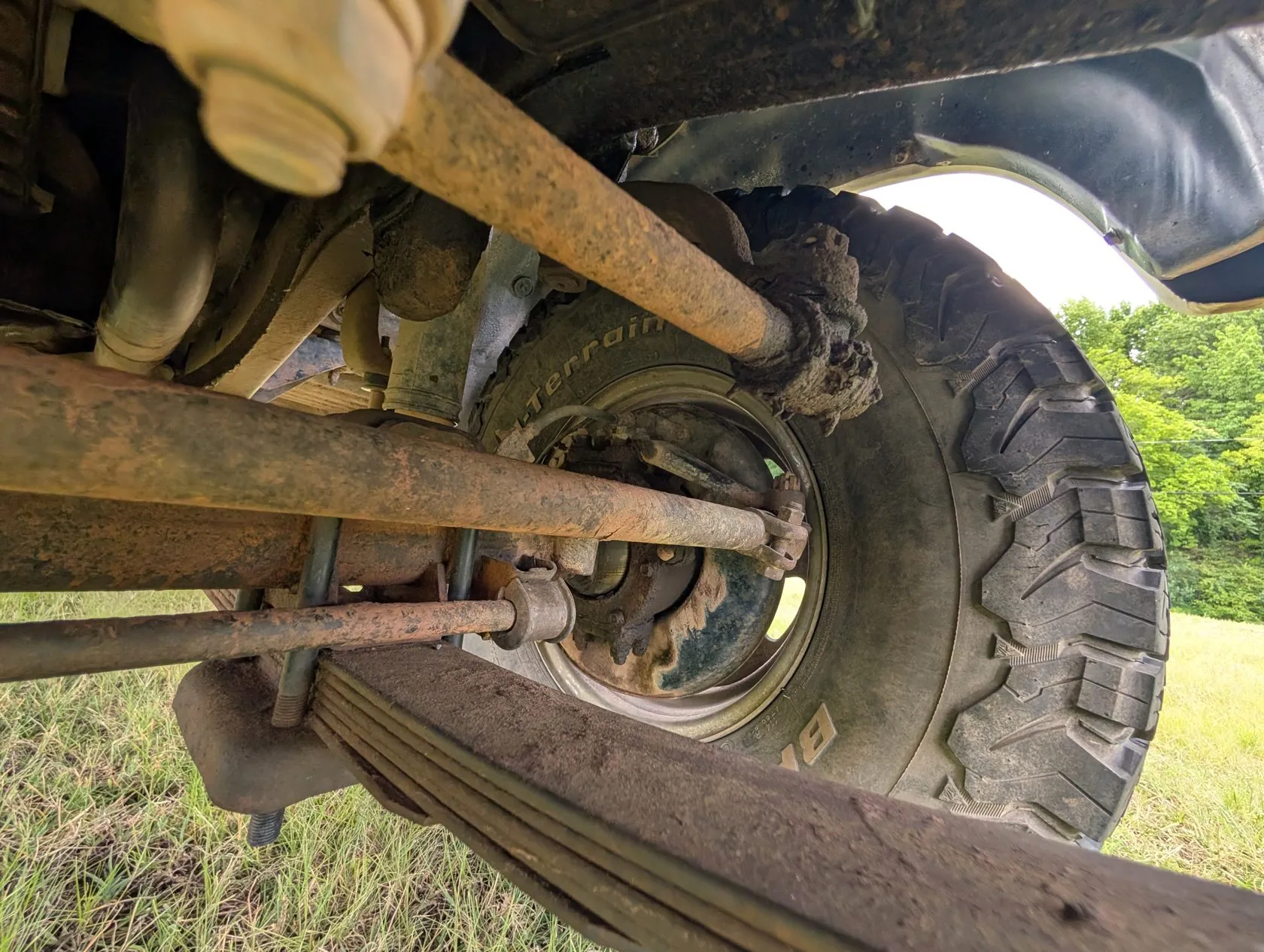
The underside of the wagon photographed from beneath, showing the frame rails, axle and exhaust run.
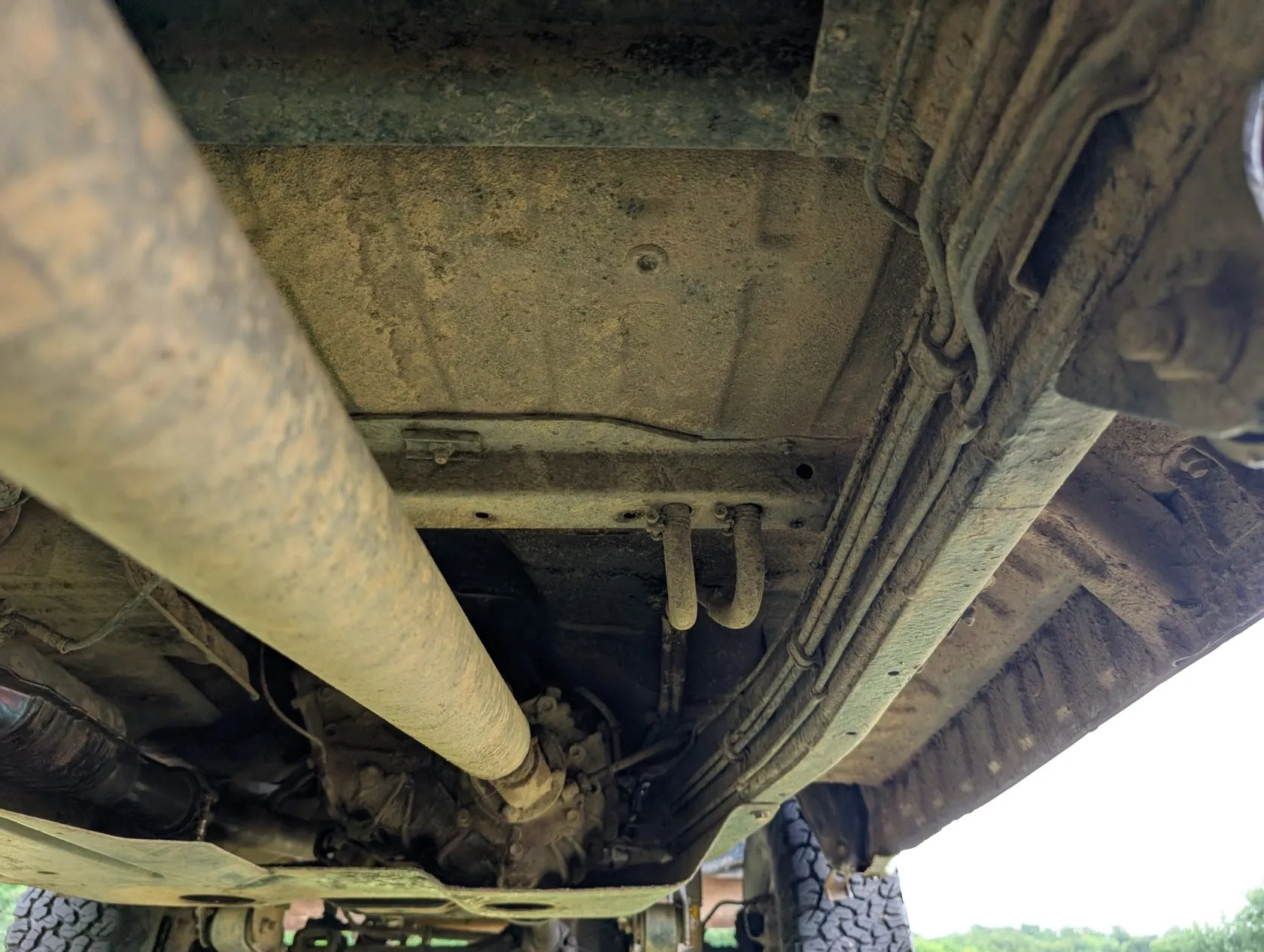
The underside towards the rear, with the fuel tank, exhaust and rear frame section.
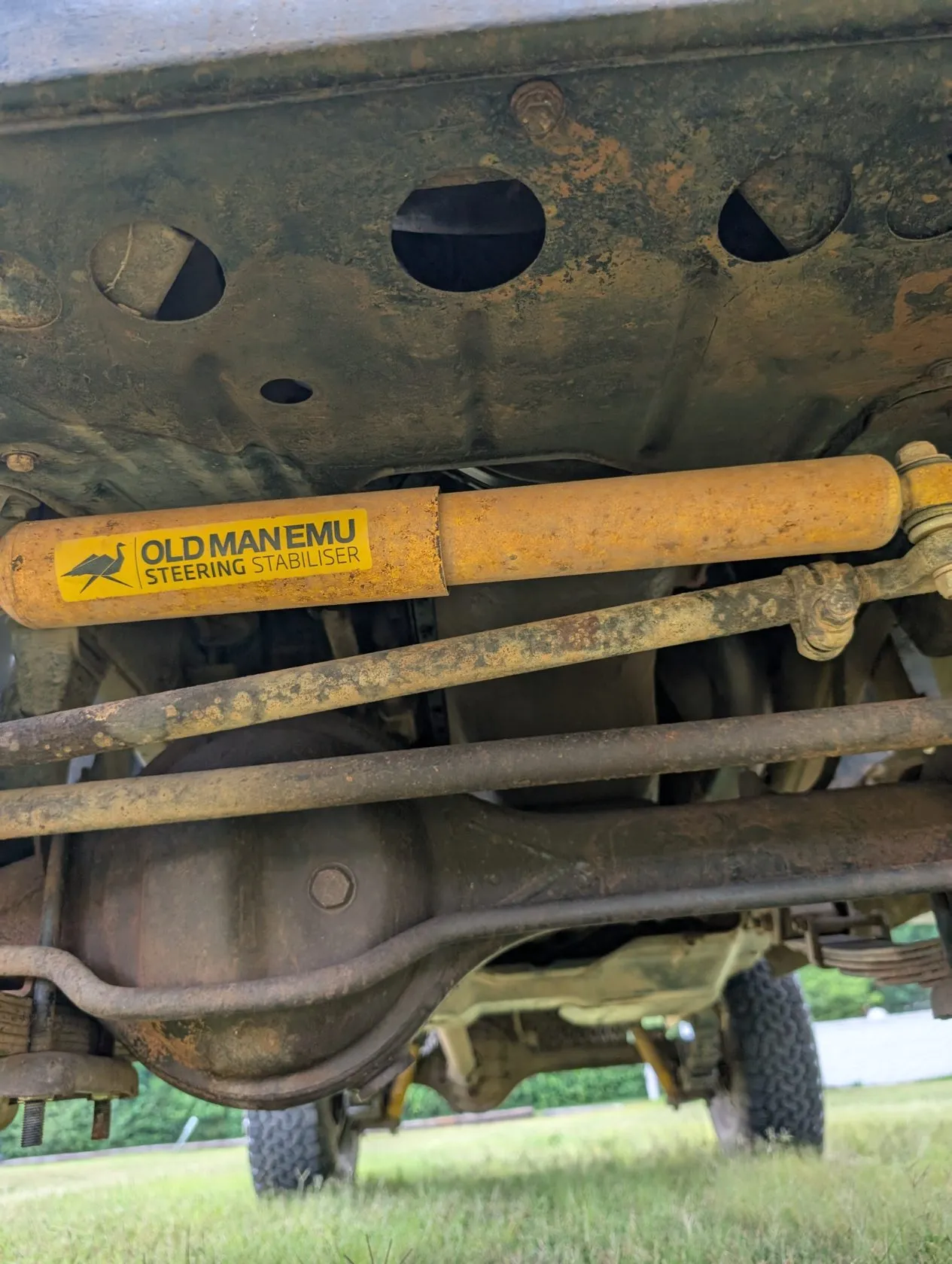
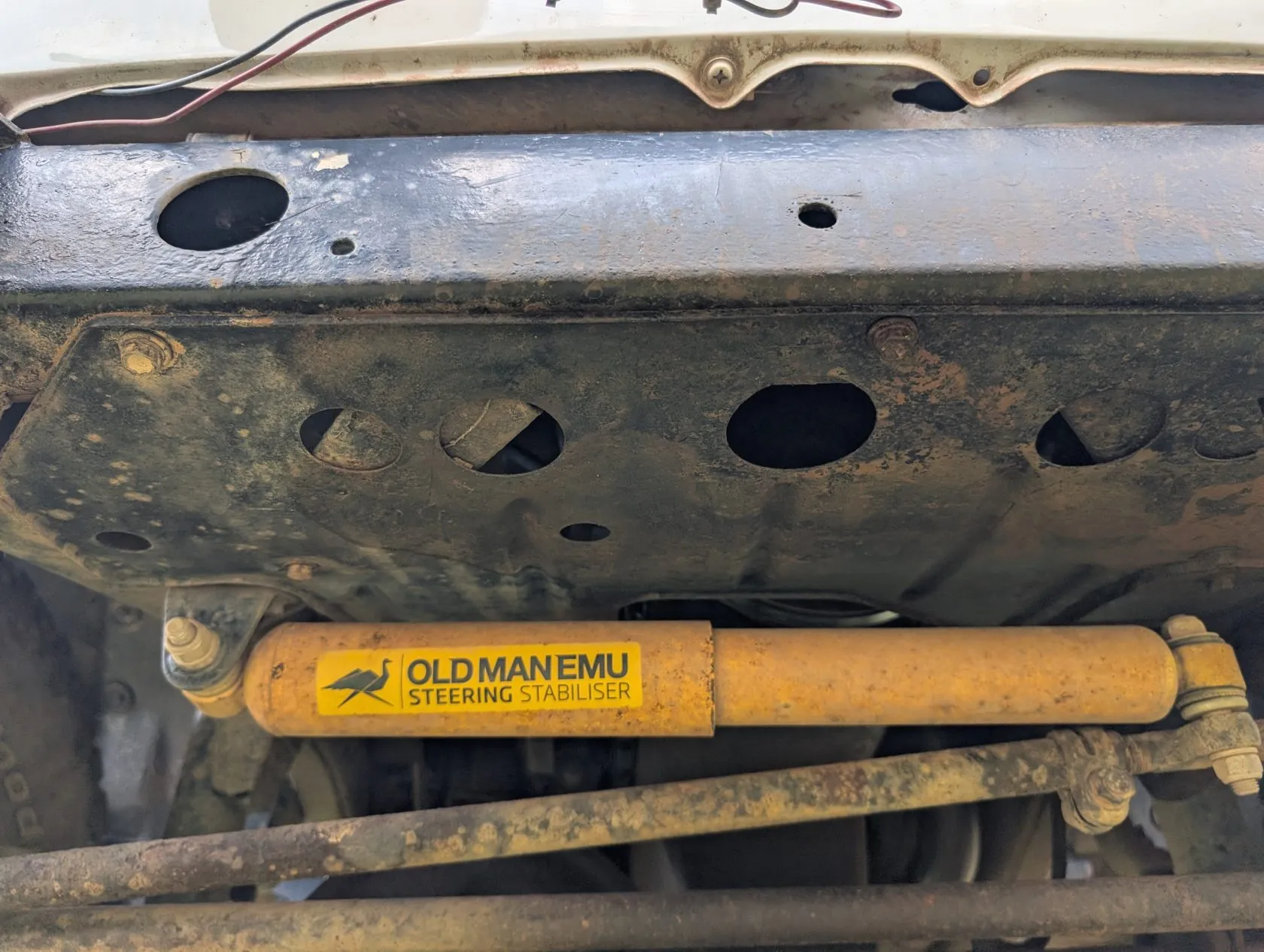
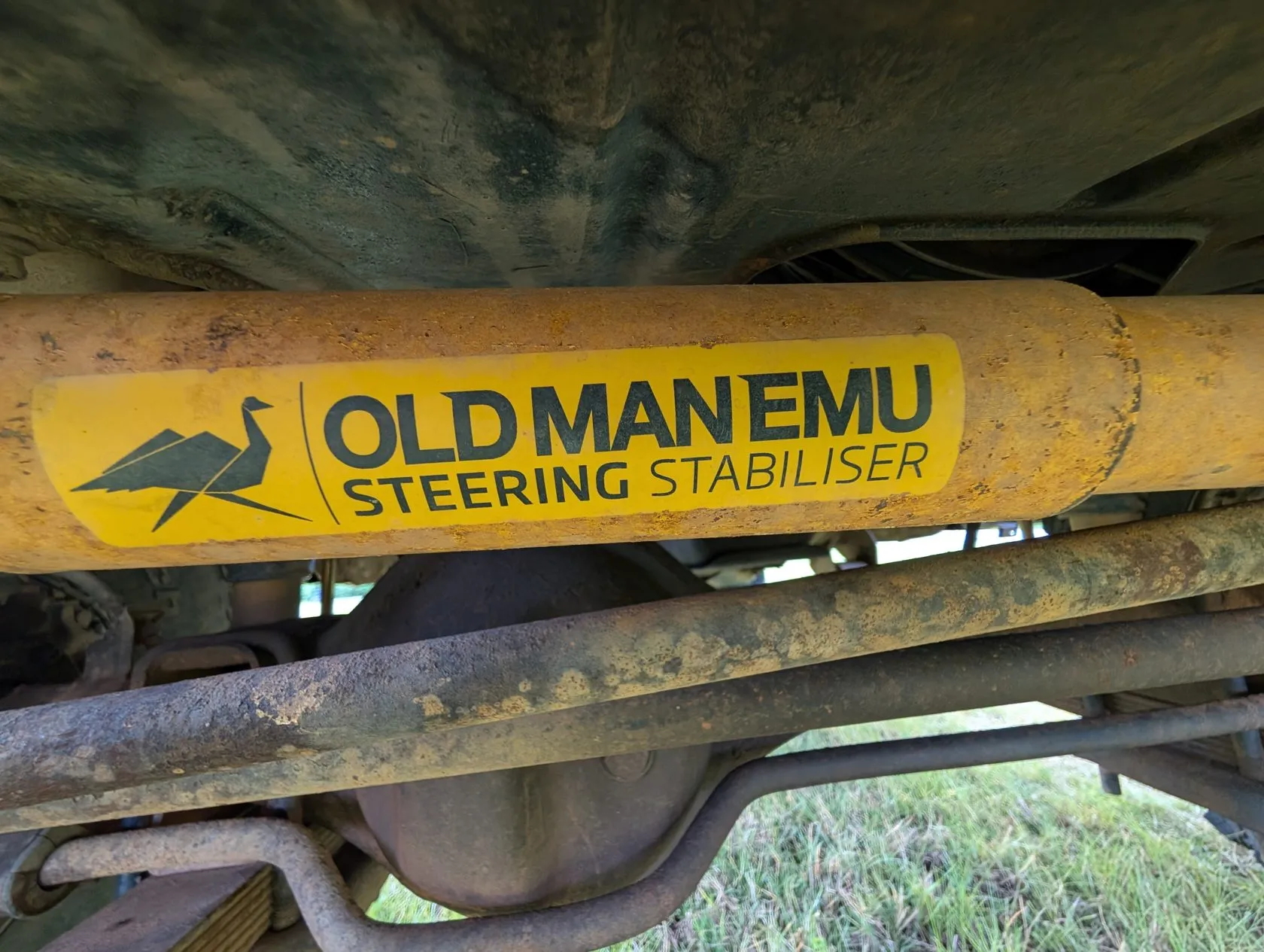
The yellow Old Man Emu steering stabiliser mounted across the front axle, its label clearly readable.
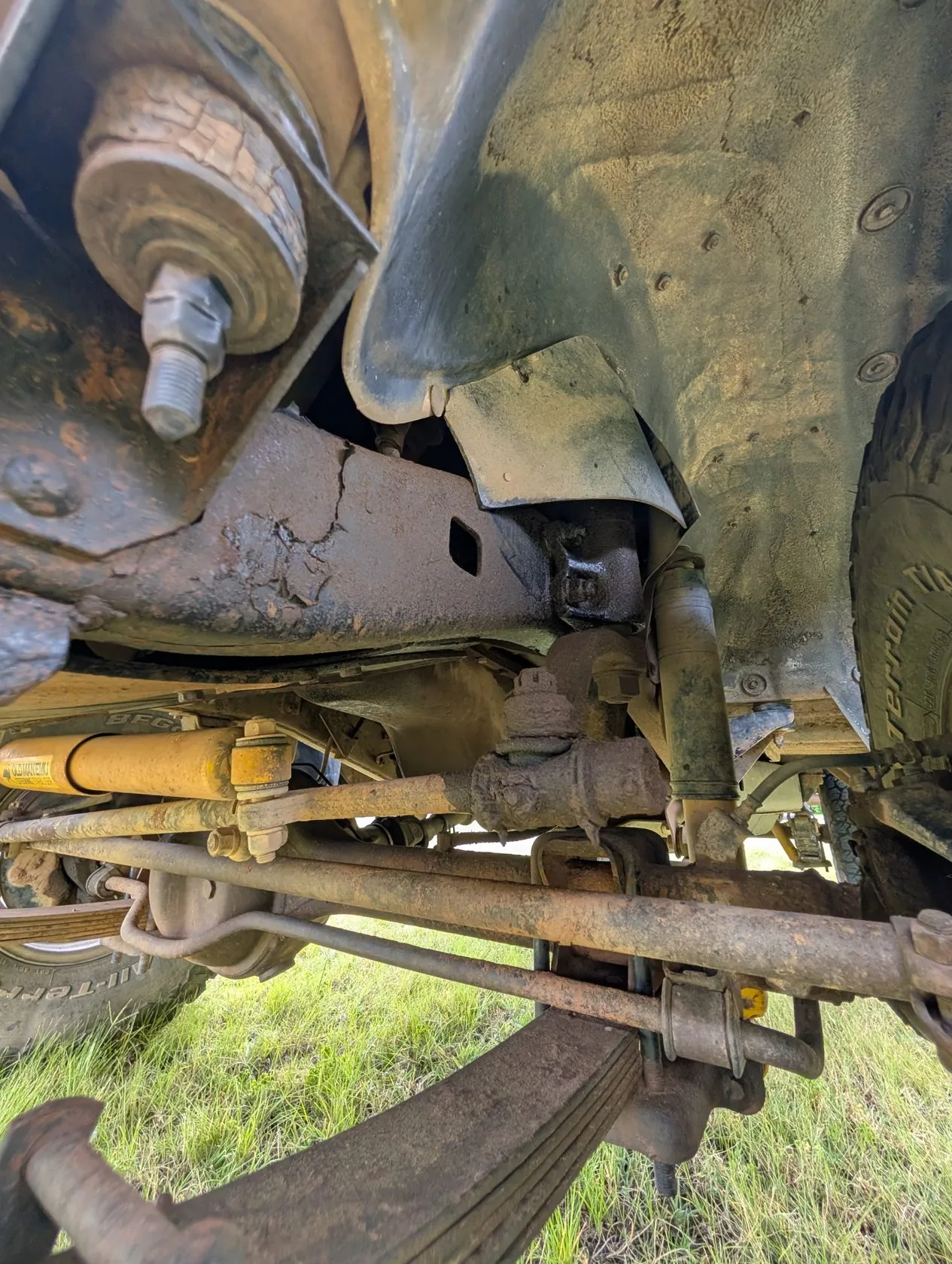
The steering stabiliser alongside the tie rod, seen from below.
The front crossmember and the underside of the front bumper mounting.
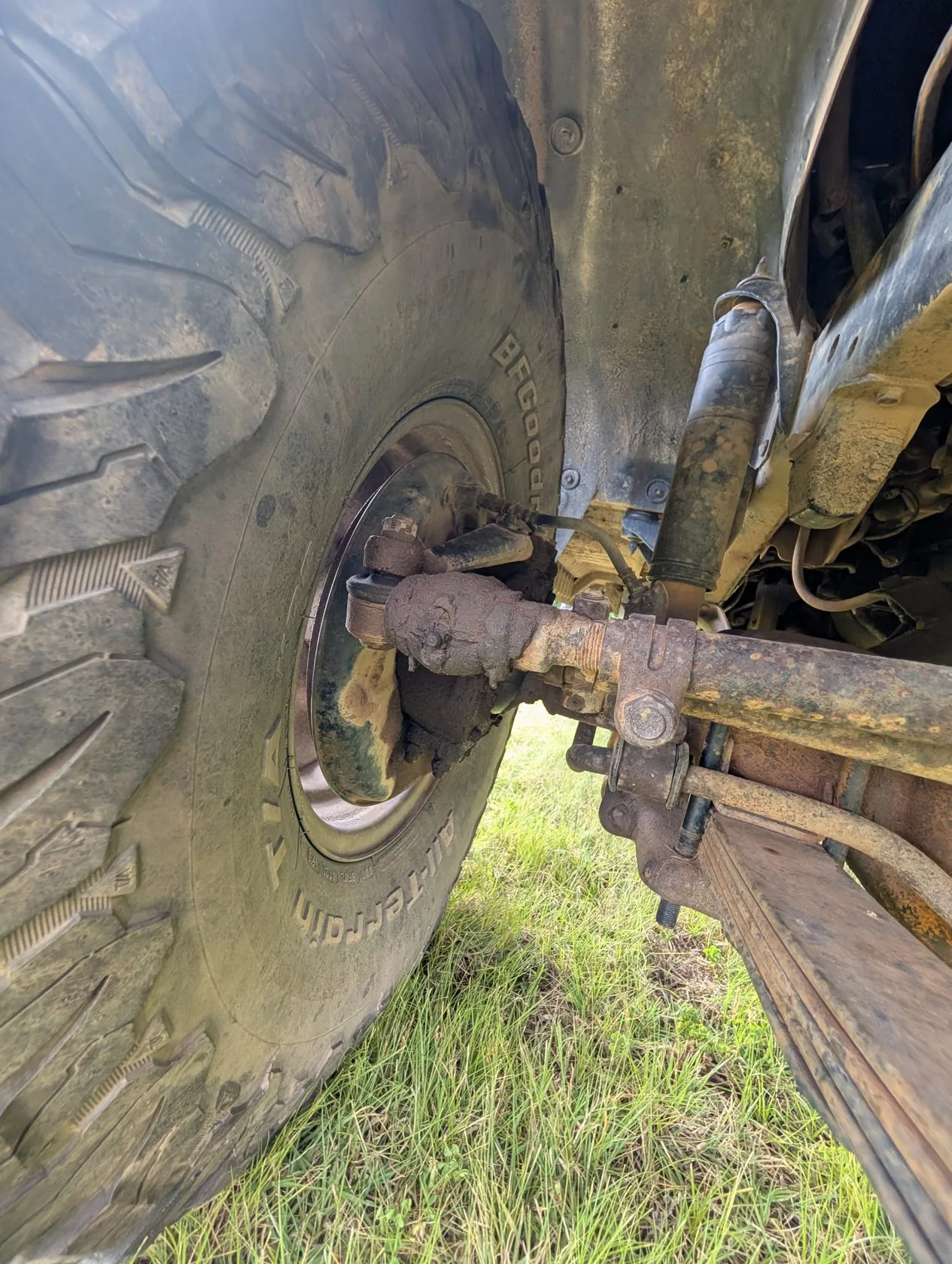
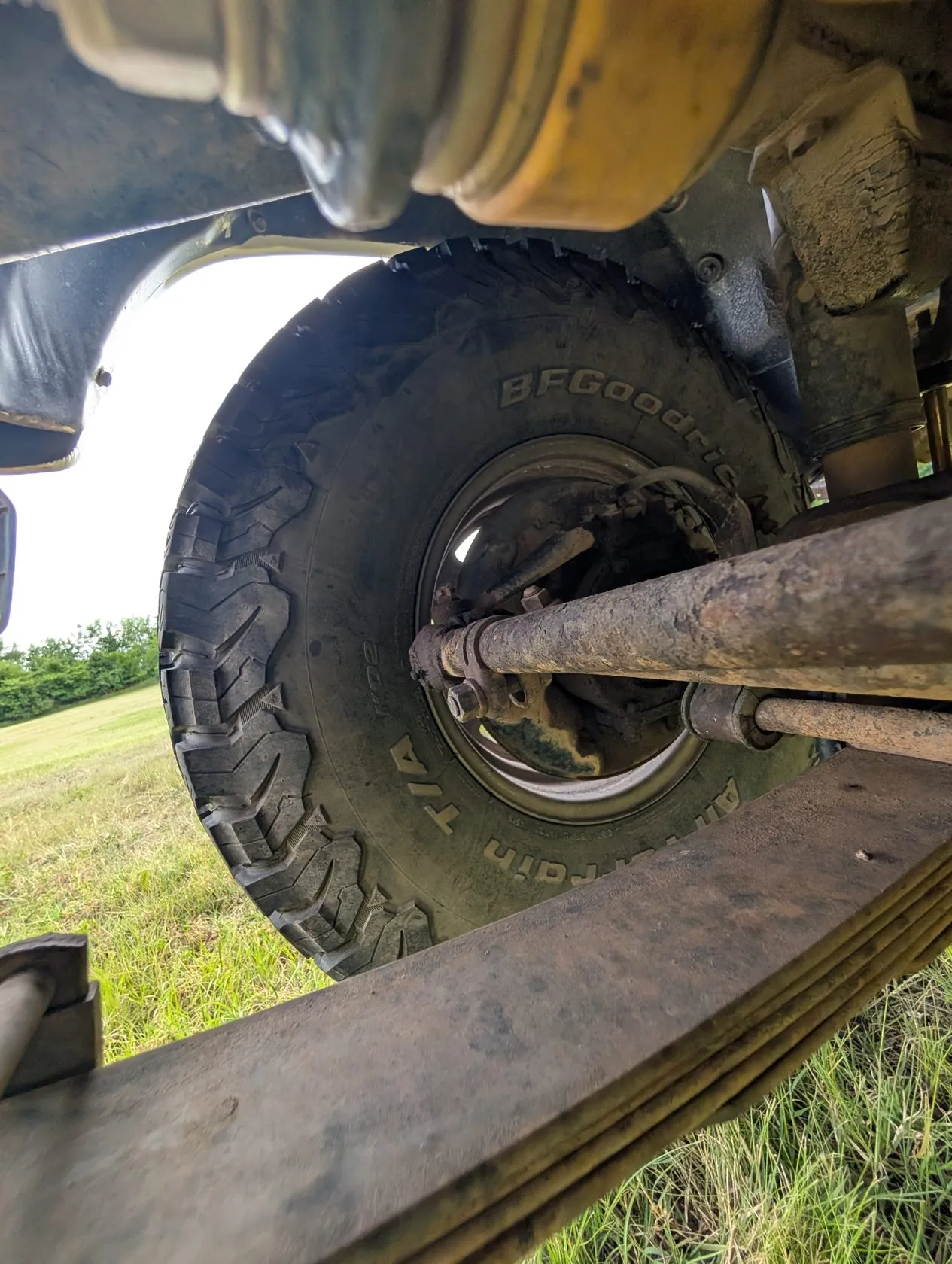
The front axle housing with its steering and suspension components.
The rear axle housing and the surrounding suspension.
A leaf spring pack and its mounting to the axle.
Close view of the Old Man Emu steering stabiliser body and its yellow label.
The steering box and linkage seen from underneath.

The restoration44

In sequence: what was found when it came apart, what was cut out, what was welded in, and what it looked like going back together.

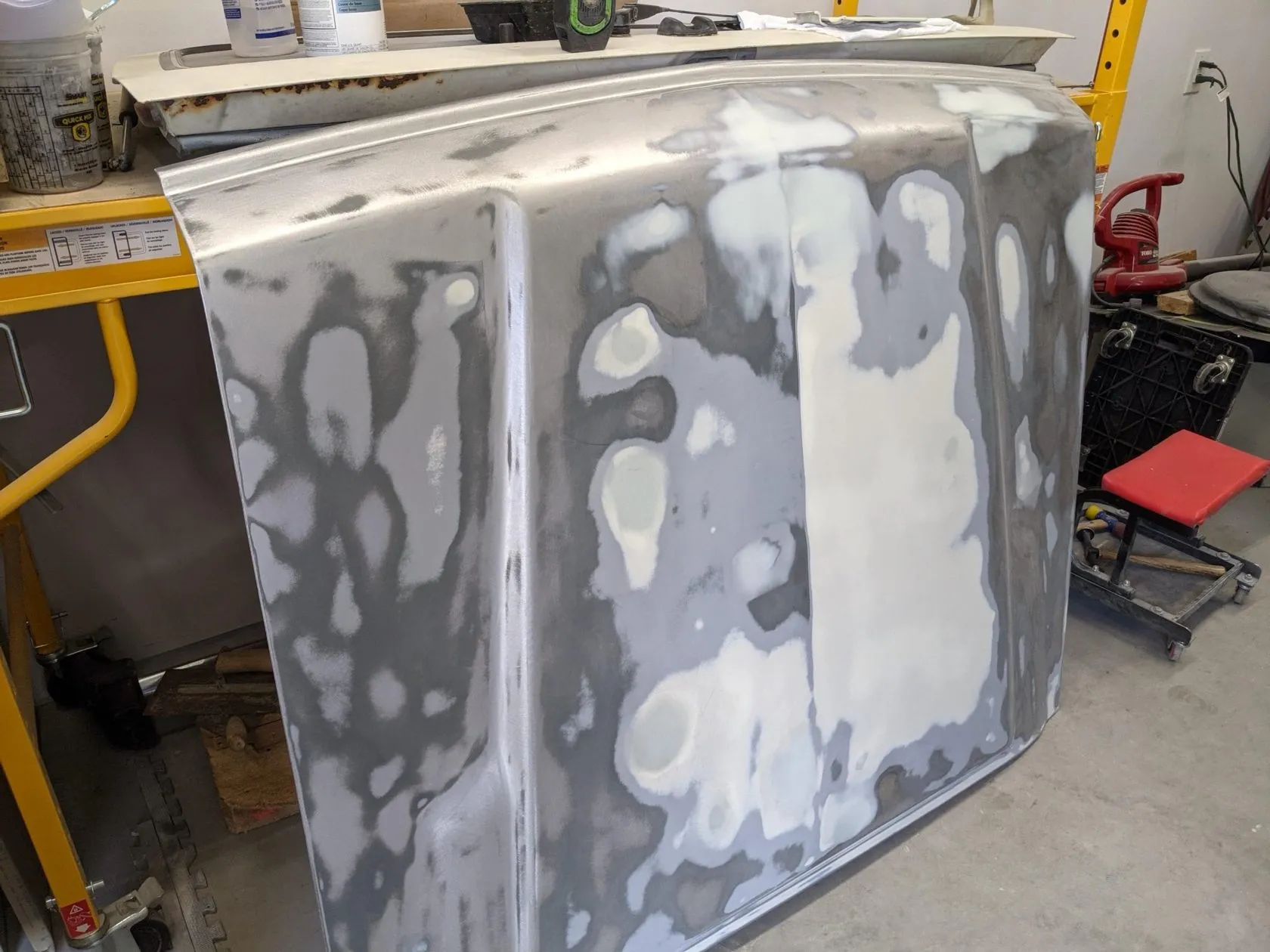
A body panel with the filler mapped out in contrasting patches, showing how much of the original surface was body filler rather than steel.
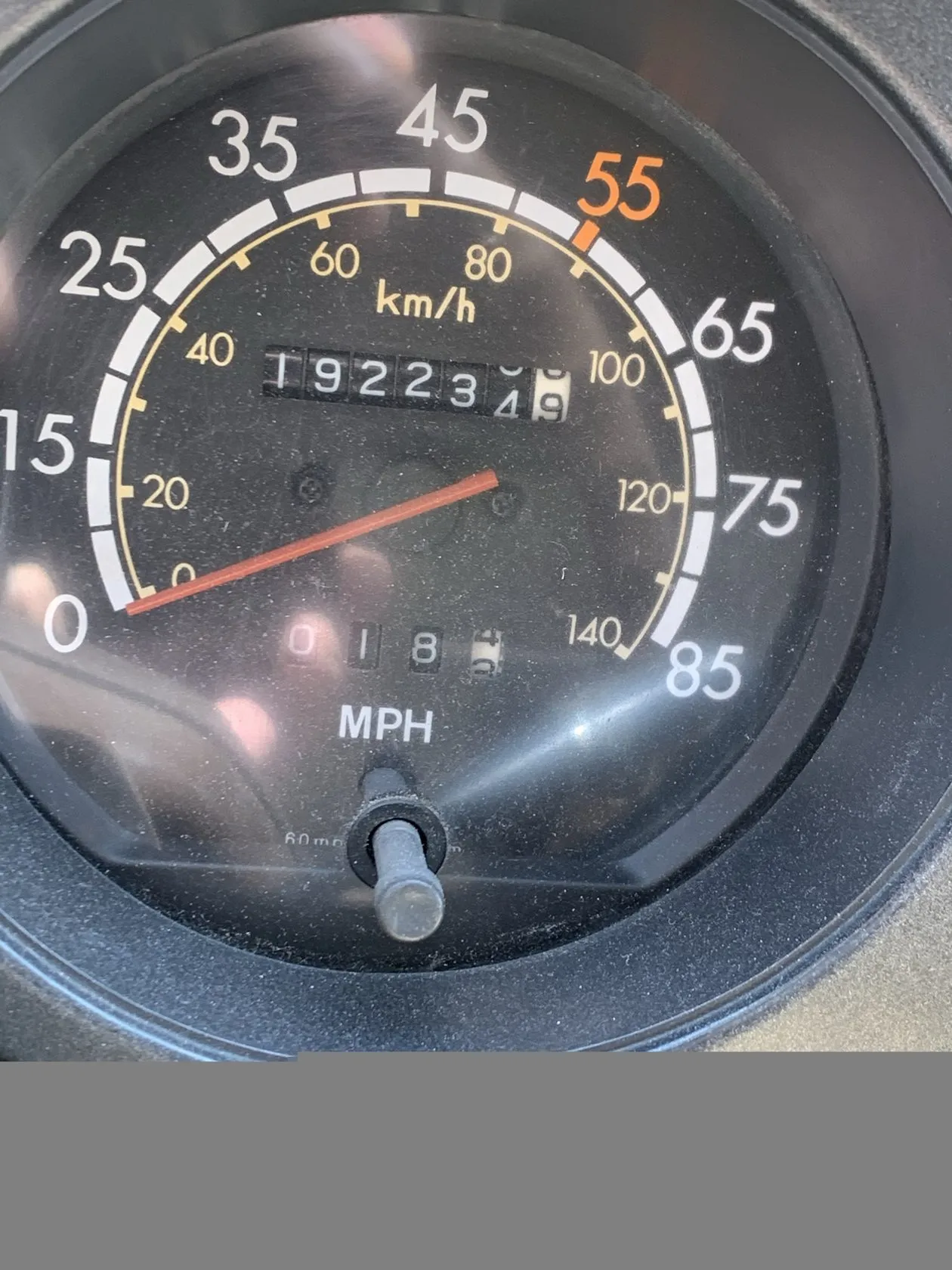
The instrument cluster during teardown, the odometer reading 192,234 miles.
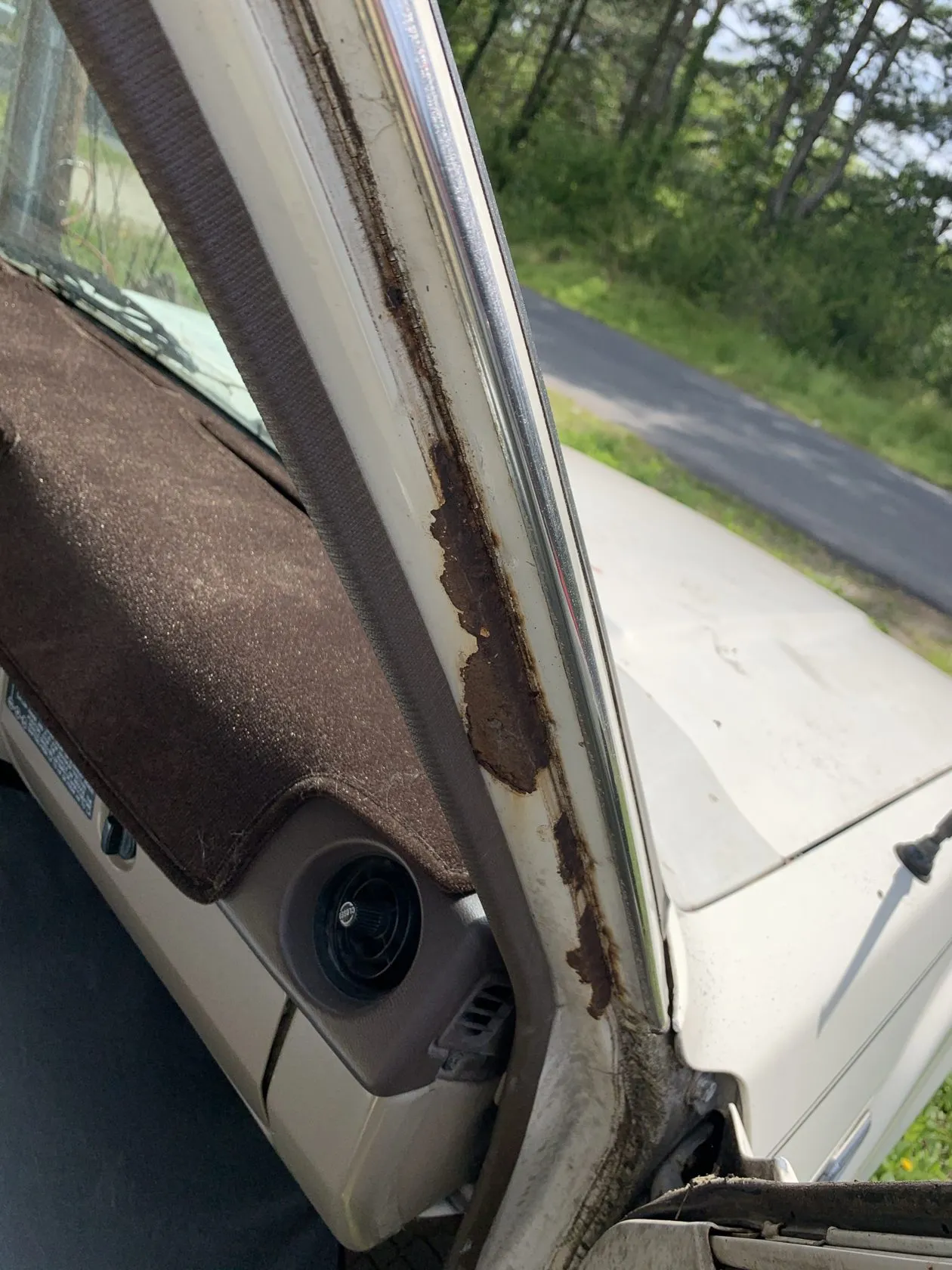
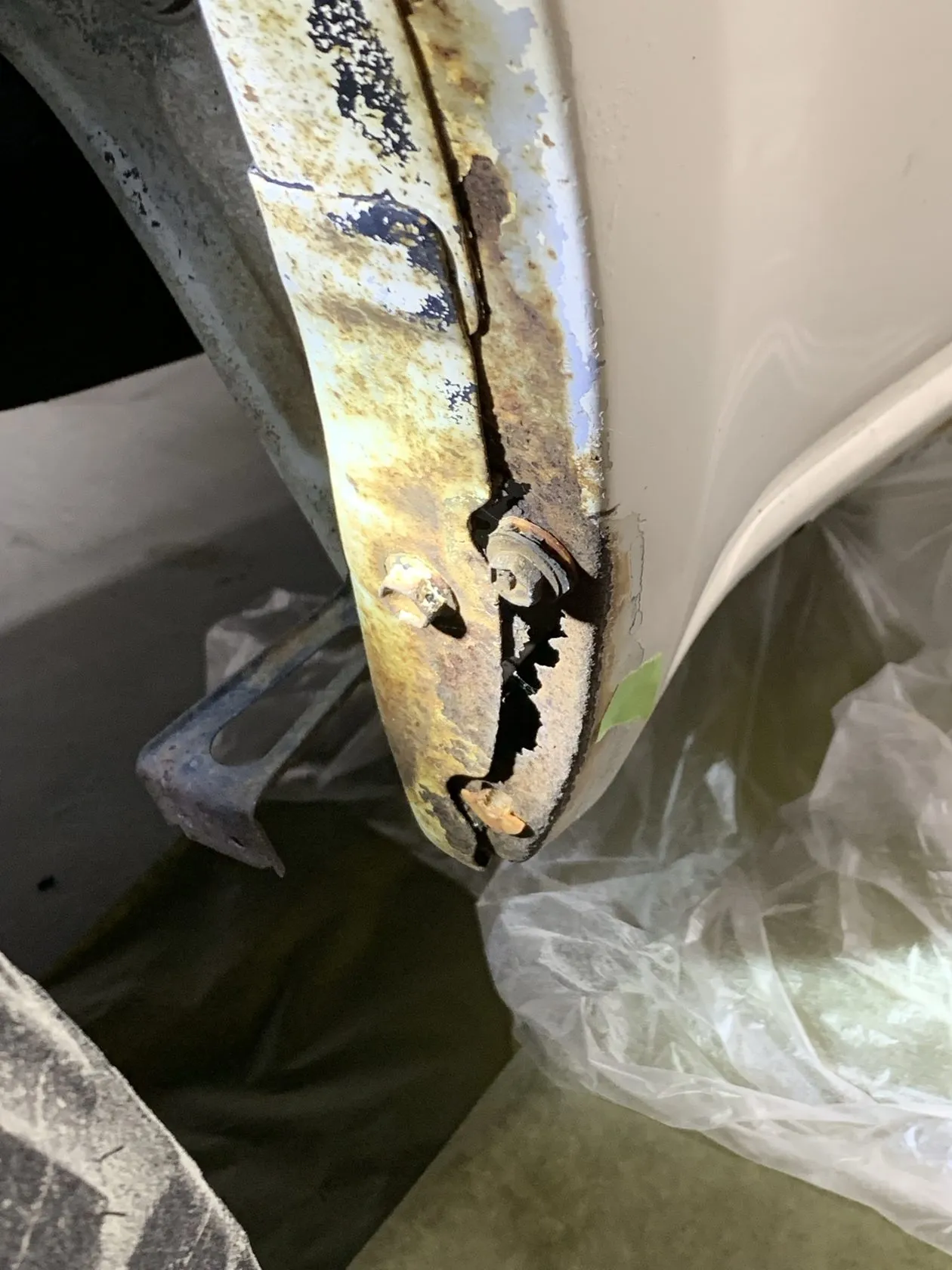
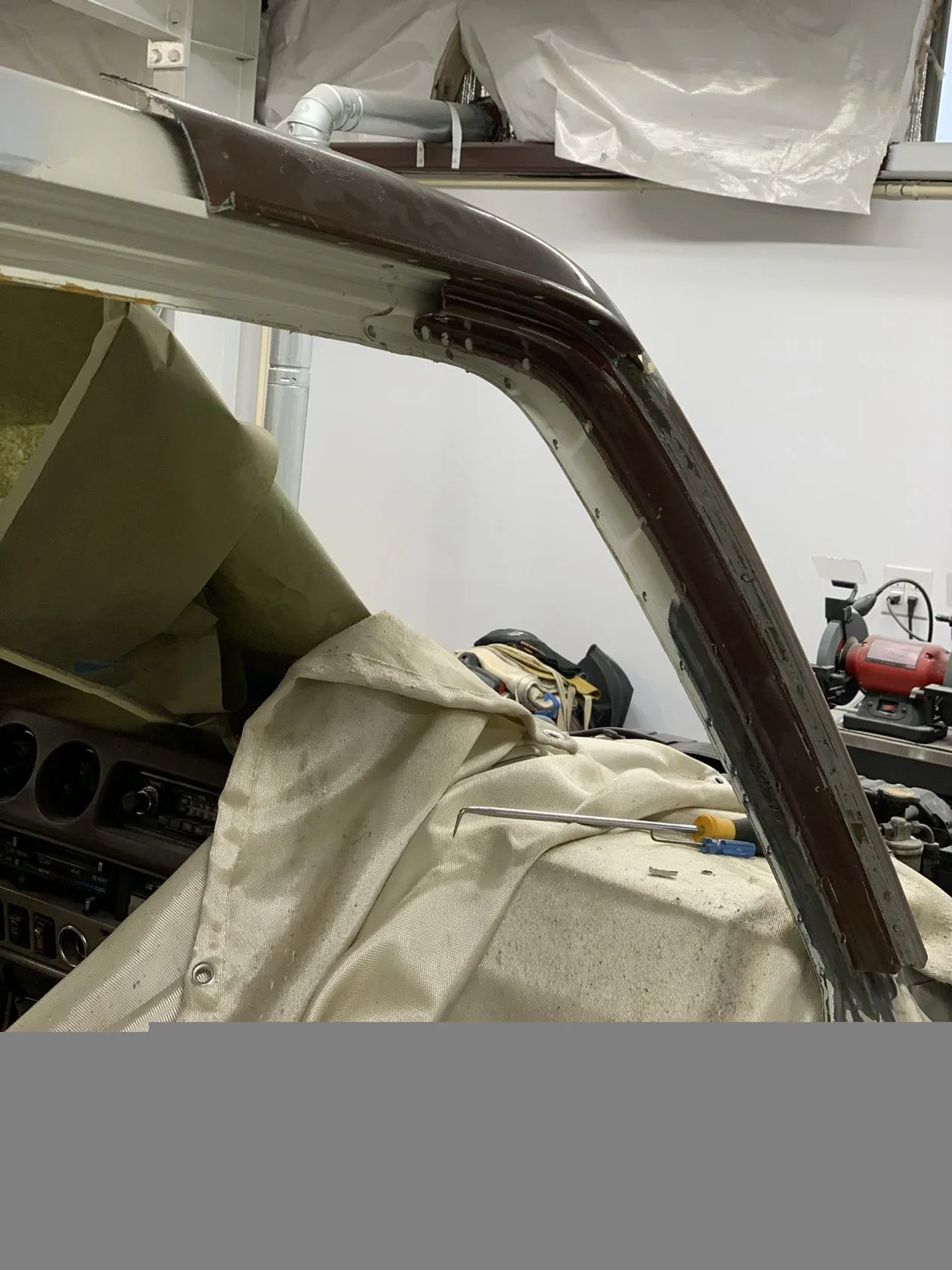
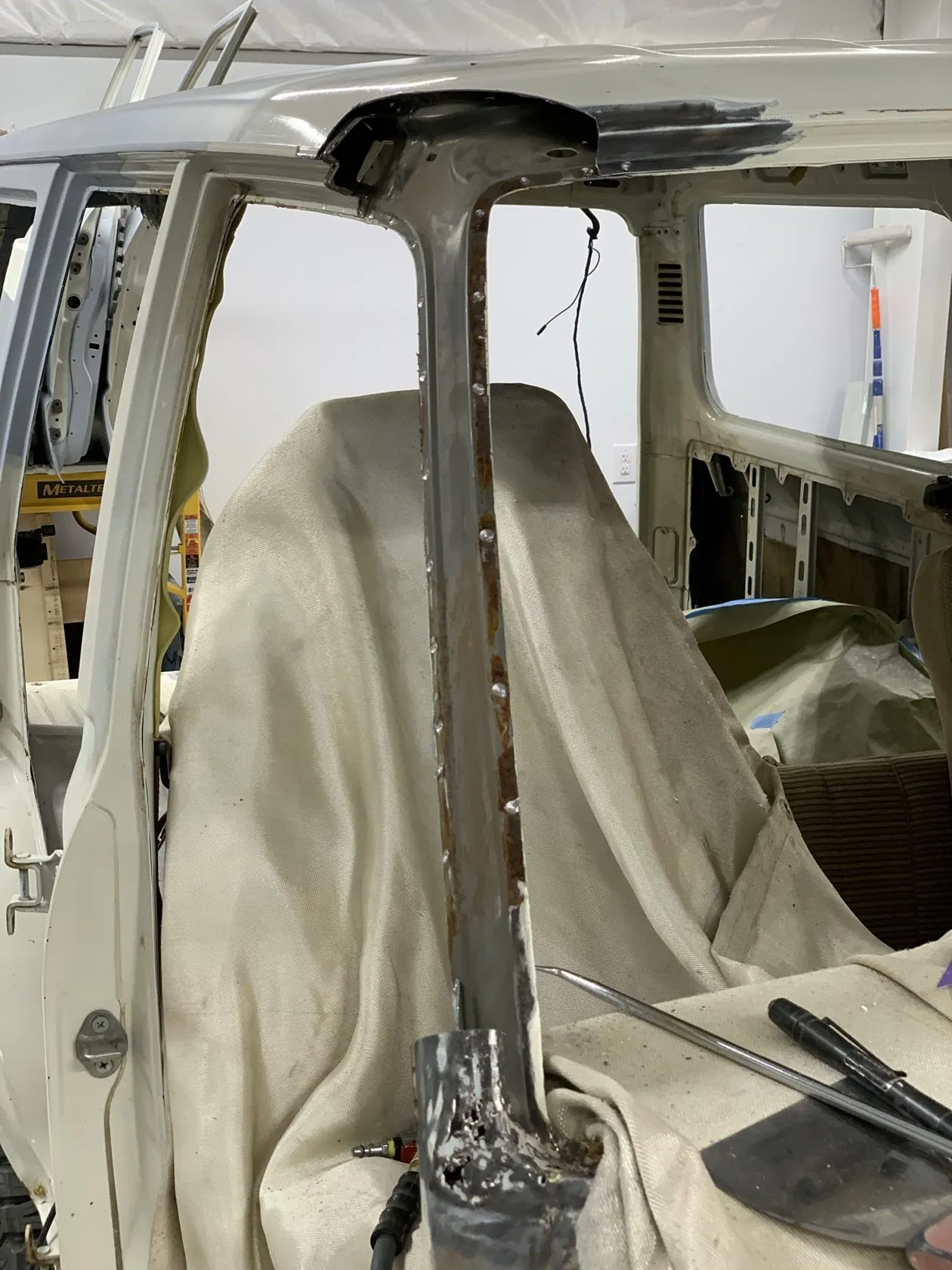
Corrosion at the base of the windshield pillar, exposed once the trim was removed.
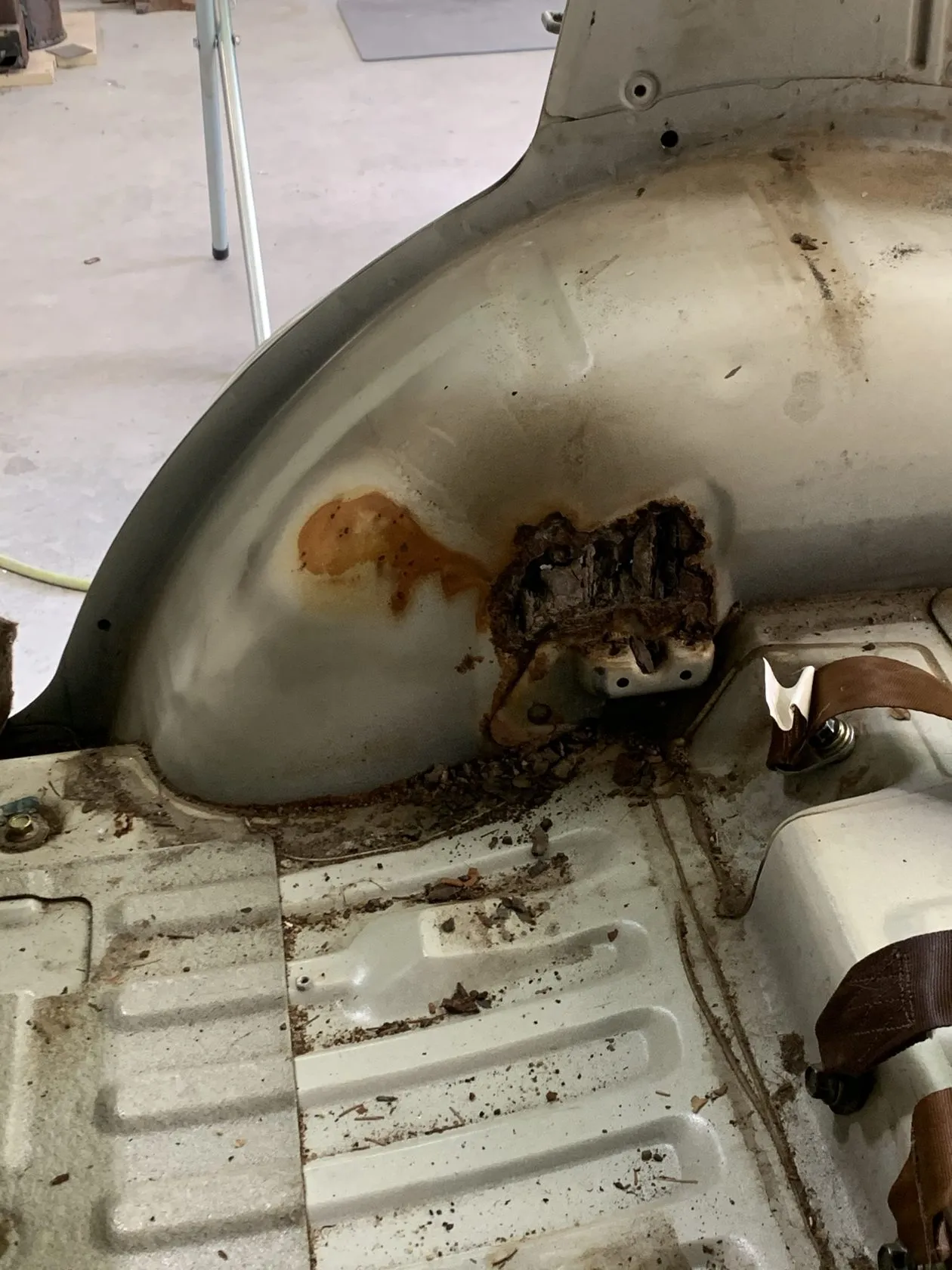
Heavy rust in a wheel arch, the metal broken through and flaking.
Rust in the door jamb and the structure behind it, revealed with the door removed.
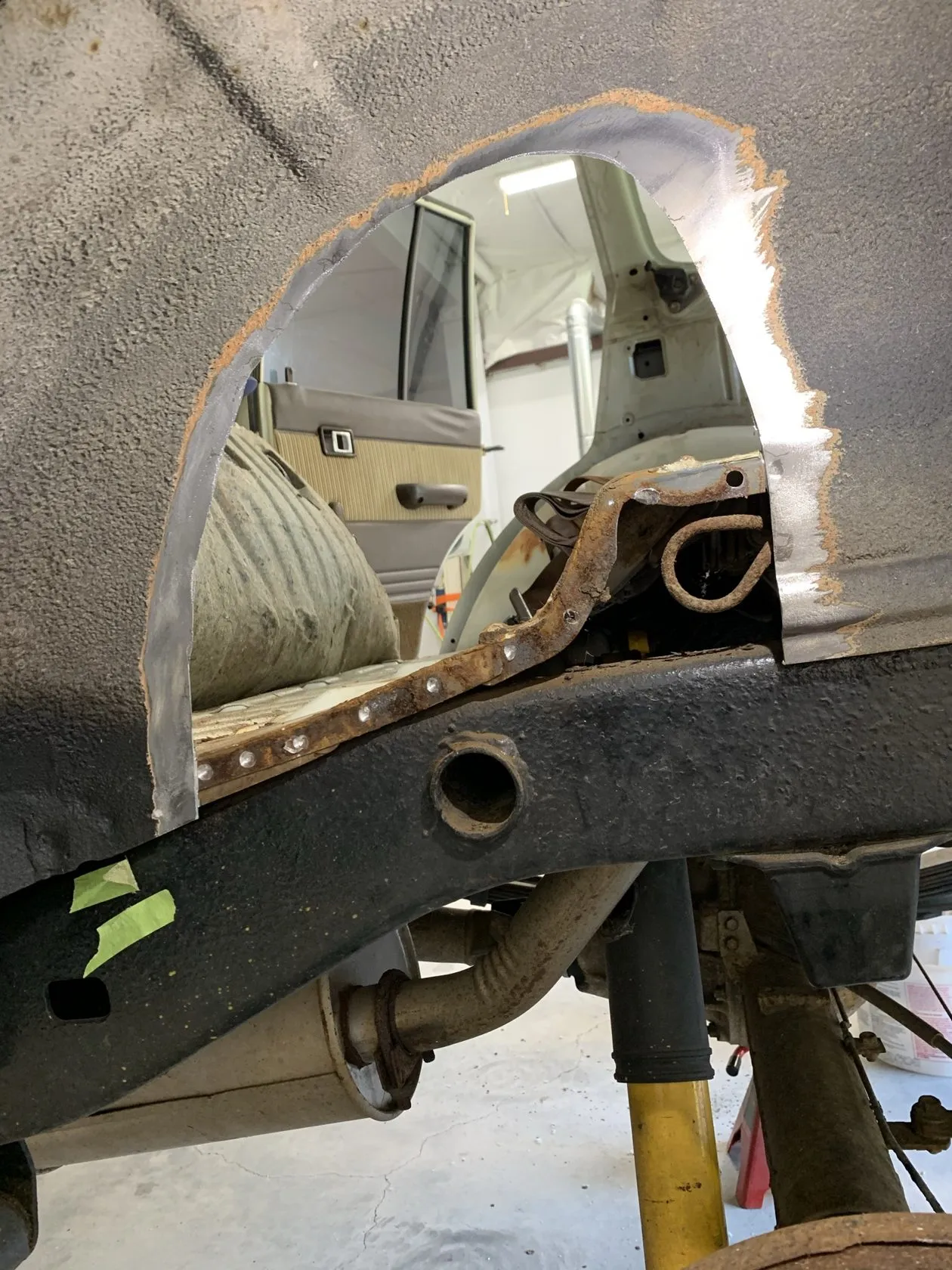
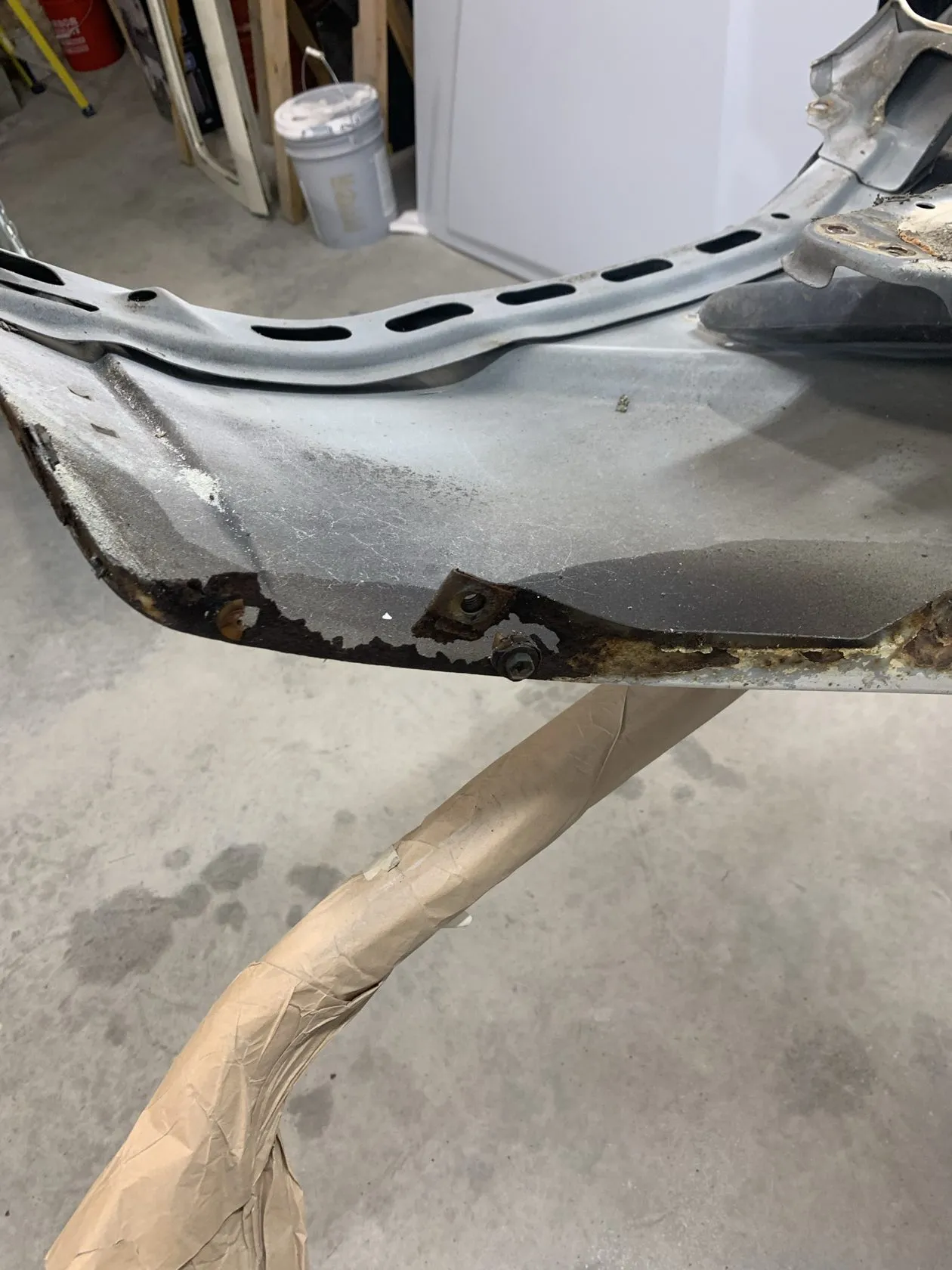
Corrosion in the body structure with panels stripped away, showing the extent before repair.
A panel edge cut open to expose the rust running inside it.
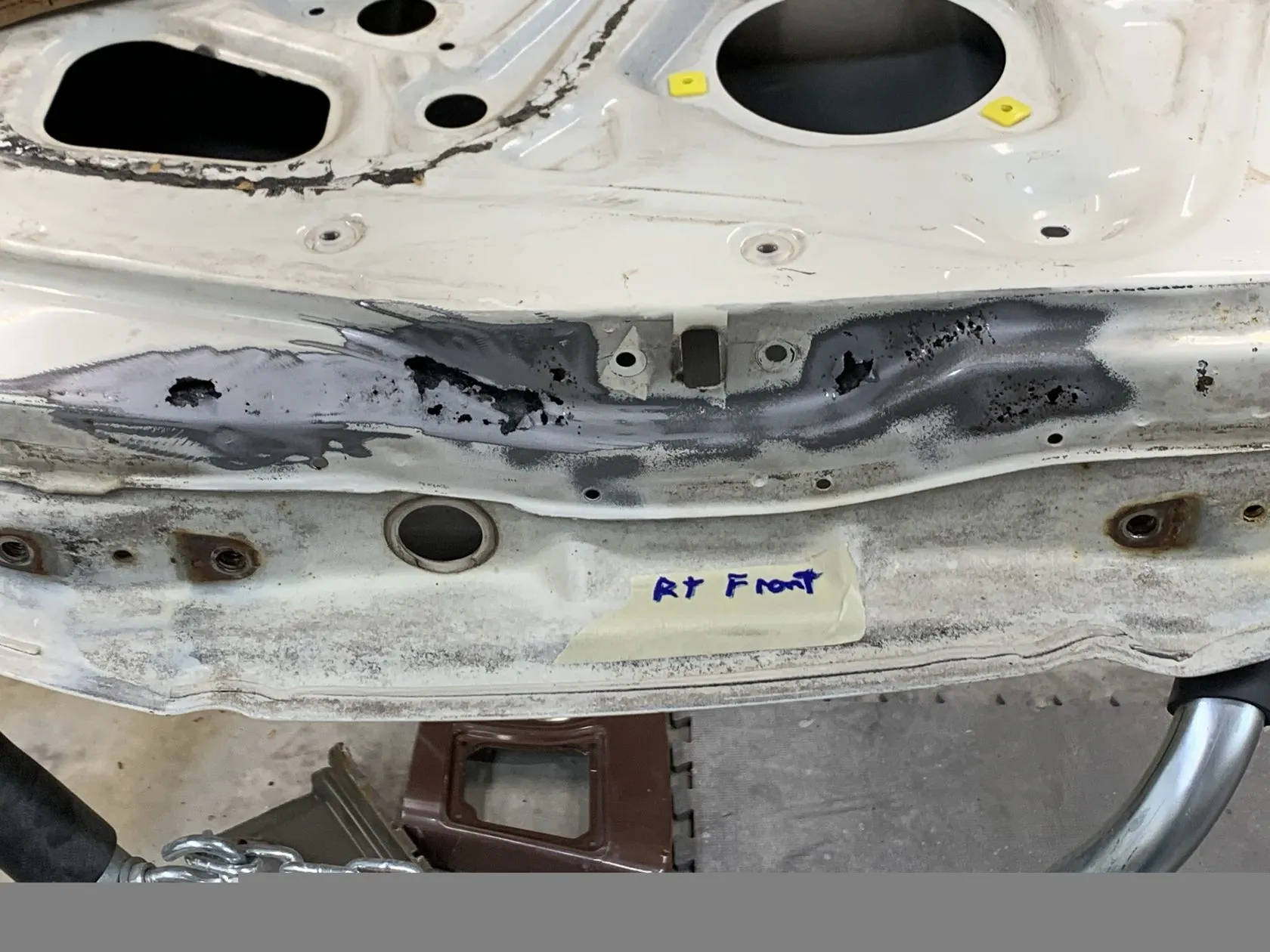
Rust in the rocker and floor area, cut back to find sound metal.
The interior stripped out to the bare floor ahead of the body work.
The body with exterior trim and brightwork removed.
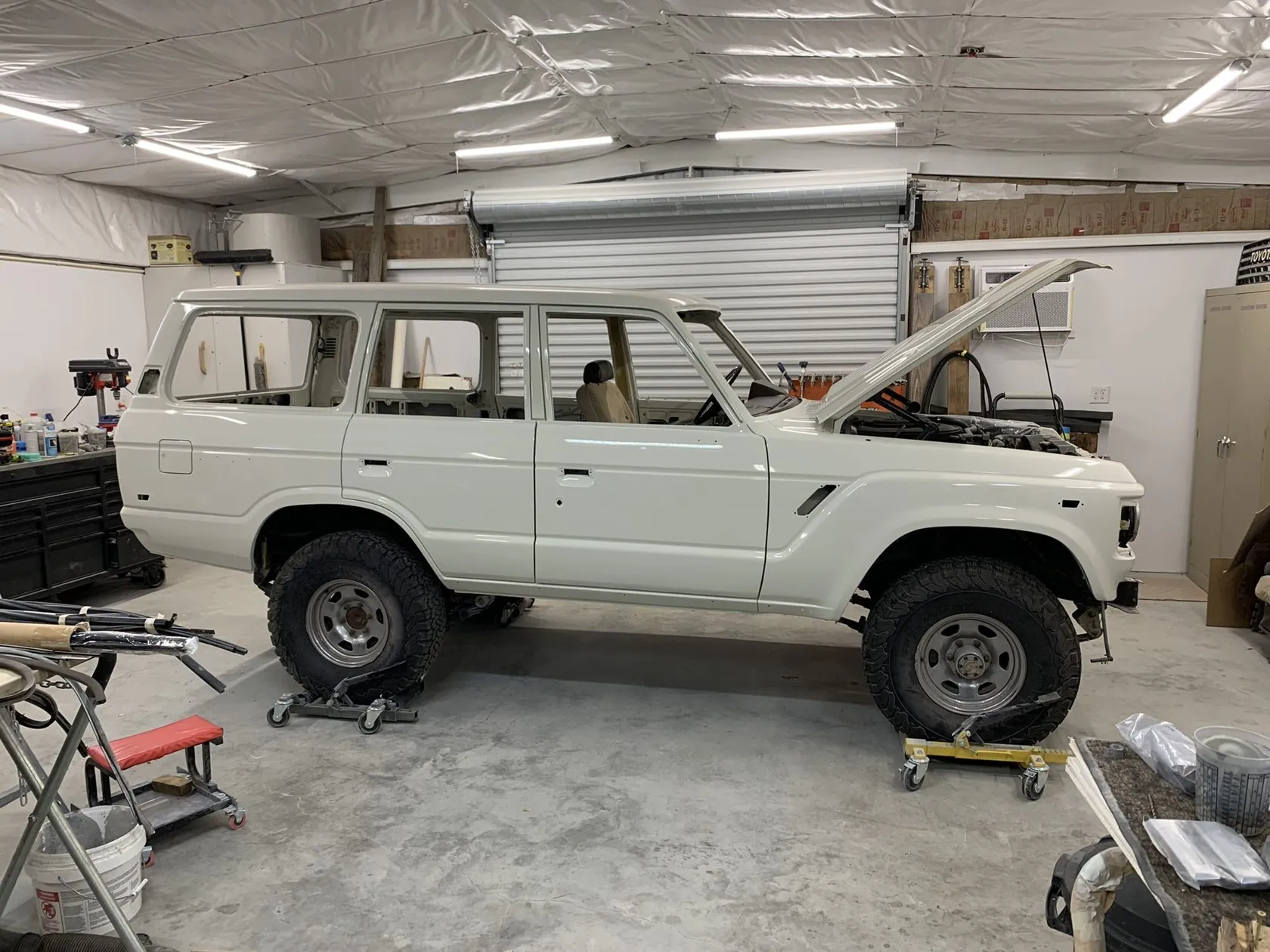
The shell in the workshop with the doors removed.
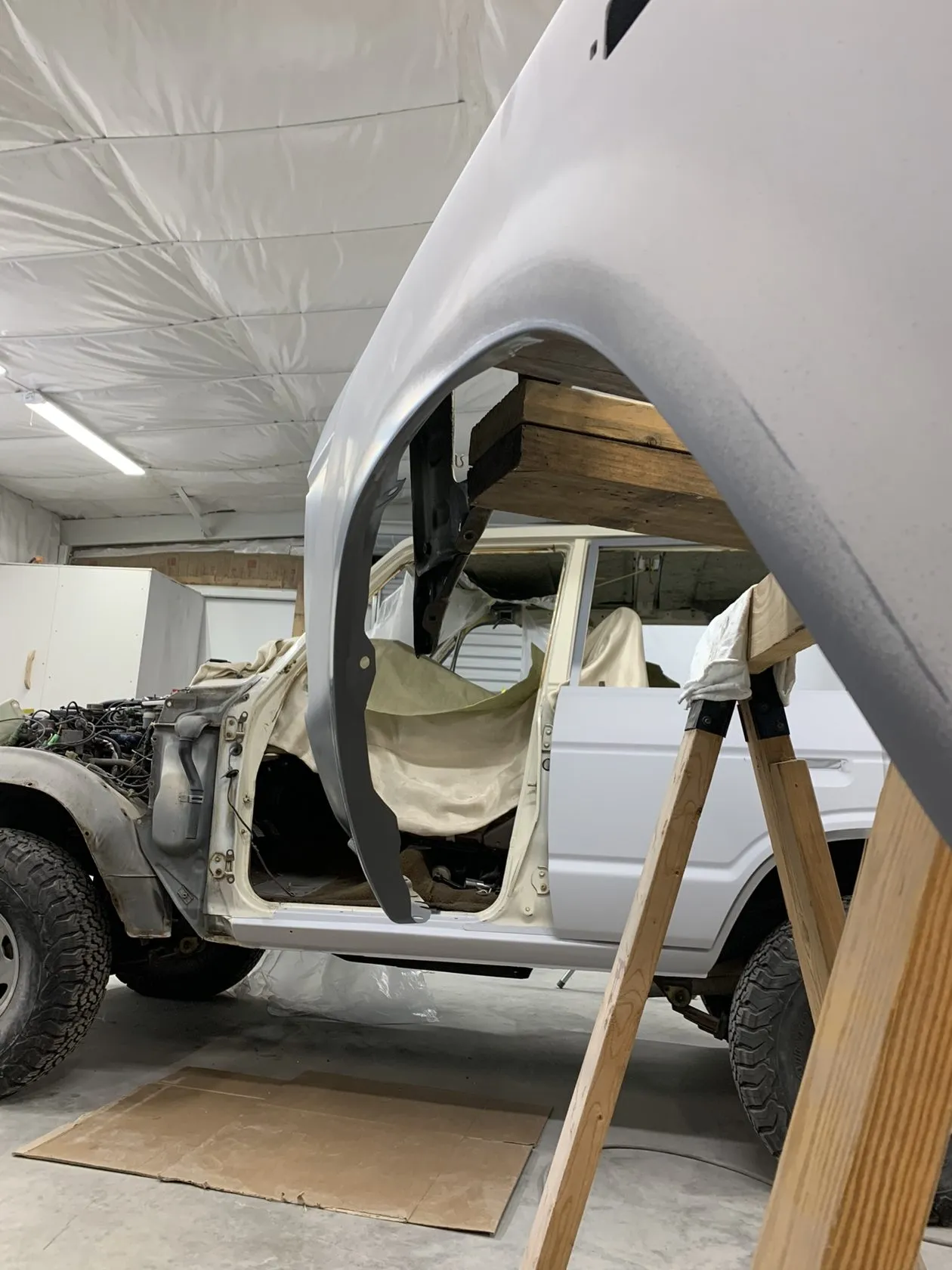
The shell with the glass removed, which is what makes this a glass-out restoration rather than a masked respray.
A door stripped to its bare shell, hardware and trim removed.
The body with panels removed, supported in the workshop.
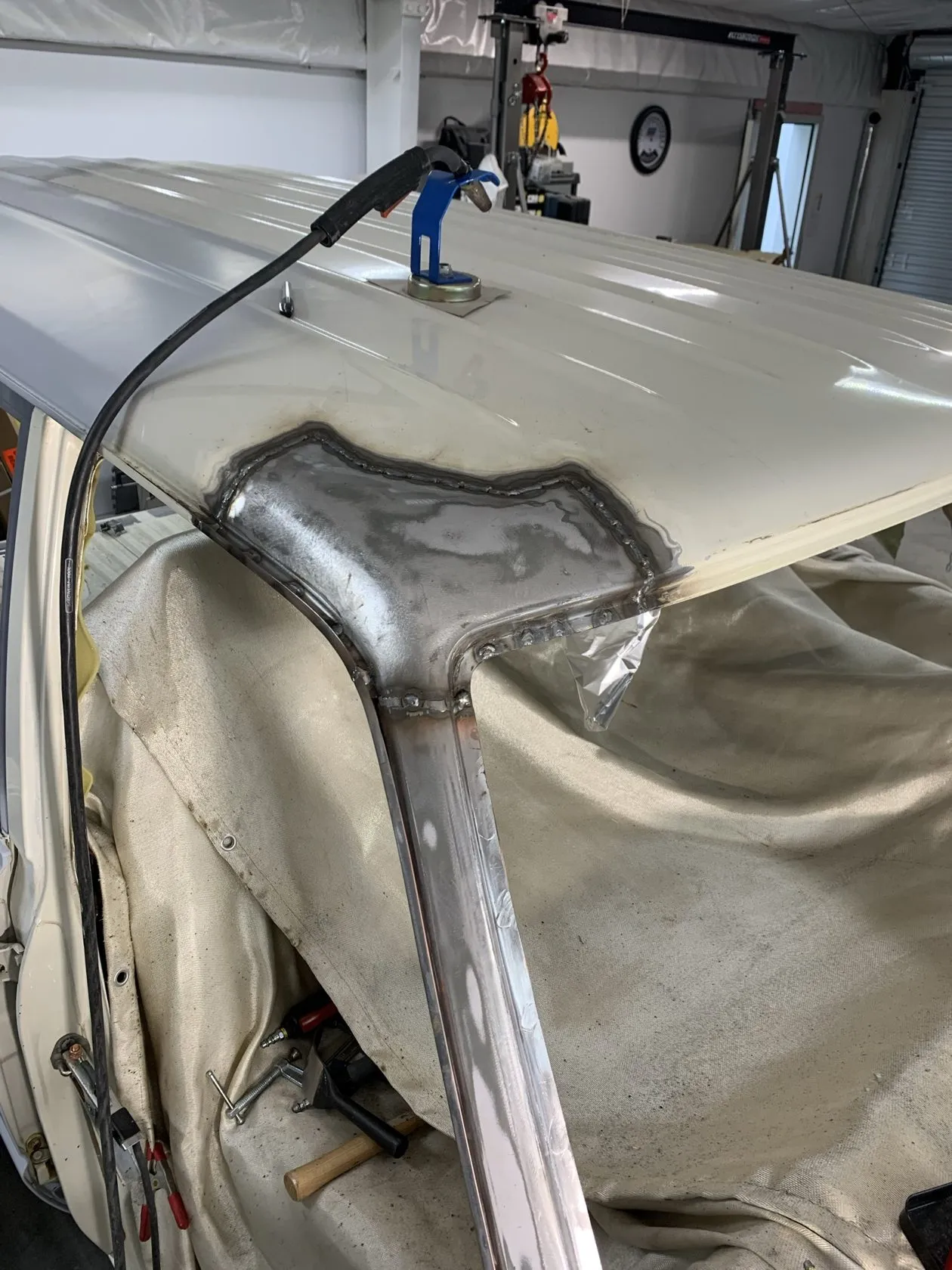
A repair patch welded into the body, the weld run still bare and unfinished.
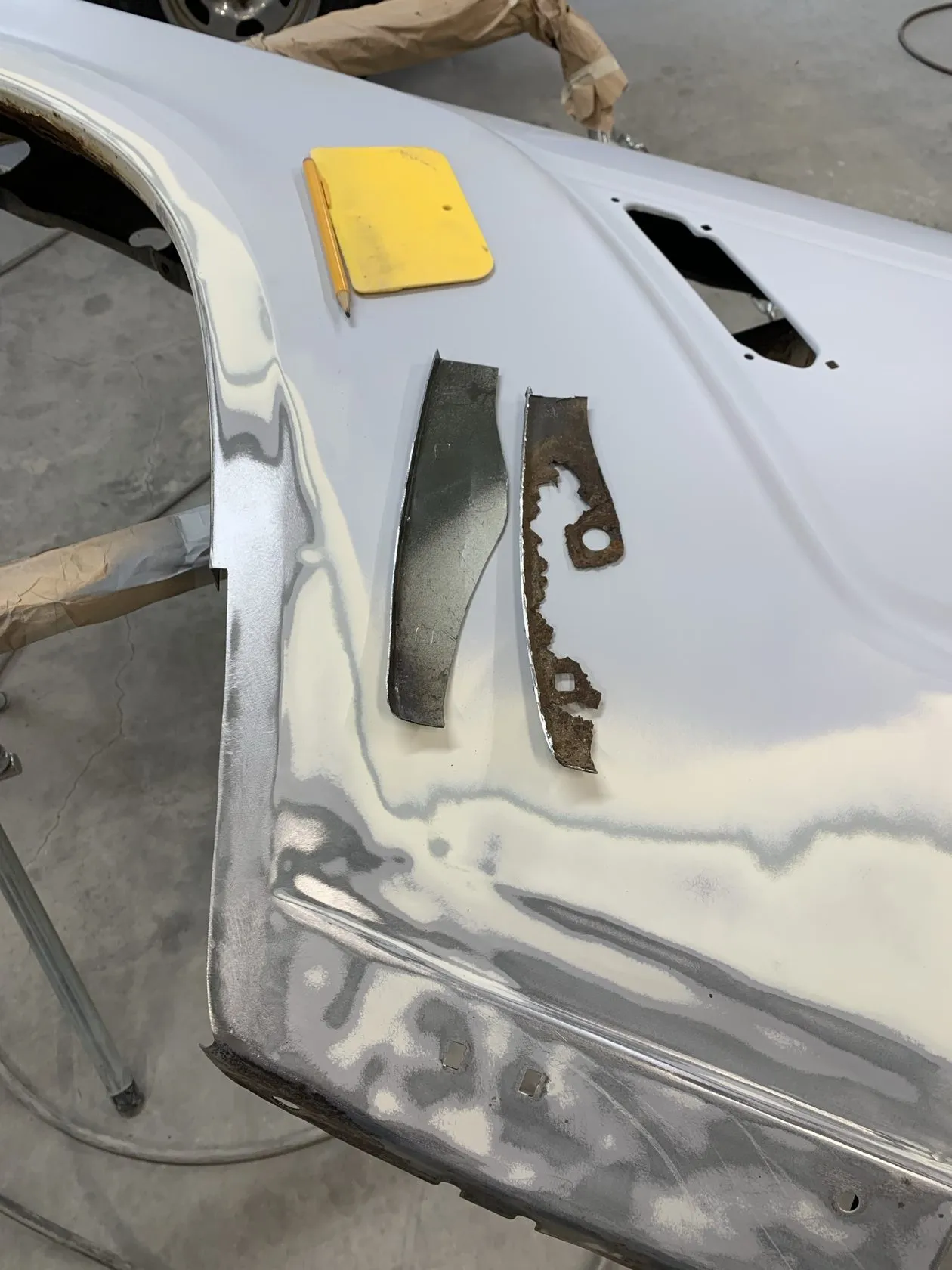
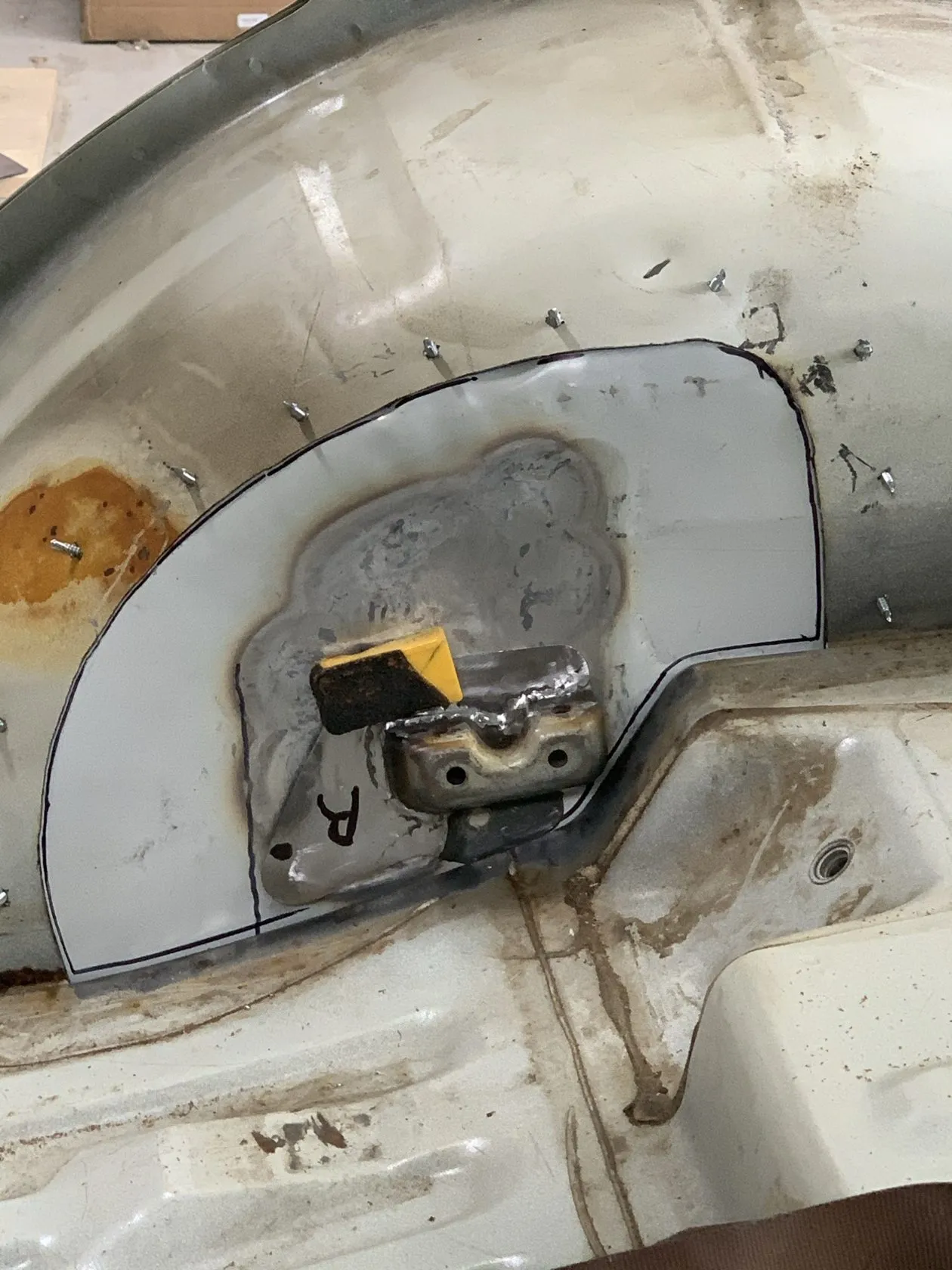
A hand-shaped steel patch panel held up against the body before fitting.
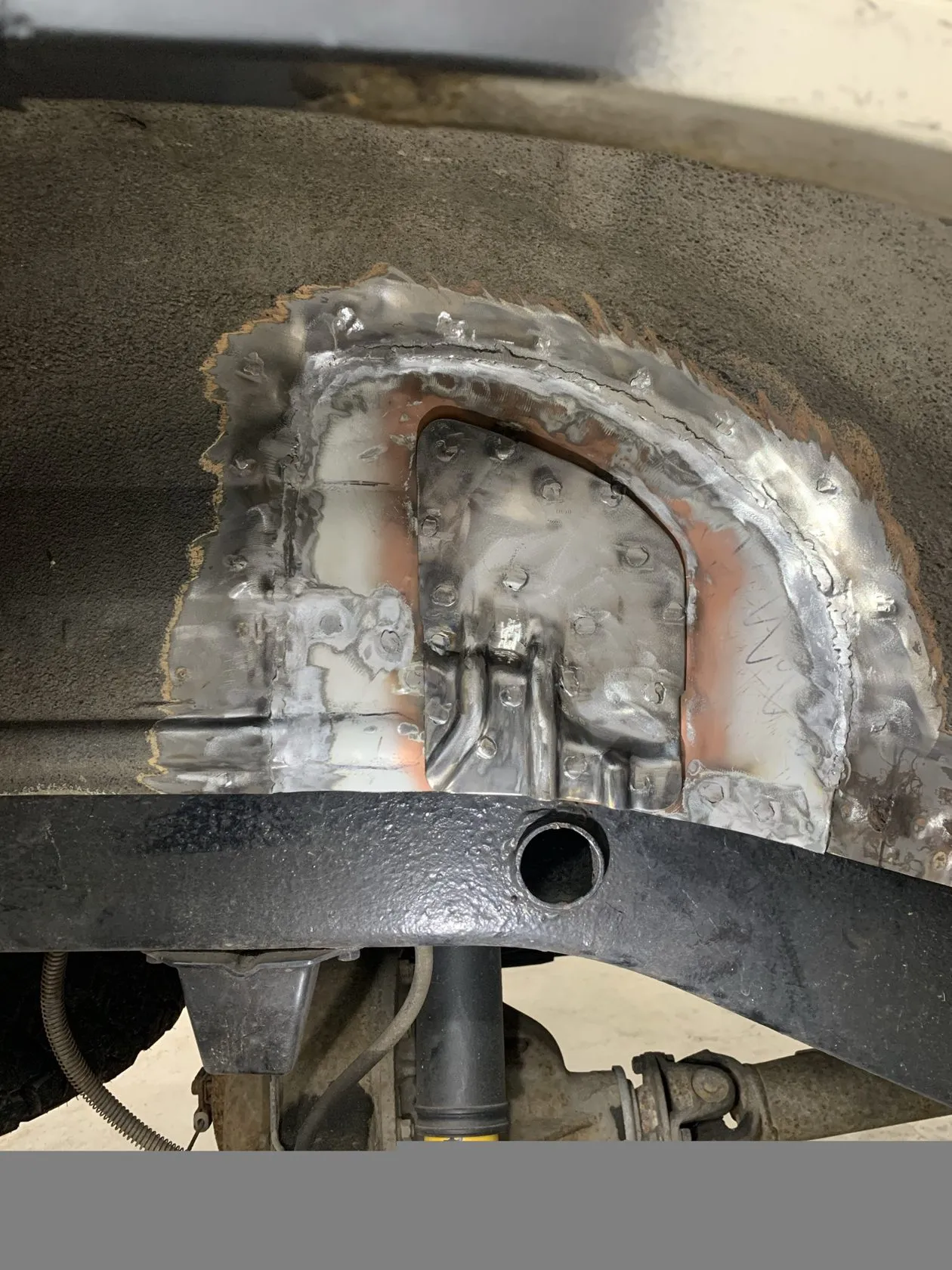
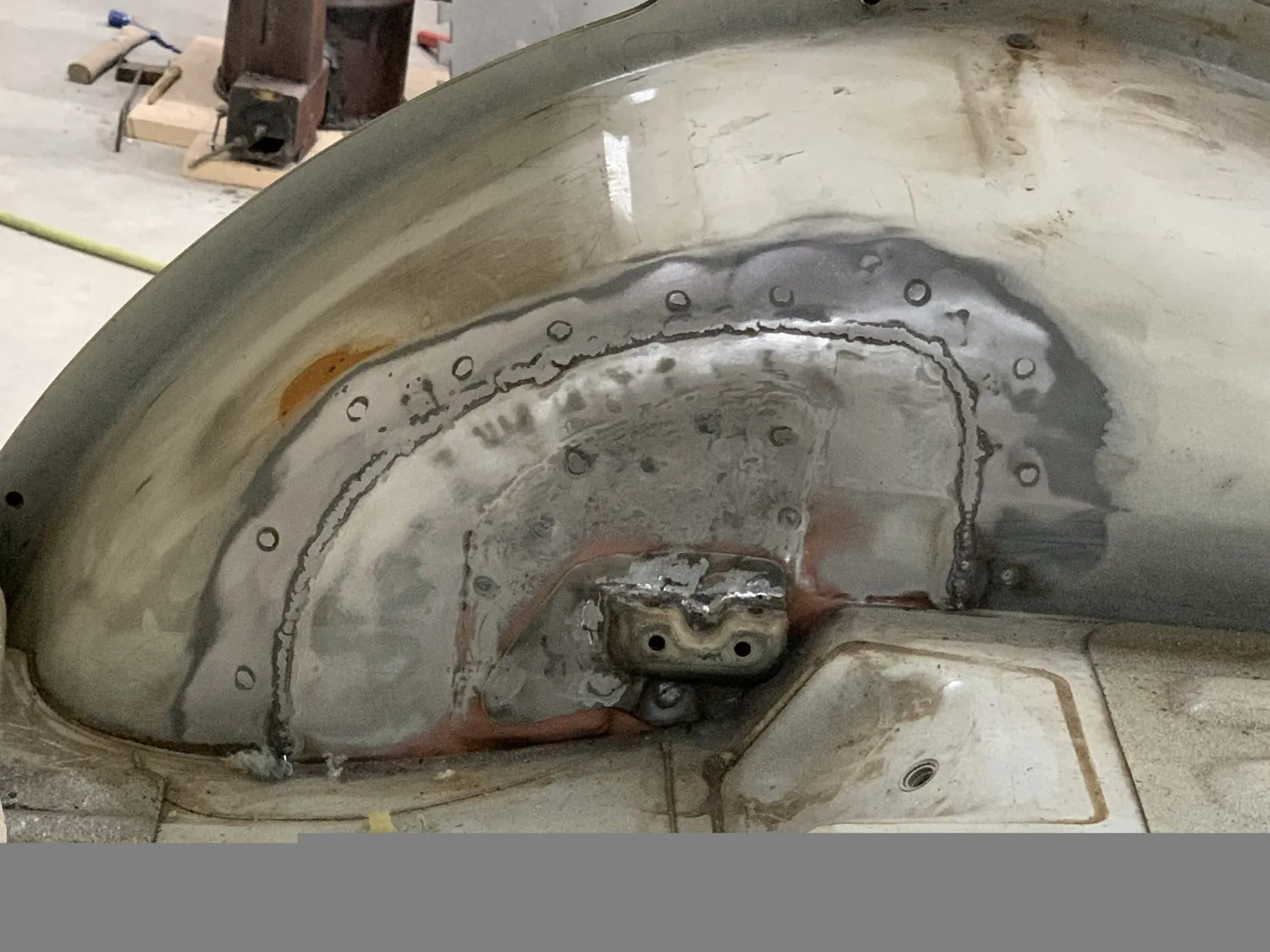
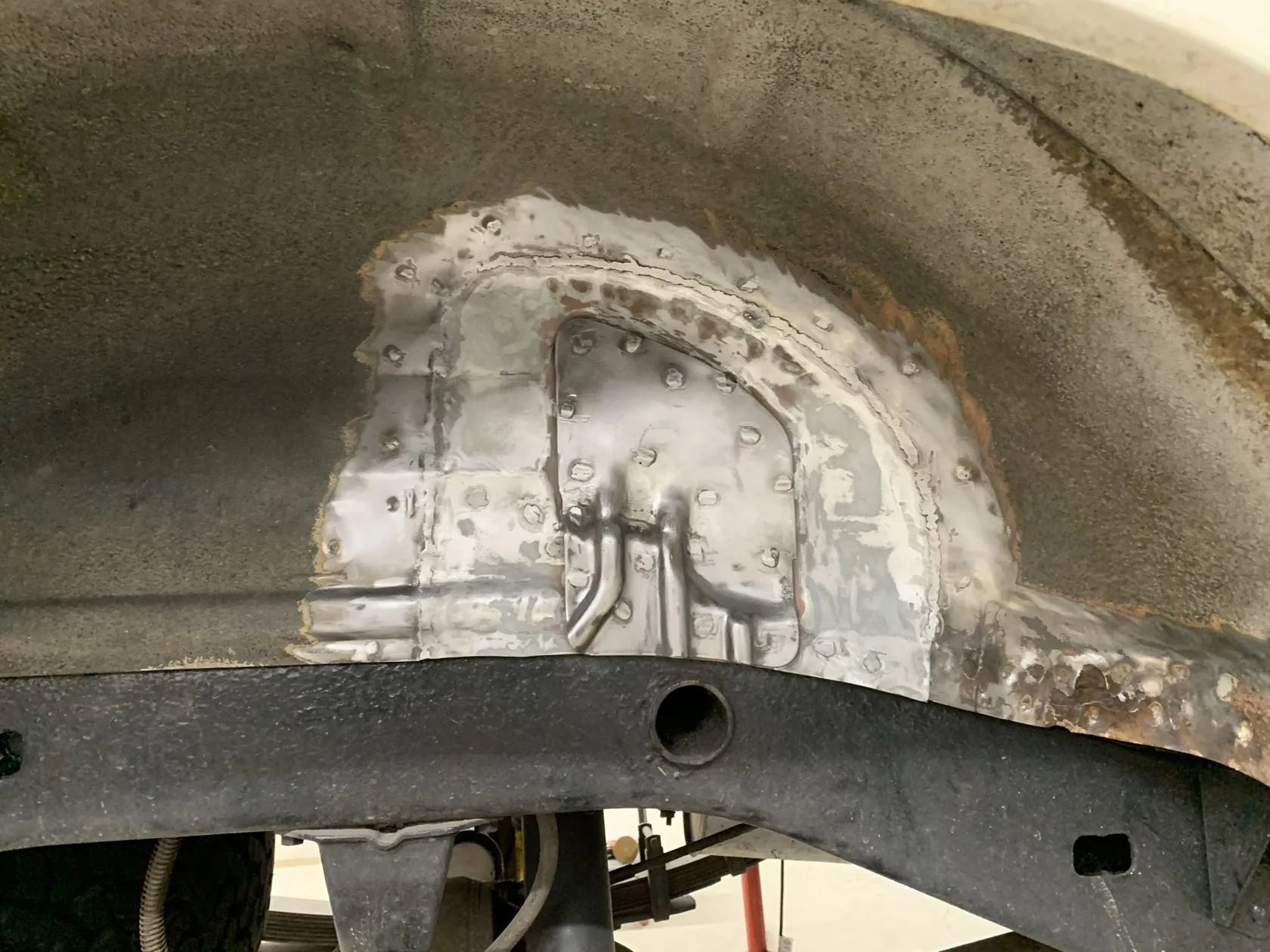
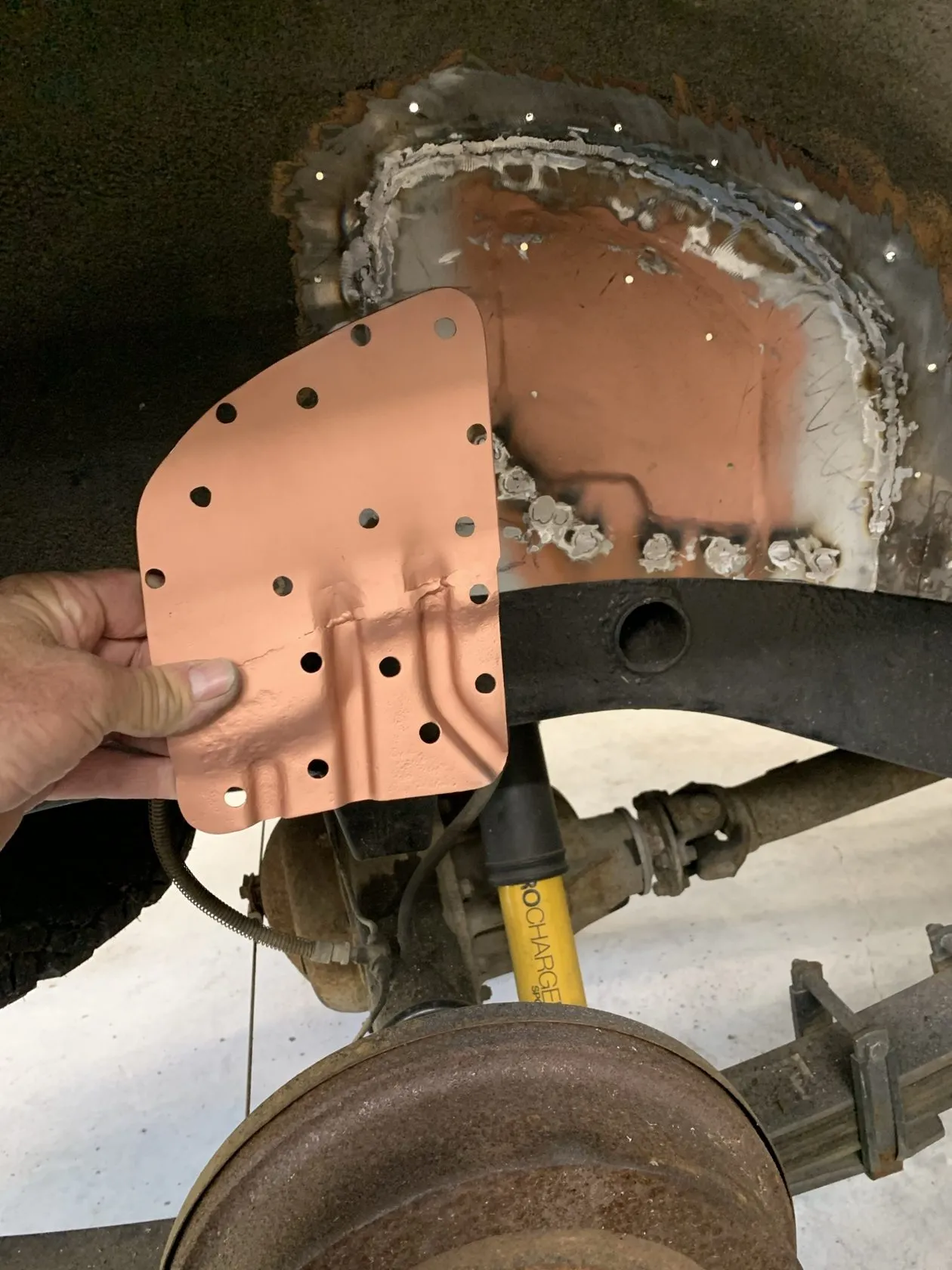
New steel being welded into the wheel arch, the seam visible along the repair.
The replacement wheel arch welded in, showing the new steel let into the original body.
The finished arch repair with the welds dressed back.
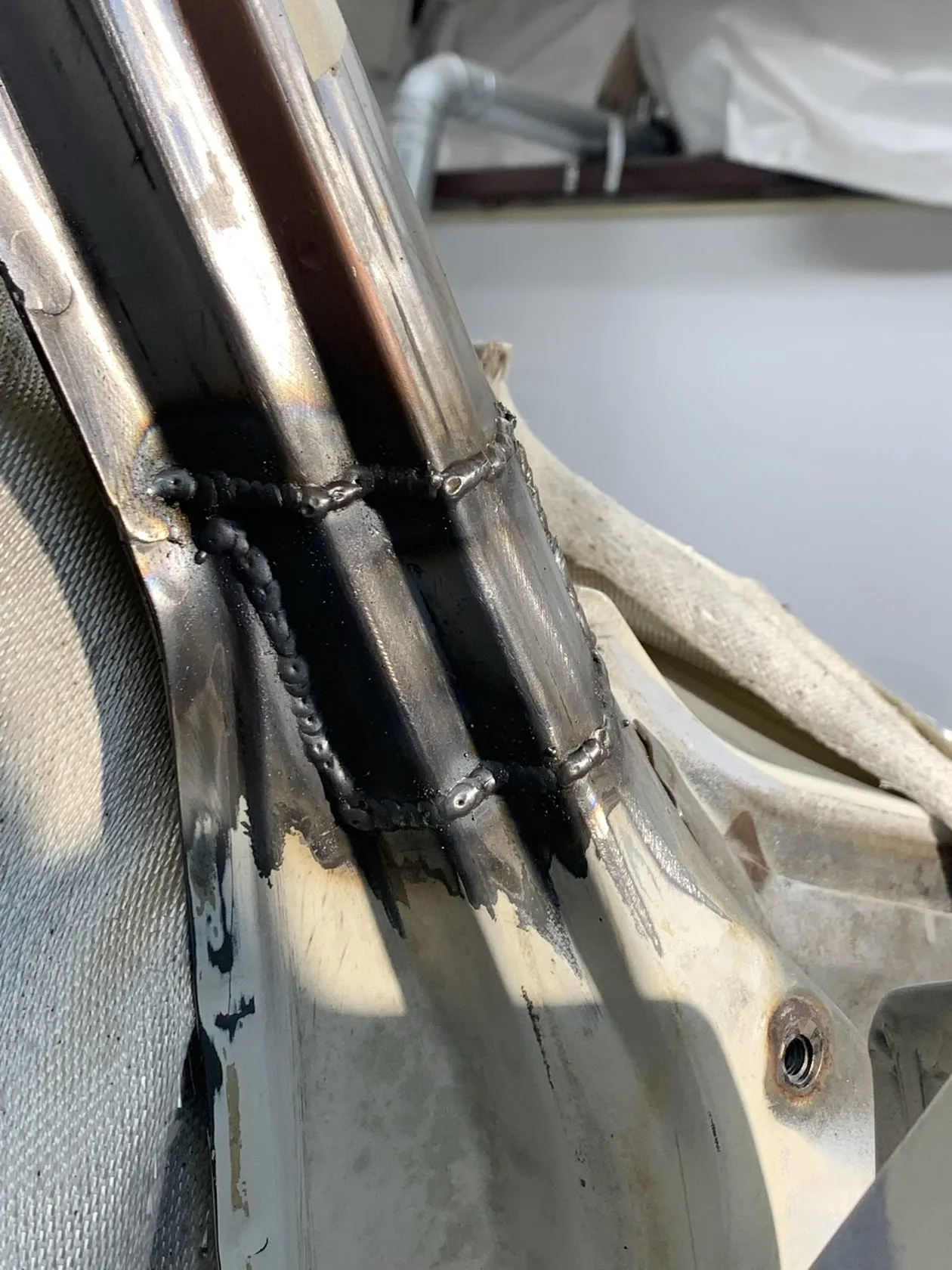
A welded seam along a structural joint.
A corner section rebuilt in new steel and welded into place.
A panel taken back to bare metal with the old filler removed, the repair areas visible.
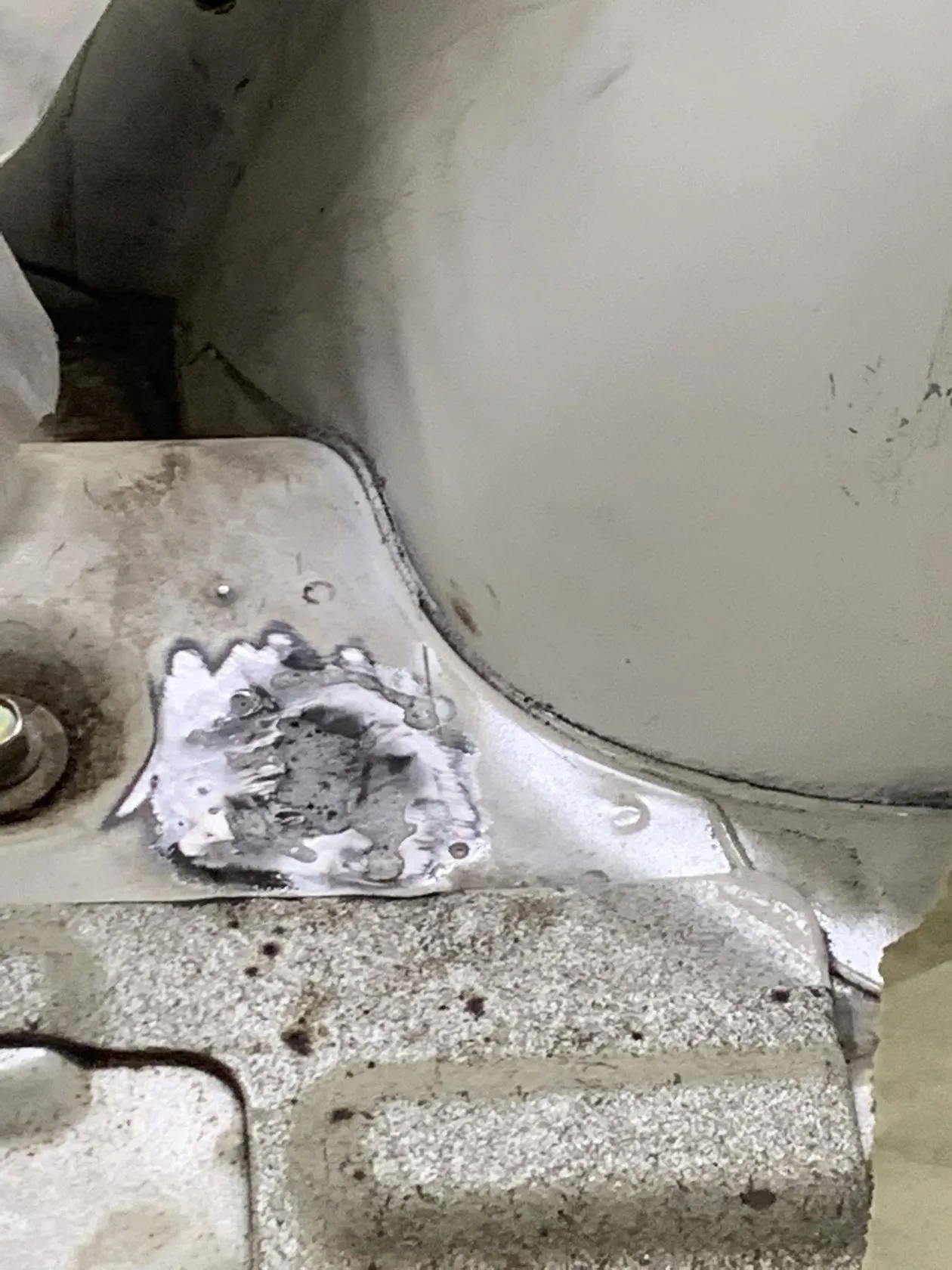
A patch welded into the floor pan.
A bare metal panel marked in pen to identify its position on the vehicle.
A donor panel in its original blue paint, taken from another FJ60 to replace rusted sections on this one.
The blue donor panel part-masked and prepared for work.
The donor tailgate in blue, before preparation and paint.
The donor tailgate supported on stands in the workshop, masked for finishing.
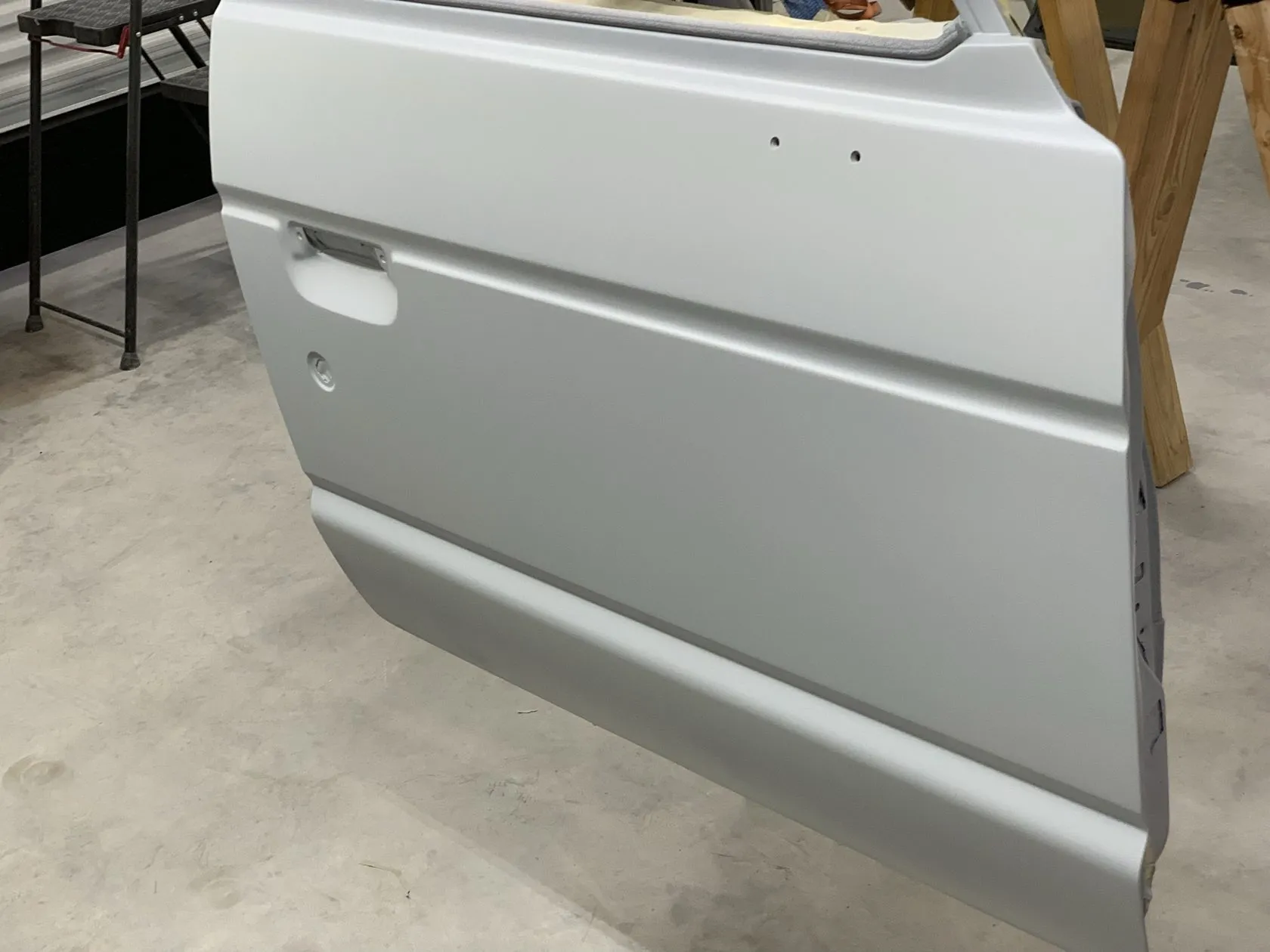
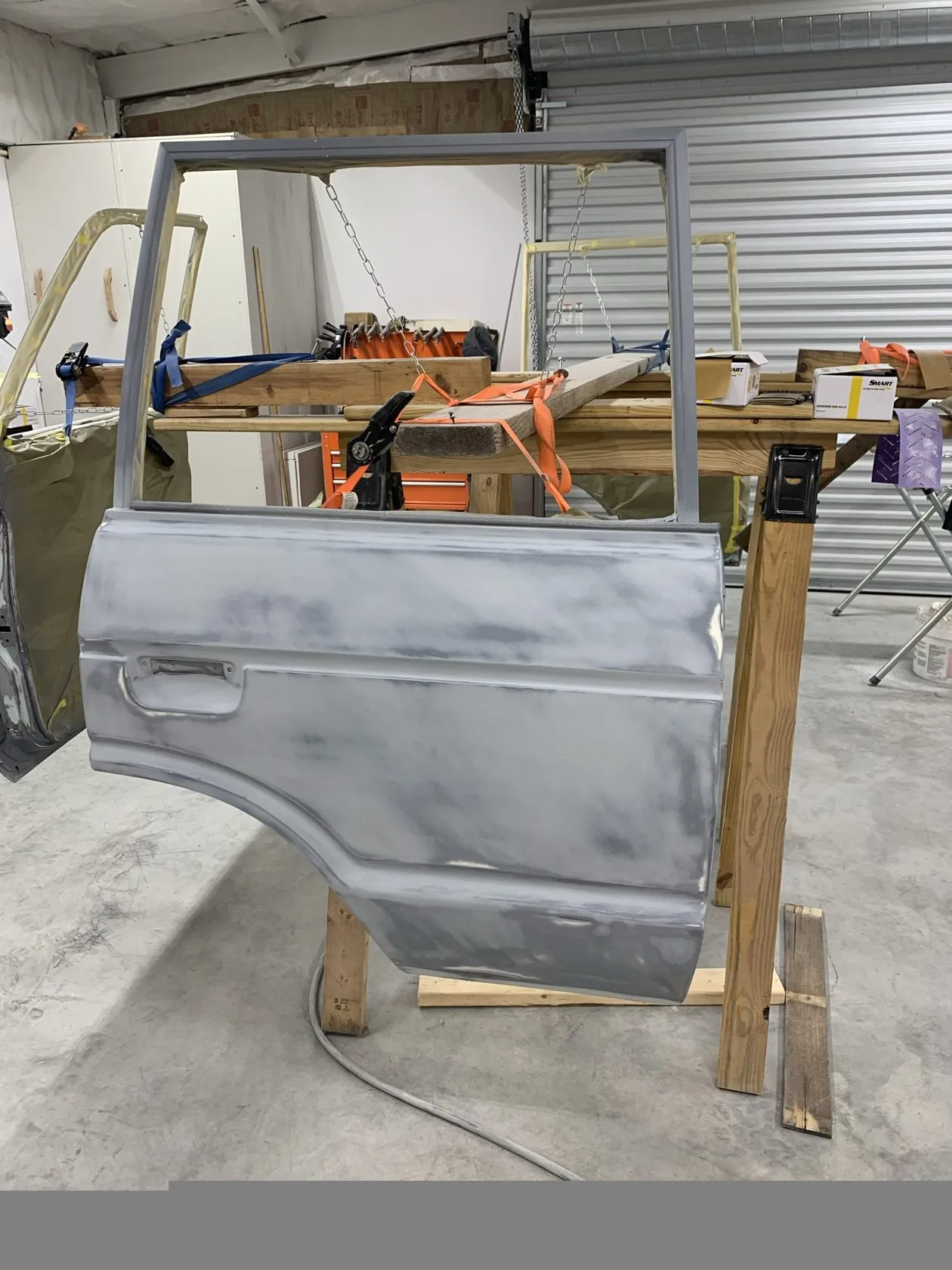
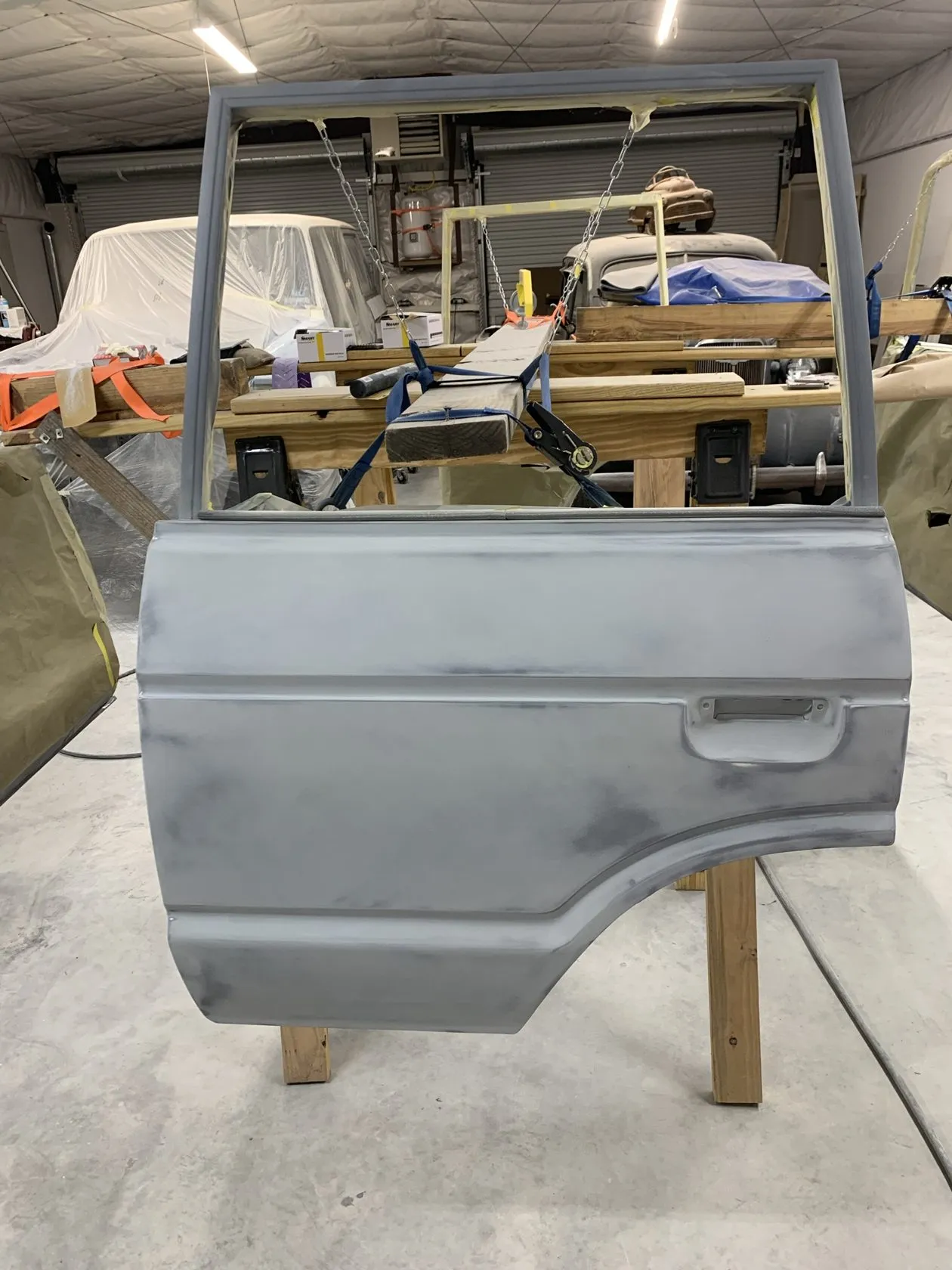
A door in grey primer, hung and ready for sanding.
A panel in primer with a guide coat sanded back, the dark streaks showing where the surface is still low.
A door primed and block-sanded flat.
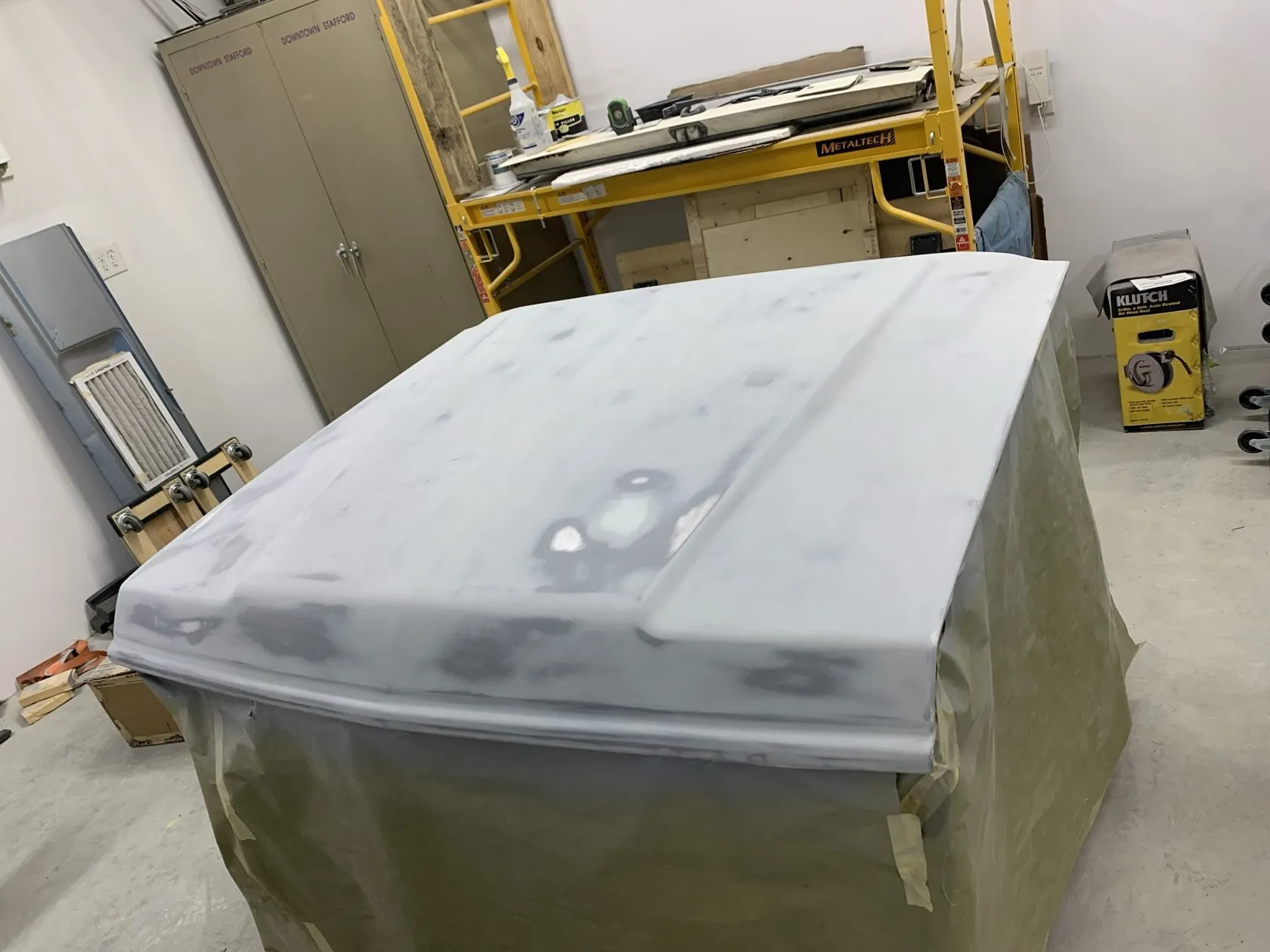
The hood in primer on a stand.
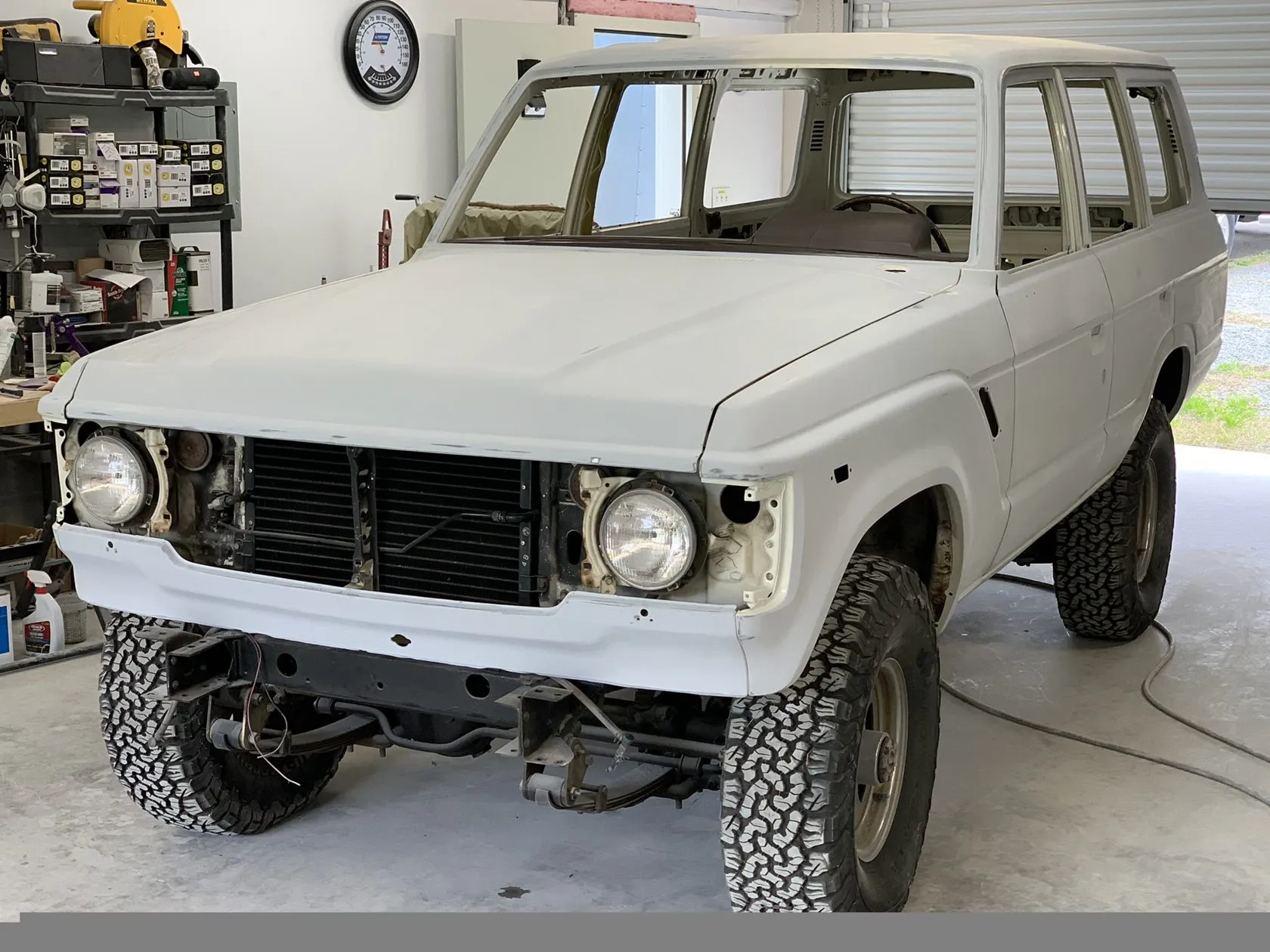
The front of the vehicle in primer with the surrounding area masked.
The body in primer in the workshop, sheeted off.
The shell in primer, front end assembled loosely for fitting.
The body masked with paper and sheeting in preparation for spraying.
The cabin masked off from the inside before paint.
The body fully masked, only the surfaces to be sprayed exposed.
The roof section painted white, seen from above with the glass still out.
The front end painted and reassembled, headlights and grille back in place.
The painted body back on its wheels in the workshop, nearing completion.
The shell painted inside as well as out, before the interior went back in.
The interior part-way through reassembly, trim and seats going back in.
The headliner refitted, dyed to match the original tan.

Records2

A fanned stack of service receipts and invoices kept over the ownership.
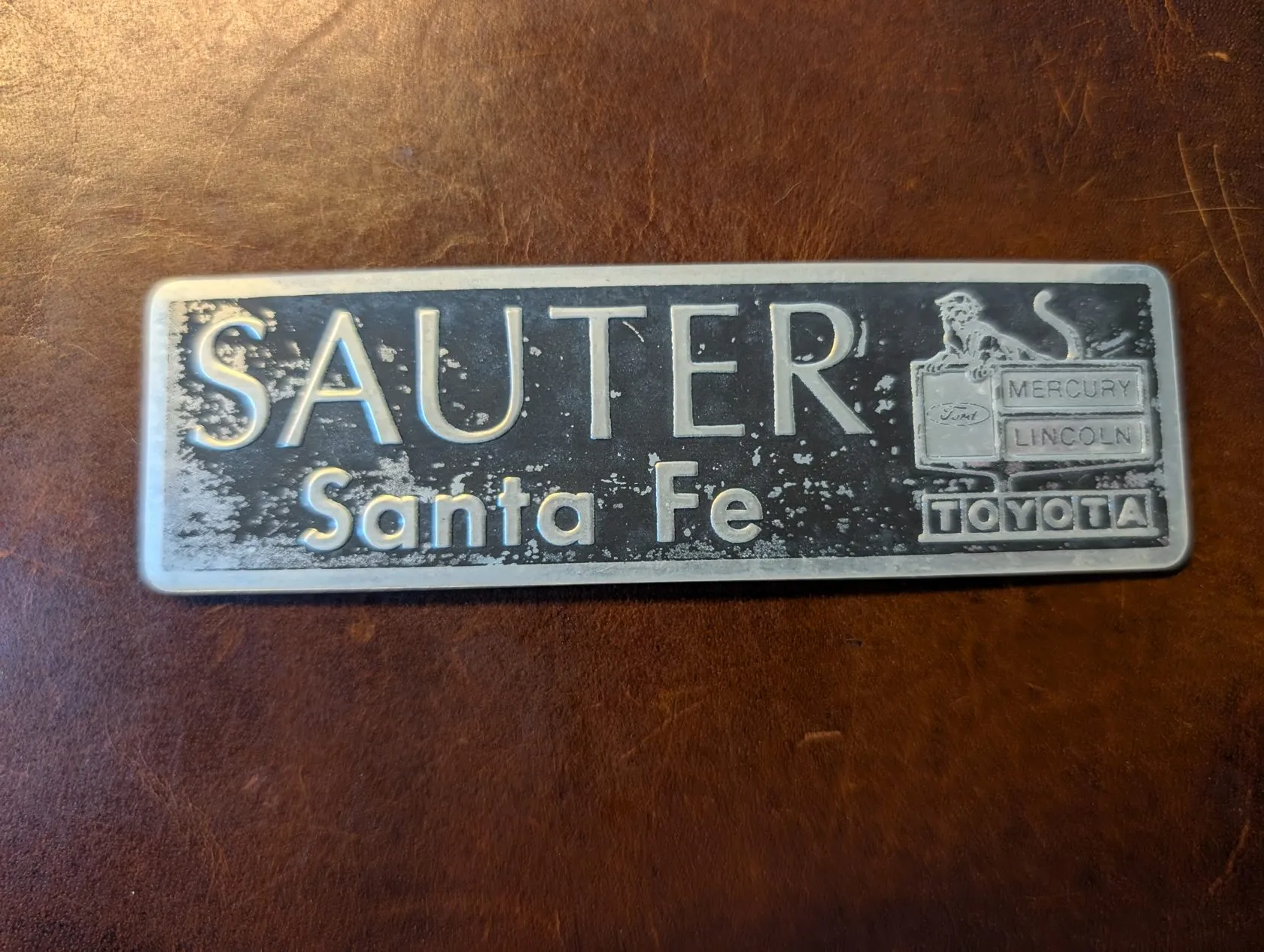
The selling dealer's metal badge, reading SAUTER Santa Fe TOYOTA.

What comes with it

  • Comprehensive maintenance records, 2014 to present
  • A box of leftover OEM and Specter Off-Road parts from the restoration
  • Yakima roof rack
  • Model-specific windshield sunscreen
  • License plate transfer, for a Virginia buyer

Come look at it

It is in Richmond, Virginia and I would rather you saw it in person than took my word for any of this. Bring a mechanic, bring a magnet, bring a flashlight and get under it.

Asking $25,000 OBO.

Email about the FJ60

Or write to at4fj60@gmail.com directly.